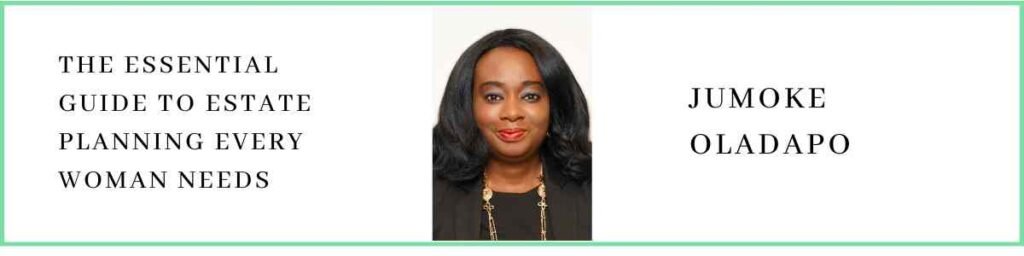
Attorney Jumoke Oladapo, CEO and Managing Attorney of IvyLaw Law Office, discusses the crucial importance of estate planning for women, addressing why it’s necessary sooner rather than later, especially for those in the mid-age group who often juggle responsibilities of caring for both children and ageing parents. The conversation covers the differences between wills and trusts, the significance of power of attorney, and the unique challenges faced by blended families. Additionally, they emphasize the importance of legacy planning that goes beyond assets to include values, stories, and family histories.
3 Key Takeaways
Understanding Wills and Trusts:
A major point of discussion was the difference between wills and trusts. While a will is a common estate planning tool, it does not avoid probate — in fact, it necessitates it. Jumoke suggested that trusts might offer better protection, particularly for families with young children, blended families, or significant assets like homes. She stressed the importance of consulting with estate planning attorneys to determine specific needs.
The Complexities of Blended Families:
Jumoke touched on the unique challenges faced by blended families in estate planning, sharing a poignant example where assets were unintentionally disinherited due to a lack of planning. She underscored the importance of having a detailed plan to prevent conflicts between children, stepchildren, and spouses.
Legacy Planning- More Than Just Money:
Paula and Jumoke explored the concept of legacy planning, which transcends monetary assets. Legacy planning involves recording personal stories, values, and family history, preserving intangible assets that enrich future generations. Attorney Jumoke encouraged capturing these stories through various media to ensure that values and experiences are passed down along with financial resources.
ShowNotes
Click on the timestamps to go directly to that point in the episode
[03:26] Why Women Need Estate Plans Sooner
[07:21] Understanding Wills and Trusts
[15:00] Blended Families and Estate Planning
[21:28] The Importance of Power of Attorney
[28:21] Legacy Planning: Beyond Money
Get In Touch:
If you’re interested in connecting with Jumoke Oladapo, you can reach her via her website, via Instagram, via LinkedIn, or on Facebook.
For those interested in sharing their own stories on “Chatting with the Experts,” reach out to Paula Okonneh through her website or connect via LinkedIn.
Paula: [00:00:00] Hello everyone, and welcome to another episode of Chatting with the Experts TV show and podcast where I speak with fantastic women from Africa, from the Caribbean, and in the Diaspora. . These women are professional and they are successful entrepreneurs and they share my mission, which is to educate, empower, and inspire women globally. I sometimes have some men join me, but 99.9% of the time it’s women. Today our title is Leaving A Legacy of Love- Estate Planning Every Woman Needs and Needs To Know About. Needs To Know About is my emphasis because well, you’ll find out why, and my guest who will be joining me soon says, if you don’t [00:01:00] have a plan, the State will have one for you.
I will tell you a bit about her. She is the CEO and Managing Attorney of IvyLaw Law Office in Greenbelt, Maryland. Her law practice focuses on estate planning and US immigration law. For estate planning, which includes creating wills, living trusts and powers of attorney. She focuses on helping family accomplish a healthy transition of their family wealth to their loved ones by providing legal guidance regarding their family assets and business. She also ensures that her clients minimize the cost and hassle of probate, protecting [00:02:00] them from losing their assets to the government and preserving them for their loved ones. Oh my gosh. There’s so much I can say about her. But one thing I must share with you is that the outcome of this planning is the peace of mind that comes with planning, knowing that they have something right to protect their families and assets from the high cost of litigation and conflicts that may occur in the event of an incapacity or death. And with that, I will welcome to Chatting with the Experts, Attorney Jumoke Oladapo. Welcome to the show!
Jumoke: Thank you very much. Good afternoon or good day to you. How are you doing today?
Paula: I am great and I’m even happier because you said yes, to being a guest on the show.
Jumoke: I’m super excited to be part of the show. Thank you.
Paula: I mean, [00:03:00] what we are talking about is something that is serious, something that, as you said, every woman needs and needs to know because you may need it, but you may not know that you need it. I dunno which is worse.
Jumoke: Certainly. It’s worse not to know you need it.
Paula: Right, right, right. And so, the very first question I’m gonna ask you the question that I’ve heard other people, some of my friends say in my age group. Why do you think every woman needs estate plans sooner and not later?
Jumoke: Oh, thank you very much. Women are pillars in this life, in our families and a lot of women, particularly women in the mid-age group, between 40, 65 and above, we find ourself in a sandwich generation.
Paula: Mm-hmm.
Jumoke: You know, we taking care of children. We’re taking [00:04:00] care of parents at the same time, and we’ll leave ourself or forget about ourselves and the fact that we need to take care of not only our families, but our assets and beyond. So sooner than later. First of all, women live longer than men. Statistics show that two out of three women are probably going to be widowed in their lifetime.
Paula: Yeah.
Jumoke: So because this is likely to happen. A lot of women find themself in a situation where their plans or this family plans, not only their spouse’s plan, the family plans is not yet in place and cause a lot of hassles and mess.
Paula: Yes.
Jumoke: Or they have to deal with hassles, a mess left by their spouses. [00:05:00] Also, a lot of women are caregivers.
Paula: Mm-hmm.
Jumoke: You know, and because we are taking care of this aging parent, if we ourselves fall ill, who is gonna take care of us if they don’t make this plan? We need to look at this and think a whole lot that we are not just the superheroes, but we need to do the needful for ourselves in terms of planning and protecting our assets. Another important thing, why now in the later, is that many women in this age bracket, they’re already made. They have assets, they have homes. Some of them, retirement account and all that, and if a crisis happens to them, they’re likely to go through probate their families, they’re leaving a mess. So the need to take care of that, which has been blessed them [00:06:00] so that they don’t find themselves in crisis or their families are not in crisis as a result of lack of planning. So there are a lot of reasons why now and not later, and I hope some of these, we’ll still touch more about that.
Paula: Thank you for expanding on that. It’s better now than later because there’s an adage that if you fail to plan, that means you’re planning to fail.
Jumoke: Yeah. Yes. We can’t leave things, que sera sera, whatever will be, will be.
Paula: Mm-hmm.
Jumoke: Because it’s not like that. Particularly not in the United States, if you do not plan for yourself and think the government has your back, that’s not true because the government is interested more in taxes, and how to take it from you, you know?
Paula: Mm-hmm.
Jumoke: So it’s not like the government will [00:07:00] not take, but at least you want to plan first to minimize unnecessary loss of your assets.
Paula: Yes, I agree with you 100%. But there’s so much confusion. I mean, in the sense that not that. You know, people, I hear this question among my friends too. The difference between a will, a living will, or even the difference between wills and trust, which one will protect your family better, do you think you can talk to us about that?
Jumoke: Oh yes, sure. We know that a lot of people, it’s the popular legal document that has to do with estate planning is will. Am I right? The short form of last will and testament. A lot of people you hear, say. I need a will. I need a will. I need a will. You know, however, many people don’t know that a will does not answer a [00:08:00] whole lot of problems that has to do with estate planning or probate. Will does not give the answer to probate and actual fact will takes you to probate. It’s like you suing yourself because that’s the legal document. A probate court, or in Maryland for example, the register will ask if a deceased person has. Why I say so is that a will may not be sufficient to protect you and your family?
It’s good to have one. It could be a good starting point, but it may not be sufficient. So when you speak with an estate planning attorney, they’re able to look at you, your family, your assets, your goals, and ideals and say whether your things are lined up in such a way that, oh, will is [00:09:00] okay or not, maybe you need more. So, a summary what I say is this, everybody’s got an estate. If you think you don’t have any, that’s not true. If you have a home, you have an estate. If you have a bank account, you have an estate. If you have clothing, jewelry, you have an estate. If you have a car, you do have an estate. If you have retirement plans, life insurance policy and all those. All those are what the government looks at, and I’m sure every one of us got something, even if it’s only a bank account with some little money in it. We got an estate. So, when do you know you need a trust versus just a will?
Paula: Mm-hmm. [00:10:00]
Jumoke: You need a trust. If you have young children, you need a living trust. And in this case there are different types of trust, but we are gonna be focusing on a revocable living trust.
Paula: Okay.
Jumoke: If you have young children, we’ll probably recommend you have a living trust. If you have a blended family, we’ll likely recommend you have a living trust if you have a home. Your home is probably, you know, a lot of homes have a lot of value. That’s the high value assets people have. You may need a living trust, but all these are different from families to families. So I’ll say that if your assets, total assets is more than a small estate, by definition of law, you may want to speak more to an attorney [00:11:00] about which is better for you. There are a lot of dynamics in between, but if you have nothing, no. Everybody’s got something that’s what I said.
Paula: Yes.
Jumoke: Everybody got something. If you don’t care about going through probate court, or you don’t have anything at all, or you have very minimum assets, then you may just need a will. But the definition of minimum is relative. So it’s always good to speak with an attorney.
Paula: Well, thanks for clearing up that bit about estates, because some people think, you know, oh, I must have at least, you know, a certain amount of money or a certain amount of assets, you know, worth an amount that they think in their mind [00:12:00] is worthwhile. But you said something that I think is very important, at least if you have a bank account, at least you qualify for having an estate to start with that. And I’m sure if you look through, you know, you start coming up with a list, you can find out that you have a lot more than you think.
Jumoke: Definitely, definitely we undermine what we have, you know, as women, and we shouldn’t. We shouldn’t undermine what we have at all. I have a situation, someone, you know, she came to the office and I need a will. I was like, you need a will? Well, let’s talk about it. Let’s have a planning session and talk about it. You know, and well, what do you have? And we started going through the list. She had a bank account. She had a meager life insurance policy. [00:13:00] You know, she had a home, but she had a vehicle.
Paula: Mm-hmm.
Jumoke: Let’s even say she doesn’t have a life insurance policy. Usually we find women that have vehicles. Am I right? They have a bank account, they get money, am I right? They have children.
Paula: Mm-hmm.
Jumoke: So all these make it important to have conversations about this because God bless those with more than we usually, you know, appreciate that we have.
Paula: You are so right, so do not under estimate what you have. As you mentioned earlier, jewelry.
Jumoke: Exactly.
Paula: Mm-hmm.
Jumoke: Some of us have jewelry.
Paula: Mm-hmm.
Jumoke: We have those costly bags. [00:14:00] Am I right? The Gucci…
Paula: The shoes.
Jumoke: The shoes, the M K, what is it called? Michael Kors.
Paula: Mm-hmm.
Jumoke: The Coach.
Paula: Mm-hmm.
Jumoke: A few of us have those. Am I right? We have some pieces of jewelry.
Paula: Jewelry
Jumoke: or gold.
Paula: Mm-hmm.
Jumoke: We have some expensive furs. We have chinaware.
Paula: We have pictures.
Jumoke: So we have pictures. We have artworks.
Paula: Artwork. Yes, yes, yes. Thank you for breaking that down. So, once you start a list, you know, you find out just as we are talking now you realize that you, oh, I actually have more than I think. Furniture in your house, you know? Oh, so much, so much. Well, you mentioned something that I think is important. I mean, we live in a age where we are hearing more and more about blended families. [00:15:00] Now let’s address that, you know, blended families and inheritance so that there’s no fight between children, stepchildren, you know, spouses, et cetera. That’s something I think a lot of women probably avoid talking about, but needs to be addressed. Is that something you can talk about?
Jumoke: Definitely. I’ll touch on it. So we live in a day and age where a lot of families come together having either children before marriage or prior marriages and that fosrm a unit.
Paula: Mm-hmm.
Jumoke: Many people get married after being settled somewhere else, and they have their assets before they come in. And you find out that you have stepchildren, you are step parents, am I right? Some of them have younger younger children that are their stepchildren. [00:16:00] Some of them have older children. However, a lot of conflict could happen. If plans are not in place, why? And also apart from the conflict that could happen, there could be situation where you are unintentionally disinheriting your children and giving your assets to your spouse. So I’ll give an example of something that happened before.
We have a stepfather married to mom, and mom has children. So the children are step children to the stepdad. Am I right? Unfortunately, mom passed away before mom passed away. She was sick. Okay. She [00:17:00] was very sick and because the husband/stepdad was not in good terms with the children, because of course the children had done some unacceptable things in the past. The stepdad did not allow them to see their mom, so there was a lot of conflict, and then there was court situation. On who is gonna be making decisions for the mom? Is it the husband/stepdad, or is it the adult child? The mom did not have any plans in place. Not a power of attorney, not a will, nothing.
Paula: Mm-hmm.
Jumoke: So the judge had to make a decision who will be the decision makers / power of attorney for the mom. There’s so much conflict there because these are two loved ones. [00:18:00] I’m sure the mom will be so sad seeing the husband at loggerheads with the child.
Paula: Mm-hmm. Mm-hmm.
Jumoke: Well, at the end of the day, unfortunately, the mom passed away. The same day the court hearing was…
Paula: Oh no!
Jumoke: And now they have a home among other assets that had to go through probate because there was not plan in place. All right. And for those who have a plan in place, let’s say there was a will, and typically the will will say, a lot of people will say, I give everything I have to my spouse and the spouse too have a will I give everything I have. You know, I give everything I have to my husband and I give everything my husband, you know, [00:19:00] vice to my wife, two different wills. Now they forgot that there was, you know, they had children when they were giving everything to each other.
Paula: Mm-hmm.
Jumoke: When the will is probated, everything, including the home, which belongs to the mom, will go to the husband.
Paula: This was the stepdad.
Jumoke: Who is the stepdad.
Paula: Who was at loggerheads with the mom’s children, her biological children. So they’re not his.
Jumoke: Exactly.
Paula: Mm-hmm. Yeah.
Jumoke: Okay. So now, this home that we are talking about was a home that the mom had with a prior husband.
Paula: Mm-hmm.
Jumoke: Who is a dad to the children.
Paula: Mm-hmm.
Jumoke: So now because the mom has given the everything she got to the [00:20:00] new husband, the children don’t have anything from the mom, not even including their dad’s house.
Paula: Complicated.
Jumoke: It could be complicated. That’s one example among many of complex situations that can arise as a result of being a blended family. Without a thorough plan in place, there could be so much mess happening, and that’s just one of them.
Paula: And that one of them, that one example is complex enough in itself just thinking about it. Oh my gosh. I can see the strife that comes from that, you know, happiness, bitterness, because this is their mom.
Jumoke: Exactly.
Paula: And all along they’ve always assumed that this house would be theirs. And now, they’ve lost in quotes, everything, and they’ve lost their loved one, their mother. [00:21:00]
Jumoke: Yeah.
Paula: Wow.
Jumoke: And the mom did not have a say at that point when the dad locked out the child.
Paula: Oh.
Jumoke: Before she passed away, because the stepdad did not allow the child to see the mom.
Paula: Oh my gosh.
Jumoke: And why is that? Because she doesn’t have written directives about what she wants.
Paula: But this is where the power of attorney comes into play, right?
Jumoke: Yeah.
Paula: Because there’s one, yeah.
Jumoke: Healthcare directive and power of attorneys.
Paula: Mm-hmm.
Jumoke: So basically the power of attorney is a legal document that has to do with finances and everyday life decision making and wellbeing. Who is going to make decisions for you in the event that you cannot make one by yourself? [00:22:00] Like, who’s gonna go to the bank? Who’s gonna help you with litigation? Who’s gonna sell your stock? Who’s gonna make insurance policy for, you know, who’s going to go to social security and for you and all that stuff? Who’s gonna go to the post office and pick up your mail? Things like that.
Paula: Yes.
Jumoke: You know? That’s the power of attorney, the general durable, general power of attorney. And then we have the banks look for sometimes more specific ones. You know, who’s gonna sell your house for you? Let’s say you wanna sell the house. So all those are covered by the power of attorney, and it’s important. Those are critical legal documents because you could go thus far. But at some point they’ll be saying, where is the authority? Where is the authorization?
Paula: Yeah.
Jumoke: And it’s important to have that authorization, and there are a lot of ways to go about it. You don’t have to make such legal document effective [00:23:00] immediately if you’re still sound, if you’re still making decisions by yourself, you know? And it could be effective only upon incapacity.
Paula: Yeah.
Jumoke: When there is a need for it or if there’s a need for it, you know? And the healthcare directive too is a separate legal document.
Paula: Mm-hmm.
Jumoke: But that is specific to healthcare. Who is gonna make healthcare decisions for you in the event that you cannot make one by yourself? People get accidents once in a while and they cannot, you know, function. Some of them lose their mind, some people have strokes, you know, and they cannot do things healthcare wise by themselves. So all these don’t let it be too late before you have that. A lot of us, we have car insurance policies. Why do we have car insurance [00:24:00] policies? Because we are forced to have one.
Paula: Yeah.
Jumoke: You can insure your car, but you can’t insure your life and you can’t make sure that your assets are properly insured by having estate plans in place.
Paula: Such an important part of life, you know, and it’s such an important point you made that we insure our cars, we insure our homes, but we don’t insure ourselves. To ensure that we don’t have all of these complexities arise when, as you said, even, you know what happens if you can’t speak. You’ve been incapacitated in a way, accident or whatever it could be. ’cause life happens. I mean, accidents are accidents because that’s exactly what it is. You don’t plan on it.
Jumoke: You don’t plan.
Paula: But it happens.
Jumoke: Yeah. These legal documents are what’s going to give you the voice because [00:25:00] now your wishes have been turned into directives.
Paula: Yes, yes, yes, yes. Whoa. You know, one thing I love is talking with my guests because it’s, I was so interesting. I don’t even know where the time goes, but there’s something I wanna touch on very quickly. But there are two things actually. Well, the quick one is that I learned, or me and my siblings learned this the hard way where, okay. Power of attorney. We didn’t realize that the power of attorney only has power when the person is alive, correct?
Jumoke: That’s true. Correct. Yes.
Paula: Ever think about that.
Jumoke: That’s true. A lot of people are confused about that as well. I see some people they’ll say, oh, we have power of attorney. And when the person has passed away, they’ll now say, oh they, I said that power has expired, man.
Paula: Yes. What do you mean? [00:26:00] Yeah. Power of attorney. Nope. It’s only when the person is alive.
Jumoke: Is alive, you know? Yeah.
Paula: Yes. Yeah.
Jumoke: And the thing is, power of attorney has its double-edged. So we have to review all these legal documents from time to time.
Paula: Mm-hmm.
Jumoke: So as I said, first of all, if you still have sound mind, have a power of attorney that is effective upon incapacity. So if it’s needed, you know, then it’s available with two physicians authorizing saying that yes, confirming that the person is incapacitated, then the part can become effective, you know? But for those women that are like in the senior ages and they’re already needing their children to care for them and all that, I sometimes will recommend that the powers of attorney and the [00:27:00] healthcare directive be effective immediately so children can help you.
Paula: Mm-hmm.
Jumoke: Or whoever is helping you can help you. You have to choose trusted people, you know, because the same power gives the person the authority to speak with someone on your behalf. The same power gives the person the authority to help you could be used as well to harm you.
Paula: Mm-hmm.
Jumoke: Okay.
Paula: That’s scary though.
Jumoke: Yes. That’s scary. That’s scary. It’s very scary. Because we see a lot. It’s double-edged. They can use that same authority to make sure that they sell your home.
Paula: Mm-hmm.
Jumoke: They can use the authority to clean out your bank account.
Paula: Mm-hmm.
Jumoke: They can use that same authority to help you manage your everyday expenses.
Paula: Mm-hmm.
Jumoke: And help you with your benefits and all [00:28:00] that. So it’s positive and negative. That’s why you have to give it to trusted people. And once you don’t trust them anymore, change it.
Paula: Change it. Yes.
Jumoke: You know?
Paula: Yes. Yes. Important, important. Wow! Hmm. I’m learning so much. My mantra is I learn something new every day. So one of the things I’d like you to talk about before we wrap up and have the audience join us is about legacy planning and why it’s not just the passing of money, but also values. And one thing too stories, you know, we forget that, you know, there is a wealth of knowledge in people’s voices and their memories and the history. Talk about, you know, our family history because sometimes the older generation die out. I’m hearing that a lot more among my peers and even my young adults are talking about that. So, mom, how [00:29:00] did this happen? Or how, and I realize there’s an importance in recording your history, your verbal history, your family history. ’cause it, I mean, it’s not just sometimes so that you can know, it can even help you with your health. When things arise and you wonder, Uhuh, where did this come from? And you are like, great-grandmother had X, Y, Z, or great-grand uncle did this. And you’re like, okay, now I’m clear. So can you talk a little bit about legacy planning?
Jumoke: Yes. So legacy is beyond money. A lot of us, we remember to pass our homes, pass our bank accounts, and give those to our loved ones. However, we don’t remember to capture our experiences, our stories, our values, our face, our love.
Paula: Mm-hmm.
Jumoke: You know, those are intangible assets. That you need to plan for as well. [00:30:00] So we call it legacy planning. So it’s beyond the estate. It’s now like what are you passing to your loved ones that they cannot hold with their hands. A lot of women, they’re powerful, empowered, educated, entrepreneurs.
Paula: Mm-hmm.
Jumoke: The list goes on. We’ve attained so much, or we attain so much and we still attaining.
Paula: Mm-hmm.
Jumoke: And we need to make sure that these things, our stories, our faults, our victories, we capture them, video form, audio form, any way, just make sure it’s recorded, you know, and make that part of your planning.
Paula: Love it.
Jumoke: And that’s part of what we do in our office. So we don’t just give them the estate planning, we record them. We call them legacy [00:31:00] interviews where we’ll ask you stories about your upbringing, your children. Tell me one word that you know about your child. If you’re gonna describe your child with one word, what’s it gonna be? What’s your idea about education, money, things like that, so that the next generation and the next one, the next one, can learn from us.
Paula: Mm-hmm.
Jumoke: You can tell about your history, you can tell about your values, you know, which one is more important to you, money or education? You know, you don’t even bother about any, whichever one face. It’s an important value that we have, that we need to pass on from one generation to another. Yep. So all this the Bible says a good, I’ll say woman leaves in an inheritance for our children’s children. And that’s part of legacy. [00:32:00] So it’s important that we have all this captured, not just the physical asset, but also the intangible ones.
Paula: Whoa. I could talk with you forever and I’m sure, as I said early on, our audience has tons of questions for you because this is a topic that is long overdue. We need to talk about these things culturally it’s a topic sometimes that people will say taboo. Why would you be talking about this?
Jumoke: Oh, yeah.
Paula: Yeah. I mean, forget about it. Yeah. You know what I mean? It’s,
Jumoke: There’s certain myth. There are a lot of myths around estate planning from what you said. Some people think that when you have a plan in place, estate plan, that means the next day you’re going to pass away.
Paula: Mm-hmm.
Jumoke: No. Some people think you have to be rich in order to have a plan in place. No. It’s not for the wealthy, it’s not for the old. [00:33:00] Some people think you have to be old and retired before you need to have a plan in place. No, once you have an asset, you have children, then it’s time to plan. So I’ll say if you’re 30 years old and above, have an estate plan. You don’t even have to have children because you have something. So, all this and much more, it’s important. Yeah, it’s important. It shouldn’t be a taboo. We need to go past that.
Paula: We need to go back past that. So, we know that there are people in the audience who wanna ask your question, but for those who are listening online later on, on YouTube, on the audio version, on Apple Podcasts, or Spotify or even YouTube has podcasts these days, how can they get in touch with you?
Jumoke: Yes. Thank you. We would love to hear from our audience some more. You can reach us our office phone number. Our [00:34:00] office is IvyLaw Law Office and our phone number is (301) 276-0887. On our website, www.ivylawoffice.com. On Facebook, IvyLaw updates. We’re on Instagram, we’re on LinkedIn, and you know, we just try to be current and everywhere. Yes.
Paula: I love it. I love it. And for those of you who have heard Attorney Jumoke, she’s a guest on my show so can you be. So if you want to be a guest, then you’re a woman. Or even though we have a few men. Please reach out to me on my website, which is chattingwiththeexperts.com. I am also on LinkedIn as Paula Okonneh. I’m on IG. My handle there is at Chat_Experts _podcast. On Facebook, look for Paula Okonneh and we [00:35:00] have a YouTube channel, Chatting with the Experts. Subscribe to us there. And every week you would hear, a very inspiring educational and fun, informative episode from these accomplished women.
Thank you again. And now we are gonna open up the floor to our audience to ask all questions that I forgot to ask or wanted to ask, and didn’t just have the time. Thank you for saying yes, Attorney Jumoke to being a guest on Chatting with the Experts.
Jumoke: Thank you very much. I appreciate.