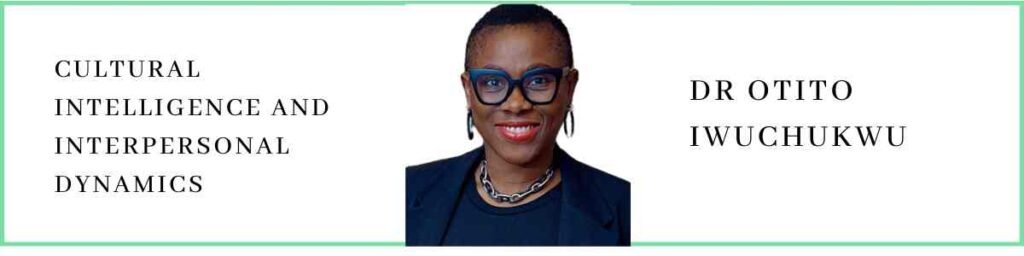
Dr. Otito Iwuchukwu, a multifaceted professional who is a pharmacist, scientist, educator, organizational psychologist, and author shares insights on belonging, family systems, cultural dynamics at work, and the unique challenges of parenting in a multicultural environment. The conversation also touches on the emotional intelligence required for navigating friendships and professional relationships and her personal experience in fostering a sense of belonging for her child with social communication challenges. With a focus on authenticity and mutual understanding, Dr. Iwuchukwu emphasizes the importance of intentionality in relationships and cultural intelligence in professional settings.
3 Takeaways
Family Systems and Belonging:
Dr. Iwuchukwu emphasizes that family systems significantly influence how we perceive belonging. She talks about how familial dynamics, such as birth order and parental influence, shape our interactions with the world. These early interactions can impact our self-esteem and the way we form adult relationships. The discussion sheds light on how understanding our familial background can help us navigate and create healthier relationships.
Friendship and Cultural Impact:
Moving beyond the family, the conversation explores how cultural backgrounds affect adult friendships. Dr. Iwuchukwu notes that friendships often carry the weight of our connection needs, which can lead to complex dynamics. The key to maintaining authentic friendships, especially when navigating different cultures, is intentionality and time investment. These crucial elements help bridge the gap in understanding and maintaining meaningful relationships across distances and cultural divides.
Workplace Belonging and Cultural Integration:
As we transition into the topic of workplace dynamics, Dr. Iwuchukwu explains that entering a new work environment involves navigating various cultural and interpersonal thresholds. Acculturation, the process of adapting to a new cultural context, requires awareness and a willingness to understand diverse perspectives. She stresses that understanding and embracing cultural differences is not about losing one’s identity but about working effectively across cultures, enhancing both professional relationships and personal growth.
ShowNotes
Click on the timestamps to go directly to that point in the episode
[02:13] Dr. Otito’s Background and Expertise
[05:24] Family Systems and Belonging
[10:30] Friendships and Belonging
[18:40] Workplace Culture and Belonging
[29:52] Parenting and Belonging
[33:30] Faith and Belonging
Get In Touch:
To learn more about Dr. Otito Iwuchukwu’s work and her upcoming book, connect with her on LinkedIn or visit her website
For those interested in sharing their own stories on “Chatting with the Experts,” reach out to Paula Okonneh through her website or connect via LinkedIn.
Paula: [00:00:00] Hello, everyone, and welcome to yet another episode of Chatting with the Experts, TV show hosted by me, Paula Okonneh, where I speak with women, accomplished women, established women from Africa, from the Caribbean, and in the diaspora. The mission of this show is to empower women, [00:01:00] is to educate women, and inspire women globally. And that’s what my guests do every week. I’ve had a few men join us, but most of the time it’s women. Today, we’re going to be talking about Living on the Edge and Thriving in Multicultural Life Situations. And with me to do that, it would be Dr. Otito Iwuchukwu. But before she comes on, I’ll tell you a bit about her.
She’s a pharmacist, scientist, educator. She’s an organizational psychologist, and a consultant. She’s also a career strategist, an international speaker and author, and she helps her clients learn how to live and thrive in the spaces in between. So our conversation will be on belonging, paradoxes in families, [00:02:00] in friendships and work and parenting and reminders that belonging is found both within and outside of ourselves. Isn’t that amazing? And so now I will invite Dr. Otito Iwuchukwu to join us.
Otito: Hello everyone. Thank you so much, Paula. Thank you for inviting me to the show.
Paula: Absolutely. You know, I am, I say this over and over that I have fabulous guests.
Otito: Yeah.
Paula: Of course, when I spoke with you and you said…
Otito: Yeah.
Paula: And I invited you to be on the show and you said yes, I was honored. So thank you for saying yes.
Otito: Yeah.
Paula: So I gave a snippet of your bio, but of course I can’t give everything. So would you mind filling in any gaps that I might have.
Otito: A gap since, you know, we’re talking about belonging [00:03:00] in different life spaces, one big gap will be a mother, right? I’m a mother, daughter, wife, auntie, like all of those things that we are in our different life spaces. In relation to work, though, I am, you know, as you said, a scientist educator. I’m also an author. I’ve written other books on marriage. I strategize marriages for people because I tend to look at that institution as an organization, like being an organizational psychologist. So that’s what I’ll add.
Paula: Awesome. Awesome. Wow.
Otito: Yeah.
Paula: From your bio, I can see that you love the academics, right or wrong?
Otito: I do. The Life of Mind as they call it. Yeah, I do.
Paula: That’s awesome. I commend you for still going ahead because many times it’s hard to marry the two, you know, academics with [00:04:00] life , especially as we, you know, compound things into our lives.
Otito: Yeah.
Paula: Married for some of us. We have children. And so working and have children and their household and you know, it can be overwhelming. And then when you add academics to that, whoo, hat off to you.
Otito: I think it’s because it’s impact work in my mind, right? People think about it maybe differently. But I think about all the students that kind of come through my classroom, especially the ones, you know, the diaspora, migrants, female students. And I consider myself a beacon for them, like, you know, they see me, they work with me and, you know, they realize you can do this, right? Just like you’re saying, all the things we compound into our lives. So it’s like a window for them to say, Oh, okay, you know, I can do some of these things.
Paula: Yeah. And you know, sometimes I like off camera, we’re talking about our life [00:05:00] experiences and sometimes our life experiences, you know, are influenced with our external personalities and how we relate to people. Because many times the shoes that you’ve walked in you see other people walking in those shoes and, you know, you know where it pinches.
Otito: And you can help them make the walk easier.
Paula: Yes, absolutely. Yes. Absolutely. So, you talked about how you’re a Nigerian and how our family culture influences our person. Let’s talk a bit about that.
Otito: Okay.
Paula: Family systems, in other words.
Otito: Family systems, right? I mean, that’s one of the things that I cover in my book, The Belonging Paradox. I literally started from family systems because how you kind of approach the world and how you enter the world can be determined by the family that you come into. Whether you consider yourself a part of that family or not, because I know, right, we’re in a country where there’s a lot of estrangement, right, in this [00:06:00] country. People sometimes, you know, almost like leave their families behind. I say you can leave your family behind, but your family doesn’t leave you behind, right?
Paula: You’re embedded in them.
Otito: Just the systems, the way you grew up, your birth order sometimes can really influence just the way that you kind of show up in the world. As an example, you know, people who are military and people that call themselves culture kids might understand this. My family moved a lot or my dad moved a lot because of his work. So I was born in one city, we moved, what, 600 miles to another one and then back and back again and another city for school. So what that meant was, you know, you kind of didn’t have any friends just growing up. And many times for many individuals, the, the early years, so the birth to about nine years is when you make yourself concept as it is. That’s when, you know, your self esteem is [00:07:00] built. You kind of almost like find yourself reflected among your friends or among people with whom you have company? So every time that changes, then you become a person who is like, I’m not sure you become hesitant about, you know, coming into group situations sometimes, and that could then impact you as an adult. Again, I’m using the word cooled because you know, we, I would built this things, but just saying that the impact of that Sometimes we don’t, you know, we don’t speak about it enough, or we minimize it.
Another thing that could impact your sense of belonging, which I cover in the book, is literally, right, your birth order or how people are treated in a family. So, you, if you have many children, if you have more than one child, you know this. Let me not say many. But we have more than one child.
Paula: More than one.
Otito: You know this for certain that each child is born different. Like they kind of come to you different. And so sometimes unconsciously, our behaviors right towards those children and vice [00:08:00] versa from our parents to us, it’s different, especially if you are one of the younger children, right? They’ve gone through these phases. And maybe they just, tired, right? Who knows? The parent that a last child sees is not the parent that the first child sees.
Paula: Tell me about it. All right.
Otito: And so sometimes that family dynamics, it literally can impinge, right, or impact our sense of belonging sometimes. And then we go out into the world with some of that. And that really influences some of the ways that we behave in interpersonal relationships.
Paula: You hit the nail on the head saying the parent that the last child sees is so different from the parent that the first child sees.
Otito: Yeah.
Paula: And I elaborated on that, I wasn’t a first child, I was a middle child. My mom was a first child.
Otito: Middle child syndrome.
Paula: Yes, there is a middle child syndrome, I spoke about it for years. And. [00:09:00] It only ended when my mom and dad had a sixth child and suddenly, all right, I had a buddy with me in the middle position, you know, but yeah, it is so different. And, the thing is I didn’t have a big family. I mean, when I had children, I only have two and interestingly my daughter in particular always say, I wish I had no siblings. And I’m thinking when I was growing up, I used to tell my mom, why didn’t you stop when you had me? Because yeah, you do see the world differently. All right. Okay. So you address that in your book.
Otito: Yes.
Paula: And, oh, any personal stories?
Otito: Yes. Yes, personal stories and it’s generational, right? So I think about me and my mother and me and my sons. So I have two sons, you know, like you. And honestly, they were the reasons why I’ll say that they were the reason why I eventually decided to write this book. Because I think [00:10:00] that some of these things, those threads, right? They come back to bite us. That’s what I’ll say. The thread of whatever happened in your household that you say, I’m not going to do this when I have my own children. You kind of find it being, you know, you kind of find that same dynamic sometimes being unconsciously created. And so I wanted to bring that, you know, into the conscious and say, this can happen and we need to be aware of it and how that impacts our children’s sense of belonging as they go out into the world.
Paula: Okay. All right. So how does that now transcend into adult friendships and adult relationships? Because, I mean, yes. The adult is the child that has grown up, in other words.
Otito: Yes.
Paula: So let’s talk about that.
Otito: What she said is so important because I think that now the way, you know, children are being treated, I feel, I tell people, these children are gonna grow into adults. They’re not gonna be children all, you know, all their lives. So we needs to be mindful of that space of coddling versus, you know, letting them be their own persons. So [00:11:00] in terms of friendship, then, you know, there are people that enter into friendship situations with a desire to… I don’t want to use the word loved, but that’s what it is, right? In my mind, you come into this friendship and it’s almost like you come with everything because you’re placing the weight of that connection needs right on that friendship.
And sometimes for the other persons, it may be a lot and they just don’t know how to handle it. And so you have this dynamics where it seems that you may be having friends and not having them. So, you know, back and forth. So especially as we get older, you know, from the adolescent years and older, those dynamics also again tend to impact on our sense of self because, you know, as Africans or at least people from what you call the more collective societies where it’s like us, us, that’s how I put it. Your sense of self is built in the society around you, or the [00:12:00] community around you, right? It takes some time for you to go and say, okay, I’m actually a different person. So when it comes to friendships then, right, people either accepting you or not accepting you into their friendship circles, especially in those adolescent years, can then, to me, impact how then you make friendships as you get older, right?
I don’t know if you’ve I’ve heard a lot of, you know, people say, Oh, I’m careful about making friends, right? That care is not a care of sorting through my friends is literally anxiety or nervousness. Like I don’t want to make this friend and have them betray me or have them, you know, treat me somehow, things like that. So that sense of safety, people are always looking for it. And it was built right from interactions that we had over the years. And so we cannot. As they say now, armor up sometimes, and you know, if you armor up, you don’t really go out and meet new friends in that sense. And obviously [00:13:00] the older we get moving around, going to different parts of the world, work, you may need to keep up with your older friends, right?
In as much as you’re making new friends, you don’t want the friendships that you made in the past to, you know, kind of get lost, but then people change. And so that changing sometimes you don’t know how to translate it over into friendships. And so to me, that’s smoothing over of saying things have changed. How do we navigate this new era of relationship or friendship? People don’t do that sometimes. They just ghost you, right? They just stop being friends. And so you’re left in this situation where you’re wondering, OK, what is going on, right, in terms of meeting that belonging need for friendship. So, yeah.
Paula: Yeah. And don’t you think that’s compounded to now we live in a very transient world, you know, and you mentioned, you know, growing up that your parents, your dad moved you all to different cities. Different cities in [00:14:00] Nigeria, yeah, they’re different, as we know, different ethnic groups and so things can be spoken in different languages and even though we speak English, but still, I mean, our culture within that is still different depending on what city you are in. And now, in 2025, we have expanded, especially as Nigerians, not just living in our country, most, a lot of us have moved abroad. We brought that transiency into a different, a completely different environment. Now, we’re not even talking about just Nigeria. Yeah. It’s expanded. Yeah. So, you know, how do we keep our friendships authentic?
Otito: Yeah.
Paula: Let’s start with the friends before we go into even how do you parent within an environment that you are not even familiar.
Otito: Yeah, yeah, yeah. So in terms of friendship, right, I do think that, you know, sometimes their friends that do last distance, but you know [00:15:00] when they say you have friends that you pick up the phone, you’re kind of back, you just kind of pick up right where you went.
Paula: Right. Right.
Otito: But if you’re not spending time, you know, if you’re not being intentional about being, you know, making those little decisions or moves or gestures that keep the friendship as with anything, right? If you’re not generating, it’s degenerating, right? That’s the way I see it. And so when you think about friendship, the foundation is not just the feeling, it’s also the behaviors, right? So, I look at it this way to say, someone might call my close friend and we say we’re friends, but then the person checks on you only maybe once in six months or once in a year, right? That, you know, they kind of check on you. Yes. When they call you, you talk, everything, everything seems good. But then if you see that same friend in another circle of friends and they happen to be meeting with those friends weekly or monthly, [00:16:00] then you quickly realize that person is not your close friend, even as much as they’ve said, it’s only because the actions are not matching, right? The supposed feelings.
And so for me, the older we get, the more intentionality we have to put behind our friendships. And that’s the feeling, right? Or the weight, the value that we’ve placed on it to say, this person is my friend and the action, because if you value something, you should invest in it or you will invest in it. And so those two things, I don’t think we can, you know, diverse them for one another, because here’s the thing, it’s easier than ever before, even with a transiency to keep in touch. Now, we may not see each other physically, but what we’re doing now becomes an important part of, you know, keeping in touch.
So the FaceTime and all of that. And so then you find out what we’re then lacking. I don’t want to say lacking, but the thing that is impacting a lot of friendships is time and not the technology, not the distance, [00:17:00] not the everything. It’s that devotion of that time, which is a huge resource now in the times that we’re in, no pun intended. So one has to be able to spend that time with the people that they consider their friends.
Paula: So yeah, so time becomes the element. And again, I think that’s can also be cultural, because some in some cultures, time doesn’t really mean anything. I mean, you say, I’m coming to see you just to have a big window of time and expect to see that.
Otito: Yeah, yeah.
Paula: And then other cultures, if I say I’m coming to see you say okay, so what time and fit them into a narrow, you know, timeframe.
Otito: That’s the yeah. You know, that’s the collective culture I was talking about. Like in, you know, I tell when sometimes people around me. It’s almost impossible for them to comprehend the concept or someone just knocks on your door and just open it. It’s like, there’s no, I’m coming. I’m not coming. As long as you’re home, you know, they knock on the door [00:18:00] and you open it because that’s just, you know, how we grew up, right? Obviously. Nigeria has changed. I’m not going to, you know, deny that, like, we’ve all, you know, also taken on certain ways because of globalization, but growing up it was, it wasn’t even a thing, like, okay, someone is in your house, you leave what you’re doing and then you come, you know, say hello.
Sometimes they come without you even being home, right, but there was no offense, nothing taken, you’re just like, oh, you know, you are even thankful, right, that people kind of came to greet you. Greet you, right, that’s what we’ll say, they came to
Paula: Yeah.
Otito: Greet you. Like you can’t put me on the phone, right? So, yeah, yeah.
Paula: So how does that impact, like, work? You know, we’re talking of a collective, and now you’re in a different environment. Yes. You, as you say, your family, your life journey through adolescence, young adulthood. Now you’re going into the workforce and you’re [00:19:00] bringing all those things with that. How do you belong?
Otito: Yeah. Okay. I don’t know if it’s, maybe I haven’t made it clear, but all of these things we’re talking about. Transitional spaces, right? We talk about transience. And so that’s why in this book, I kind of almost like focus on what I call liminal spaces, those spaces of transition, spaces of movement, spaces where psychology threshold, right? Threshold of adolescence to adulthood, careers to come with thresholds where you move from one job to another, or you’re entering into the workforce initially, right? So those places where it’s like I’m moving from one life stage to another or one, you know, life space to another, there’s always a hesitancy, right? How would I be accepted? How would I be welcomed? How would I fit in? Right? There’s always that thing at the back of our minds. And so when it comes to work, you know, we’re coming with our education, but we’re also coming with our culture, whether we like it or not, we’re coming with [00:20:00] our cultural ways of being.
And so what then happens for many of us from diaspora, as you might be aware, is that we then have to go through acculturation. That is, you kind of have to almost like the learn the ways of the new space and the new world that you find yourself. And that can be really hard on the psyche, right? Because it’s almost like you’re straddling two people in one and you’re having to deal with all of these experiences, behaviors, and ways that are just so strange as it were. It’s strange to you, but people don’t acknowledge it at all because it’s like, you’re in here now. You should do what we do, right? You’re in Rome now. You have to do what the Romans do. And, I actually kind of ascribe to that a little bit, but I also say before you became Roman, there was a process, right?
So it’s that process that one has to think about. And remember I said, the things [00:21:00] that the way our self concept is sometimes driven by the way people see us. So that belonging at work is really also driven by the people at work because you may be the most friendly person, but if you enter into an icy environment, it’s going to take you some time to change it. And by icy I mean, you know, where people are not warm, you know, and that warmth sometimes has nothing to do with you. It has to do with their own culture, right? You know, there’s this concept people say about warm and cold climates that really track distance from the equator. In terms of…
Paula: I believe that.
Otito: In terms of how friendly and warm people are in bringing other people in. I don’t know how to explain. It’s really hard because most people sometimes, think of, okay, America, they’re friendly. That’s kind of the stereotype that is around. They’re friendly, they’re loud. You know them when you see them. But then within the country, right, there are all these buckets. [00:22:00] It’s, it’s like our country or the country we were from. It’s a United States, right? So it’s a united conglomeration or amalgamation of different people and different places. And these people come to work, right, as we do. All of us come to work with all of these things behind. And so the first step is knowing this, because if you don’t know this, you’ll be shocked.
So it’s having that clear awareness that at work, I’m not just dealing with a person I’m dealing with their culture. And that culture could be their personal culture, their family culture, their, you know, environmental culture that comes with them, even though it’s not conscious. And so some of the things that we see may not be about us at all, but about, you know, that thing. And so just that awareness, I think, can be very helpful to know this is not about me. Because most times when things happen, we kind of, you know, personalize [00:23:00] it and think, Oh, I didn’t do something right or I didn’t do this right. Sometimes it’s not about that at all. It’s just about the environment itself.
Paula: I hope that, I mean, I know that you address that in the book and I hope that, you know, you continue to talk more about that because yes. The first thing that people tend to react when they react, and then they internalize and say, Oh, it must be me when you take it off you and you try to understand them or the other person.
Otito: Yeah.
Paula: And it takes the pressure off you because you’re spending the time understanding them, then you can understand yourself better and how to even navigate within that space.
Otito: And the way that I talk about in the book is that this should be a shared understanding. So it’s not just you understanding people all the way, right? The burden is also on the other party to understand other people, right? In that sense. And if they don’t, then you just know, okay, that’s what it is, but don’t almost [00:24:00] like, don’t take all of that shared burden of, Oh, I understand. And then theirs. So you kind of want to also almost like put the responsibility a little bit on the other party, right? So that it’s not just, which is why I talk about this concept of cultural intelligence. You know, I’m a cultural intelligence facilitator. And this is what we do to really say, learning to understand people has nothing to do with you changing. Cause that’s normally the fear. Oh, are you saying I should be a different person?
But it’s like, no, we’re just saying, how do you work effectively with other people? You don’t have to be friends with them, but you can walk in a more effective way without all of this conflicts, right? Seen and unseen, you know, uh the work relationship.
Paula: Love that. But how do you do that? I mean, okay, you’re aware of it. So you under, you within yourself say, okay, I’m faced with it. It’s not me. I have to realize that this person or persons have, you know, their family, their personal personality, their [00:25:00] environment, their culture. How do you now convey that to them that, okay, I understand you because it’s a choice on their part to say, okay, I appreciate you understanding me or us. We want to understand you too, because if it’s not two ways, then you are aware of their space, but they’re not even aware of you.
Otito: Yeah.
Paula: How do you change that or how do you navigate that?
Otito: Yeah, so I say this is where, and you know, I wouldn’t be the first person to say, but it’s, you almost like putting out that beacon first to say, Hey, I need you to know that people from my part of the world may do this or may do that. And so if you see certain things, don’t take it personal, right? Or don’t take it, I just want you to understand, right? So you come in almost like presenting the understanding initially, right?
And so from that point, you can then say, okay, I’ve told you this, help me understand you too. Like you’re also, you know, offering that let’s understand. And what that does is at the very beginning, you can have a bit of a [00:26:00] shared understanding of, you know, culture or cultural things that might impact people. So as an example, you know, I say to people, my voice may get loud, but that means I’m being passionate. I’ve already told you ahead of time that the loudness is passion, right? And so …
Paula: I love because I know as Nigerians, we can be quite loud and it is passion. It’s not because I remember my children. Why are you all shouting like this? And we are having fun. We’re having an interesting discussion. That’s it.
Otito: Yeah.
Paula: We’re not angry. So yeah.
Otito: So, you know, and so like in the classroom, I tell my students, I said, this is not the way that I talk. I have to adapt, right? Because I’m here, I know my accent is there. I know the pace, you know, and my pitch is not like this at all, right? And so when I’m here, I have to slow down, make sure I’m [00:27:00] talking, you know, slowly and all of that. And so that’s me already telling them, right? You’re seeing a different person. I can’t hide the color of my skin, right? I’m different. But there’s a reason why I’m here, right? Which is my education, my accomplishments. However, I’m also adapting to you all, right? I’m adapting. So it’s that like nuanced adaptation. Obviously, if I leave the classroom and you see me in, in, in another setting, don’t be surprised because I already told you.
Paula: I like that. I really like that. Wow. Education and awareness, you know, emotional intelligence, all these. Well, somewhat new, I would say, because I was speaking a day or two with someone else and we were saying, you know, our parents generation, we weren’t aware of that. It was just, this is who I am, accept me, leave me, you know, but with all the research that has been done, this is so helpful. It helps [00:28:00] break down barriers and it fosters better understanding and cultural integration, you know, which is what we need.
Otito: The thing that I want to say is that our parents experienced this. They just didn’t have the words, right? I just think that that’s what we’re doing now is being able to, like I said, bring the unconscious, you know, conscious. I do think that they experienced this, right? You’ve been people with different settings, you get treated differently, but again, you know, from the society back home, that difference is that you kind of, you know, you go to a party, everybody eats and drinks and they go home, right? And so there’s that almost like shared consciousness of we are a people, right? I’m not looking at myself as an individual versus you as an individual versus you as an individual. Not to say at all that things, malevolent things don’t happen, you know, in societies like ours or anything, but that shared understanding you didn’t have to think about what was different from you apart from language, right?
For [00:29:00] instance, apart from, I come from one part of the country and you come from one part of the country. So here, there’s so many things that come in, right? Especially for us sometimes you’re just like, what is the issue? Right. And you’re not able to sometimes place your hand on it, but now all of this language helps us better understand so that we’re not mired right in our own thoughts around this and thinking that, you know, one is inferior or anything like that, because there’s no reason to feel that way.
Paula: Yes, yeah, that’s so right. So, wow, I always say this, I can’t believe we’ve been speaking for 25 minutes. But I do want to touch on two things if possible. Okay, we’ve talked about family systems and we’ve talked about, you know, being in a different part of the world. Parenting.
Otito: Yes.
Paula: I do want to talk about that.
Otito: Yes, this one. Sometimes I [00:30:00] always shy away from this topic because it is a topic that is so personal to me and I’ll tell you why, because I have a child who is on the spectrum. But, you know, it’s funny because this is one of those things, like if I say this, every time I say this, I keep saying to myself, I am not categorizing this child well. It’s almost like you have that sense that something, you know, you don’t have enough words to describe it because it is not, it’s not, you know, when you talk about the spectrum, people think autism. It’s not necessarily that it’s one of the, you know, associated, I would say diagnosis around it, which has to do with social communication.
So these are the kind of children, they say socially awkward, but very intelligent, like so, you know, their intelligence is like notches above their age grade, but their social path is almost like lagging. And so you have this, and then they happen to be male as well. So you have this thread that you can’t really, you know, put together, but such [00:31:00] a brilliant child, right? And so you can imagine that we’ve had our back and forth with the school system. Very nice. I’m using the word back and forth with the school system. And so that really, you know, that whole, every time you’re being called, right. Every time you’re being called, Oh, the child didn’t sit down today. They didn’t stand up today.
They didn’t do this today. Over time. I mean, there was a day I remember saying, I’m just going to go pull him from school and sit at home. Like, what, what do you want me to do? You know? So for us parents, and everyone, I’ve seen many people who are in this same bind, right? It really impacts your belonging as a parent. Because I say, if someone rejects your child, they’ve eventually, they essentially reject you.
Paula: Yes.
Otito: Right? They do. And so it’s like, how do you then be that person who is able to still advocate for the child in spite of what you’re feeling in spite of the, you know, that sense of alienation that you feel because you can sense it. You can just see [00:32:00] like your child is a problem, right? That’s kind of what they’re saying without saying it to you. And so you kind of go through this. I’ve been in parenting groups where this is like our, you know, our albatross that we have to bear. And so we kind of are always teaching each other how to be and how to then be with the child and be for the child. And so that’s kind of, you know, the part that I talk here to say, anything that impacts your child impacts you and will also impact your sense of belonging in that area. Because now you’re like, if I go to be with other parents, I’m always going to have to be explaining away this child, but I’m not trying to keep him in the house.
We’re going to do everything we have to do. My children, for instance, were traveling from the time they were babies, right? And that’s because in my mind, they are part of the world I should not be making excuses for them everywhere I go simply because of who they are. So it kind of boils back to what I said, the family system. You have to now be that [00:33:00] person who’s going to create the environment where they know that they belong no matter what. And so for me, it’s how do you be in that mindset as a parent? Because you’re also your own feelings and that can then impact how you treat the child sometimes. So one has to be very mindful of that balance. And I talk about that in the book.
Paula: I gotta get this book. You’ll show it there soon because I want to touch on something else that’s dear to me and I know is dear to our faith. How do we belong in our faith? Because faith and culture do go hand in hand.
Otito: Yes. So, the belonging part as an African woman, I don’t think you can talk about it without talking about hospitality, right? That welcoming of a stranger, you know, as we say here now the poor, the oppressed, open house, like an open room. And so, you know, as people of faith, the way I think about it is that we have to be the ones shining that light. Like you should not be, [00:34:00] you know, differentiating with an action or thoughts or anything of people that are in that house, right? Because that house is a different house now from the one that we, you know, physically live in.
This is what we’ll say house of God, right? In that sense. And so from that perspective, everyone who comes in there is a child of that family and should be treated as such. And this is what I say in every place where we use the mantra. It’s like family. You belong here. Every single person should be valued, you know, for who they are and not for what they can bring. Not for, you know, what part of the world they come from, not for anything other than just who they are. Right. And that’s why I say in my book, that to be human is to belong. You don’t need any extra thing. Right. In that sense. So, yeah.
Paula: Man, I could talk with you forever. We’re going to open up the floor again to everyone who has joined so they can [00:35:00] ask you questions because I can’t ask all the questions because I can’t. But people who join will ask you. But, in the interim, because this is going to also be on a podcast and on a TV show, how can anyone who is listening in after this live stream, how can they get in touch with you?
Otito: Okay. So you can find me on LinkedIn. I call myself the Belonging Whisperer, but it’s Otito Iwuchukwu on LinkedIn. It’s a unique name. I don’t think that there’s anyone that has that combination on LinkedIn. You will see Otito’s, but not Otito Iwuchukwu. I think I saw two or three Otito’s when I just searched the name. And then, my website, otitoiwuchukwu.com, and that’s where you can, you know, learn more about the book when it’s coming out and how to get it into your hands. And then, my author page, right, which really speaks all about the book on Facebook and on Instagram,
Paula: On the [00:36:00] page, on Facebook and Instagram. Awesome. Awesome.
Otito: Yeah.
Paula: And I always say to everyone, I speak to amazing women, and if you are an amazing woman and I do sometimes have men, please reach out to me if you’d like to be a guest on the show. My website is www.chattingwiththeexperts.com. I am also on LinkedIn. I love LinkedIn. LinkedIn, take note. I love LinkedIn. On Facebook, I’m Paula Okonneh. And, on Instagram, you can find me there. My handle there is at chat_experts_podcast. And we also have a YouTube channel, please subscribe to our YouTube channel. Chatting with the Experts, as I say, is to inspire, educate, and empower women globally, and Dr. Otito [00:37:00] did exactly that. Thank you so much.
Otito: Thank you so much for having me. Thank you.
Paula: And now we will open up the floor to all who have joined us. Thank you.