
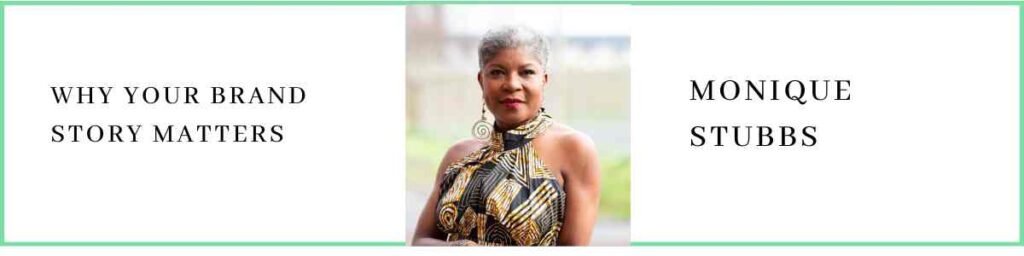
Monique Stubbs, a branding consultant, author, and global impact leader, emphasizes the importance of personal brand stories in differentiating businesses in a crowded market. She discusses how authentic storytelling can build emotional connections, trust, and loyalty among clients. Monique details her journey, including her book ‘UNCLOGGED,’ which addresses overcoming mindset blocks to achieve business success. The conversation also touches on the effective use of social media and consistency in elevating one’s brand. Monique shares insights on maintaining a balance between personal and professional lives on social media, ensuring clarity and consistency in brand messaging.
3 Takeaways
The Essence of a Brand Story
Monique emphasizes that every brand’s story is its soul—an authentic narrative that differentiates it in a crowded marketplace. She believes that a brand’s unique history not only sets it apart but also fosters an emotional connection with clients, building trust and loyalty. This, she asserts, is a vital ingredient in converting first-time customers into recurring ones.
Living a Rich Lifestyle Beyond Monetary Gain:
In a captivating segment, Monique discusses her personal philosophy on wealth, emphasizing that a rich lifestyle extends beyond financial success. It’s about cultivating meaningful relationships and nurturing a mindset of service, humility, integrity, and purpose. Her personal journey—from challenging financial times as a single parent to a thriving global leader—provides a poignant backdrop to her teachings.
The Importance of Consistency and Clarity:
For those diving into social media as a platform for their brand story, Monique’s advice is clear: consistency and clarity are key. Whether it’s crafting engaging content for social media or creating distinctive imagery, she stresses the need for strategic planning. By maintaining a consistent presence and clear messaging, brands can effectively communicate their stories, standing out in the competitive digital landscape.
ShowNotes
Click on the timestamps to go directly to that point in the episode
[04:21] The Importance of Your Brand Story
[09:44] Creating a Rich Lifestyle Through Mindset and Relationships
[14:27] UNCLOGGED: Overcoming Mindset Cloggers
[18:19] The Power of Visual Storytelling
[22:35] Consistency and Clarity in Social Media Branding
Get In Touch:
For those intrigued by Monique’s insights, she is accessible through her website, moniquestubbs.com, and on LinkedIn and Instagram, where she continues to share her journey.
For those interested in sharing their own stories on “Chatting with the Experts,” reach out to Paula Okonneh through her website or connect via LinkedIn.
Paula: [00:00:00] Hello everyone, and welcome to another episode of Chatting with the Experts with me, your host, Paula Okonneh, where I bring to you, I introduce, I showcase women from Africa, from the Caribbean, and in the diaspora, and what we do is inspire, motivate, and educate women globally. These women are professionals. They are successful entrepreneurs, and I’m always so happy when they say yes to being a guest on my show. Our topic today is Your Brand Story is a Terrible Thing to Waste, and the person who will be telling us more about that is Monique Stubbs. Well, let me tell you a bit about her. He says, remembering your brand story is the soul of your business. It is important that not only [00:01:00] you share it, but you also respect. You also respect what it stands for. I can’t, I can’t speak today what it stands for in the manner in which you conduct your business. Monique believes that you should operate your brand in a spirit of service, humility, integrity, and purpose.
So you’ll find out from her today, why your brand story is a terrible thing to waste. I’ll tell you also that Monique defines herself as a global impact leader. She believes that leading others is not just about power and prestige. It’s about a spirit of humility that allows her to be the vessel that makes true impact globally. She’s a native of Nassau, in The Bahamas and is a resident of Charlotte, North Carolina. Monique is a speaker. She’s an [00:02:00] author and a branding consultant. Her fifth published work called UNCLOGGED-Targeting the Top 10 Mindset Cloggers to Business Success has already won the internationally respected GOLD Award of Excellence in the Collateral-Self Promotions category of the Interactive and Visual Arts Communicator Awards. And it has also enjoyed reaching audiences internationally. Let me let this impressive woman join us now. So welcome to the show, Monique. There’s so much more I could say about you, but wow, welcome.
Monique: Well, thank you. I’m happy to be here.
Paula: Ooh, you are so impressive. Your bio is so impressive. There was so much more I could read. I was like, wow, where [00:03:00] do I start? Where do I end? So is there anything I left out about you that you want to add, please?
Monique: Well, I always tell people the most important thing about me is who I am truly as an individual. And so as an individual, you should know that I am a mother of four children and I’m a gamma. A proud gamma of three grands. And they are really my reason for all that I do. They are my why. And so I always have to start everything off with them first.
Paula: Off camera, we talked about the impactfulness, if there’s a word like that, of grandparents and grandparenting. And I was like, I give the story of how my mom used to tell us when growing up that, hmm, she had six of us. And that when we have our children, you guys will take care. I’ll just visit. And then the grandchildren started coming and oh [00:04:00] my gosh.
Monique: Whole thing changed. Whole thing changed. Mm-hmm. A whole different thing. A whole different ball game. Oh boy. Yeah. We eat them up.
Paula: Mm mm mm I saw that as we spoke about you’ve been the gamma of three. Your eyes lit up, your whole persona changed. Wow.
Monique: Yeah.
Paula: So, you are gonna tell us about why our brand story is a terrible thing to waste. Why do you say that?
Monique: You know, because I believe that sometimes as business owners or even professionals, we get so caught up in what we sell and what we promote, that we don’t really think about the why behind it. And how we miss this real important piece is that we have to understand that in order to [00:05:00] differentiate yourself in the marketplace, when you’re promoting a brand or a product, there is one unique identifying factor to your business that is different from anyone else who does exactly what you do. And that unique identifying factor is your personal story, your story behind your brand, and so I think people miss that. And it’s just very important to setting yourself apart from the rest of the marketplace.
Paula: In other words, that unique story, as you said, is your personal story. It makes you stand out. You are authentic. You are different. You are you. No one can be you.
Monique: No one can. You got that unique stamp, just like a fingerprint. No two fingerprints are exactly the same, just like a signature. No two signatures are exactly the same. And so your brand story is unique to you. It’s [00:06:00] your journey that led you to what you choose to do as a business or as a profession.
Paula: Yeah, so you know, it’s a very crowded space out there. So many people are doing similar things. So can you give us any tips like, okay, how do we, because we are in business, right? And for most people, you’re in business not as a hobbyist. You’re in a business so you can serve. You can serve your clientele, you can serve your community, but you also have bills to pay. So how do we stand out, you know, with our personal brand story when it’s a business, you know? And we gotta brand ourselves in a bi in a way that people will know this is not a hobby, this is a business.
Monique: Yeah. And so the brand story is simply what will enhance what you do as a business. And so the idea behind putting your [00:07:00] story out there in the marketplace as a part of your branding is the significant part of your branding is because your goal, the ultimate goal is to get clients.
Paula: Mm-hmm.
Monique: So how do we do that? Right? What is it that you want? Do you want a client that is a one-off? Or do you want a client that keeps coming back to you over and over and over again? And so the power of the brand story is because when we’re talking about attracting our ideal client, you will be attracting people who come to you for more than just the fact that you offer something. They have selected you out of all the other people that do the same thing, because they can connect. There is a connection between who you are and what your story is and themselves. And so now this helps you to have loyal customers.
Paula: Mm-hmm. [00:08:00]
Monique: Because there’s a deeper reason that they are connecting with you, and that’s what you have to understand. What you’ve created by putting your brand story out there is an emotional connection, which causes trust to be established. And then now there’s a memorable experience for the people that are engaging with your product or service. So it’s actually a contributing factor to you making money.
Paula: Uh-huh, yes. Because they, you know, we’ve heard this in business that people do business with, people who they like and they trust.
Monique: Absolutely. Yeah.
Paula: Yes, yes.
Monique: But how would they know that if you don’t tell them what the real deal is behind your brand. Then you’re just another person selling paper products.
Paula: That’s true. You’re just another person. So it’s like there are 10 of you and like, uh, all right. Today, I do to door one. Tomorrow, door two. But [00:09:00] no, if you want them to come to you, you’ve got to make it personal. Let them know who you are.
Monique: That’s it. That’s it.
Paula: Okay. We know that customers aren’t really, you know, they’re not just buying the product. They’re buying you. They’re buying your service. They’re buying everything that represents you. So tell us still a bit more about that, because, you know, we said, I know earlier on, I spoke with you about a quote that you had and I wrote it down and I’m gonna read it. It says, A rich lifestyle has nothing to do with money, but everything to do with mindset and with meaningful relationships.
Monique: Mm-hmm. Yeah. I firmly believe that in creating the value behind your brand, you have to also understand that who you are as an individual and as a brand, you have to have some substance and some [00:10:00] value behind what you do. Right? I believe that we have to detach our concept of what wealth and being rich is.
Paula: Mm-hmm.
Monique: I personally, from my own life’s journey, learned how to detach my self-worth and value from my bank account. That was because coming out of a difficult time being a single parent, where sometimes my bank account was zero, and sometimes it was negative, right? Because of the circumstances I happened to be thrown into. And so I had to learn very early on that, you know, happiness and a rich lifestyle, really when you peel back all the layers , the happiness is going to come from, first of all, from within, right? Because we have to learn that part first. And then it comes from establishing meaningful relationships with others.
It means that, we foster and [00:11:00] nourish our relationships, whether that’s with our family members, whether that’s with community members, other professionals. You know, it’s so important that we learn how to become rich in those meaningful relationships. And you notice, I use the word meaningful because it’s not just relationships in general. There are some relationships that you don’t need to foster, right? Because it’s not going to serve you well in a positive way for whatever the reason may be. And, it’s also developing a mindset, right? A mindset that is healthy. A mindset that is centered around the four things that I feel are extremely important when we’re talking about your brand and, and having a valuable brand.
And that is that your brand operates in a spirit of service. It operates in a spirit of [00:12:00] humility, a spirit of integrity and a spirit of purpose. So when we’re focused on those four things, we’re gonna serve our clients, our customers, with the utmost care and respect, right? We’re gonna make sure that when anybody has any type of transaction with us, that they walk away feeling like they just received VIP treatment, right? When we talk about humility, you know, unfortunately, in this world we live in today, people are mistaken about that word, humility. They look at humility as, you know, oh, that’s just such a weak word. You’re weak. You know, they always talk about being humble. Being humble. That’s a weak term, and it’s not.
See, the person who knows how to be humble understands that they don’t know it all. They don’t know it all. You may have employees that you work with that are trying to [00:13:00] express to you what they’re seeing. You know, and you could be in this position of power and feel like, you know, there’s nothing that those people can tell you, but you’re wrong, right? You nobody knows everything. This is why you should be seeking from your clients. You should be seeking advice and getting information from them. Do surveys to find out how you can be better.
Paula: Mm-hmm.
Monique: And so it’s very, very important that you operate in a spirit of humility, integrity. You know, that should go without saying that you definitely want to operate in a way in your business where people trust you. Because when you start being sneaky and you’re doing things that are underhanded, you know, that is not gonna serve your business well. And then you wanna show that you have purpose. That you’re very clear about what you’re doing with regards to your business, the direction you are moving, and what you want to [00:14:00] accomplish for your clients.
Paula: Absolutely love that. I remember, I think it was Maya Angelou who said, people remember more about how you make them feel than what you, I’m not quoting her directly, but than what you do for them. It’s not what you do for them is the way they feel. That’s what they relate to. Yeah.
Monique: Yeah,
Paula: Yeah. Yeah. So, you know something, Monique, that book that you wrote that really stood out for me. The title stood out in particular, and I’m gonna read it. It says, UNCLOGGED- Targeting the Top 10 Mindset Cloggers to Business Success. And you said that won you international. I mean, you won an international award with that. Tell me more about that, especially that title UNCLOGGED.
Monique: Absolutely. So, the best part about the book is that the cover of the book
Paula: mm-hmm.
Monique: Has a plunger on it.
Paula: Oh boy.
Monique: And yeah, it has a plunger. [00:15:00] And so when I thought of the word UNCLOGGED, as the title of my book.
Paula: Mm-hmm.
Monique: That’s what came to my mind immediately was a plunger.
Paula: Mm-hmm.
Monique: It was, you know, we’re talking about unclogging a toilet.
Paula: Mm-hmm.
Monique: And when we talk about that, it requires exertion of energy, you know?
Paula: Mm-hmm.
Monique: And nobody likes to unclog a toilet.
Paula: Uh-uh.
Monique: I mean, like really, that is not our favorite thing to do. And yet it’s something that happens, right? And so it’s the same thing I feel like in life. And when we’re talking about brand stories, the story behind your brand.
Paula: Mm-hmm.
Monique: There are many, many times throughout your life where you may have felt clogged up and being clogged up. Kind of holds you hostage and makes you stagnant sometimes, right? Mm-hmm. And so with that in mind, I thought it would just be appropriate to help people to understand that you can get unclogged and here’s the thing. You’re not just clogged up once and then once you get unclogged, that’s it for life. [00:16:00] No, you know, it’s gonna happen over and over and over again, and you have to learn how to pivot, how to adjust, and come up with some method where when you do get clogged up, it doesn’t take you as long to get unclogged, right? Because you’ve, you’ve practiced this numerous times, and now you’ve gotten it to the point where when something gets you stuck, you’re like, wait, I have the tools. I know what to do, right? In that book, that book explained to me, the tools that I can use to get myself out of that mindset of being stuck and to continue to move forward in what I need to do to be successful. So that’s really what the premise of the book is. I did. I really love the fact that I was able to bring in 11 individuals, as contributors to the book where they’re telling their stories about the different areas that they were clogged up in.
Paula: Mm-hmm.
Monique: I happened to have had the opportunity to [00:17:00] coach the majority of them, through some of these periods of time. And so they tell their stories, in the book. And so that makes it really exciting ’cause you’re hearing from different people’s perspectives, not just mine.
Paula: I have to get this book. Most of my guests have written such interesting books and I try to make it a habit of buying the books of my guests so that I can, this is now showing up. I can say to people when they come to my house, you know, one of my guests wrote that.
Monique: Yeah. You know, there you go.
Paula: Your book, it’s, I assume it’s on Amazon, right?
Monique: It is on Amazon, UNCLOGGED. Yes. And you’ll know it’s the right Unclogged because you’ll see the toilet. I mean the plunger. You’ll see the plunger on the cover.
Paula: That’s a good example of why saying your brand story is a terrible thing to waste because you made it so, you made it visual as you said. I will recognize the book because of the plunger. That’s [00:18:00] visual. I’m not gonna forget that.
Monique: Yes, absolutely. Absolutely. It’s, again, all things branding, right? If you’re gonna stand out, you know, why have a boring cover. Cover has to make sense. And it has to be something people will remember. They will remember the plunger.
Paula: They will. They will. But talking about stories, I know you did a fly. You take such phenomenal pictures. I remember Facebook, we talked about how unfortunately your Facebook account was taken down, but I would wake up some mornings and I would see, you know, a post that you’ve written. And this is probably like [8:00] AM or whatever time. I mean, I’m looking at Facebook and you have like 200, 300 comments. And I had looked and I understood why. Because it would be your visuals, your graphics, your video would be so captivating that you couldn’t stop but say, wow, look at this you know. And off camera I [00:19:00] saw one or two that you’ve done. I wanna share them if I can.
Monique: Okay.
Paula: Hold on. This is one. Meet your storytellers. Tell me a bit about this. How did you come up with this?
Monique: Yeah. So, you know, just staging photography shoots where it really reflects who you are. And then also, you know, it’s selecting the right photo to go with what it is you’re trying to express to people.
Paula: Mm-hmm.
Monique: So this particular one is actually this image and the words that go with it really are part of my branding.
Paula: Mm-hmm.
Monique: So when someone decides that they would like to hire me to be the person to tell their story, I have a deck that I’ve done. That, I would then send to them, which takes them through all the different stages of what they’re about to experience with me as their storyteller.
Paula: Mm-hmm.
Monique: And so, of [00:20:00] course wanna start open it up always with me and my story and why I am even doing this, because I can’t tell you all to express your story if I’m not expressing mine. And so, this is the image I selected because I felt like it reflects who I am, which I am an island girl. So I have on a print that’s indicative of my heritage. You can see the greenery behind me.
Paula: Mm-hmm.
Monique: Which is on brand with who I am as an island girl. But this piece also tells individuals why storytelling has become a part of my life. And that’s because as a little girl who suffered from allergies. Instead of being out playing with the kids, I was always inside with the adults. And so I would sit at the feet of the elders, and I would just listen to their stories. They’re telling all kind of stories from when they were younger to all the times they got in trouble for things they were doing, to some of the [00:21:00] happy moments and the trips that they took with their family. You know, all those kind of things. And so , it was really, really cool to see how, you know, stories could make people crack up laughing, but then stories could also bring tears to their eyes.
Paula: Yeah.
Monique: And so I saw the power of storytelling very early on, and that’s what I tried to communicate here with this photo.
Paula: I have to show another one too. Hold on. This one really had me crack it up. Tell me about this one. Look at you crack it up there.
Monique: Yes, because again, it’s helping individuals to see that I am a real person. So yes, I’m a professional. Yes, I, you know, run my own business and all of that, but I know how to have a good time too, and it’s a part of just showing who I am authentically, which is very, very important. We’re talking about branding.
Paula: I love that. I couldn’t help but share this, you know, [00:22:00] talking about, you know, stories and authenticity that sets us apart. Who we are, that’s who people buy. They buy from us because they like and trust us or feel some connection with us. You know, some ways.
Monique: Yes.
Paula: So, yes. Thank you for allowing me to share these pictures because as I said. I’d be on, I wasn’t much of a Facebook person. I am now. And your Facebook account, oh my gosh. It rocked. And talking about Facebook, which of course we know is one of the social media platforms. With our brand story, does that involve clarity and also having consistency to elevate our brands? Because storytelling, many times I think about it as just spontaneous, but…
Monique: Mm-hmm.
Paula: As a business person, I know there’s more to it than just this. It’s not even spontaneous. I mean, there must be some consistency or regularity because people need to know what’s going on with your business [00:23:00] and what’s going on with you. So can you delve into a bit of that?
Monique: Yeah. So when I speak of brand stories from a storytelling perspective, I’m usually speaking of, what I do, which is the actual video production of your brand story, right? And that video production of your brand story is something that will, you know, be utilized along with proposals. So you’re sending out a proposal to a prospective client and you want to attach a video. Of you telling your story behind your brand and why your brand is, is so special to you. And when you do that, it’s just a second piece of marketing that, you know, can be very powerful, as to why someone would want to select your service as opposed to others in the marketplace because that story becomes so compelling and it’s so unique. So you could use that brand [00:24:00] story, that piece from a production standpoint for proposals, to put on your social media. It can land on your website. It could be the first thing people see when they come to your website, or you could have a YouTube channel where it lays along with other content that you begin to put out.
But here’s the key. The key to effective strategy for social media is consistency and clarity. Consistency and clarity. As I like to tell my clients, either you’re gonna do social media or you’re not. Either you’re gonna do it or you’re not. So if you’re not gonna be able to be consistent with it, or you can’t enlist the help of a company that can help you to be consistent, then don’t do it at all. Because it’s better to do it and be consistent and do it properly than to do it haphazardly, and it’s a waste of time. [00:25:00] Honestly, it’s a waste of time because we already know that with the algorithms that are set for each of these platforms, if you’re not consistent, nobody’s gonna see it anyway.
Paula: Mm-hmm.
Monique: So, it’s a waste of your time. So just make sure that if you plan on getting involved with social media, you have a plan of action, a strategy for how you’re gonna do it. Your consistency could be once a week, you know, maybe people will know that you send out a motivational Monday post once a week. And they can count on that every Monday you’re gonna have this post go out and it’s something that motivates individuals or something that motivates, and of course, best of all, connects them to your brand.
Paula: Mm-hmm.
Monique: So, it’s definitely necessary that you have consistency. The other thing is, you know, I watch some people’s social media for their business, but they get confused because they put personal stuff mixed with all their [00:26:00] business stuff, and so it becomes junky. And so then people don’t understand, there’s no clarity in what is your brand and what do you do? Because they see all kind of hodgepodge of things happening and it’s confusing to them. So just make sure, you know, you can have a personal social media page, and then you have a business social media page.
On my business social media, once in a while, I may throw something on there with regards to my family, but when I do, it definitely somehow ties into still my brand, right? So, there are creative ways that you can do that with your business brand. But if you’re gonna have a lot of the kids’ birthdays and this and that and all that going on. Create your own personal social media page that your friends and family follow. But [00:27:00] then on your business page, you’re gonna limit a lot of that stuff because your focus needs to be on your business, right? Now, you may post something about your kids and say, this is my why, you know, for why I do my business.
And I do that every once in a while. You know, just say to people, you know, this is my why is looking in the eyes of my children. They inspire me to keep going with my business. Okay? And that’s a way you can tie a picture of your family in, but you’re doing it in a professional manner. So it is definitely important that if you wanna elevate your brand, that you’re doing so with a sense of clarity. So you’re not confusing the audience and at the same time that you remain consistent. It’s very important.
Paula: That’s good to know because I find Facebook in particular hard to kind of, you know, distinguish between the personal and the business because [00:28:00] most people on Facebook are interacting with other people who may or may not be business owners. With the business page, I find there’s a lot less interaction with the people that you want coming to the business page because it comes back almost to like, people do business with people who they like and they trust and they can see some element of your personal life in. And the business page to me, on Facebook just seems so kind of cold and remote from what’s happening in real life and people’s lives. So I struggle with that. I’m gonna be frank with you.
Monique: Well, and I think that’s why your imagery is important, right? So you don’t have to make the business page look stoic, right? It could still be fun and energetic as you’re reflecting what you do. It’s just like when you have that picture of me cracking up laughing, right? That’s something that I use [00:29:00] for my business. It’s a business photo that I use, but if I use it, it’s usually connected to, “you won’t even believe the funny thing that happened today in my business”.
Okay. Or “this thing had me cracking up today”, or “one of my clients made me laugh”, you know, and then you tell a story.
Paula: Mm-hmm.
Monique: Right? So there’s creative ways to make your business page fun at reflecting that side of your personality. But still, it keeps a professional look.
Paula: Wow. Yeah. That’s really good to have to talk more to you about that. Me and Facebook. Sure. Not the best of friends, but I… so talking about Facebook, if someone, I mean, of course we’re gonna open this up to the audience who have joined us, who can ask even more questions than I have thought of. Well, if someone is looking at the recording on YouTube or listening to the audio [00:30:00] and want to get in touch with you, where can they find you online?
Monique: So you go to my website, which is moniquestubbs.com. So Monique, S-T-U-B-B-S.com. Or they can visit me on LinkedIn. And LinkedIn, you can look me up as Monique Stubbs Hall. That’s, Monique, S-T-U-B-B-S and then it’s Hall. So even if you type in Monique Stubbs, that’s good enough. It will pull up the profile.
Paula: Thank you so much and for me, for those of you who are listening or who are in the audience right now, if you’d like to be a guest like Monique is, reach out to me on my website, which is chattingwiththeexperts.com. I’m a LinkedIn person. I love LinkedIn, so you can find me on LinkedIn as Paula Okonneh. I’m also on Instagram [00:31:00] and my handle there is at chat_experts_podcast. I always have to think about that. And then, me merging more and more on the Facebook platform. There you can find me as Paula Okonneh on my business page, which I was just talking about, which is a challenge to me, which is Chatting with the Experts business page.
Thank you Monique, for sharing.
Monique: Oh, you’re welcome. Thank you. It’s been a pleasure.
Paula: Absolutely. And now we’ll open up to the audience who have joined us.
Monique: Okay.