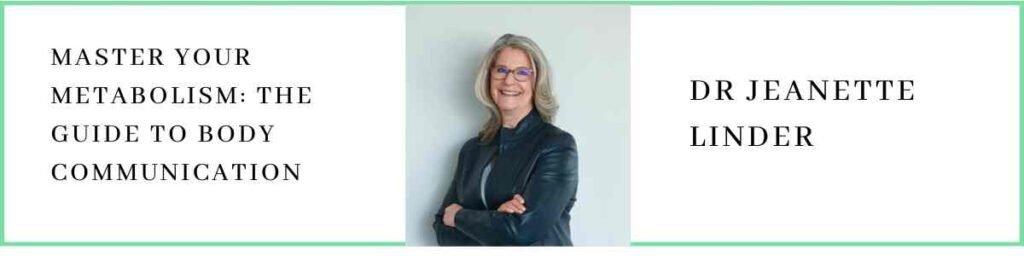
Dr. Jeanette Linder, a functional and integrative physician, discusses the importance of the Metabolic Communication Method and how learning to listen and talk to our bodies can significantly improve our health and well-being. She shares her personal journey through burnout, self-discovery, and recovery. Dr. Linder also explains the five modifiable lifestyle factors: movement, nutrition, sleep and rest, stress management, and connection, detailing how each affects our overall health. The conversation emphasizes the integration of functional and conventional medicine and offers practical tips, such as using continuous glucose monitors and journaling, to start listening to your body. The episode highlights Dr. Linder’s collaborative workshop, Rise and Be Well, aimed at empowering ambitious women to thrive without compromising their health.
3 Key Takeaways
Rediscovering Wellness with Integrative Medicine
Dr. Linder’s practice combines conventional and functional medicine, aiming to rehabilitate people’s approach to health by integrating lifestyle changes alongside treatments. She discusses her retirement from conventional practices and her return to the field with a passion for helping people discover balance between their personal lives and ambitious careers. Her functional practice is set up virtually, allowing for extended consultations that make lasting impacts.
Lifestyle Changes: The Five Key Factors:
Highlighting five modifiable lifestyle factors—movement, nutrition, sleep and rest, stress management, and connection—Dr. Linder offers a nuanced approach to metabolic health. These elements, she notes, critically influence metabolism and overall well-being. For instance, poor sleep can disrupt metabolism, leading to cravings and increased pain, while stress levels can manifest physically, causing rashes and raising blood pressure.
Practical Steps for Metabolic Awareness:
To start this journey, Dr. Linder suggests tools such as continuous glucose monitors for personalized insights into how daily habits impact one’s metabolism. Journaling, tracking energy levels, mood, and dietary responses, can also be illuminating. Depending on personal preferences, individuals can engage deeply with detailed data or simply adjust habits incrementally to build a sustainable lifestyle.
ShowNotes
Click on the timestamps to go directly to that point in the episode
[00:43] Understanding the Metabolic Communication Method
[02:33] Dr. Linder’s Personal Journey
[03:42] The Importance of Listening to Your Body
[07:50] Integrative Medicine and Functional Practices
[12:22] Five Key Lifestyle Factors
[26:25] Practical Tips for Better Health
[30:53] How to Connect with Dr. Linder
Get In Touch:
For those eager to explore these concepts further, Dr. Linder’s resources are readily available online. Her work alongside Michelle Lance in the “Rise and Be Well” workshops blends career and wellness strategies, aiming to equip individuals with tools for holistic success in both life and work.
For those interested in sharing their own stories on “Chatting with the Experts,” reach out to Paula Okonneh through her website or connect via LinkedIn.
Paula: [00:00:00] Hello everyone, and welcome to another episode of Chatting with the Experts TV show and podcast where I, the host, Paula Okonneh speak with women. Women from Africa, the Caribbean, and in the diaspora. But sometimes I make exceptions. I’ve had men on the show and I’ve also had women who have visited Africa or the Caribbean and they are excellent guests. Well, today I am gonna be speaking with Dr. Jeanette Linder, but before she comes on, let me tell you what we are gonna be talking about. Our topic today is the Metabolic communication Method- Learning to Listen and Talk to your Body. Isn’t that exciting? And Dr. Linder says, “most of us have stopped listening to our bodies when we [00:01:00] were young, and now we don’t know how.”
She says, “learning to listen subjectively and objectively takes training and patience, but it is possible then you can help your body heal and improve your health span. I can’t wait for that. So I’ll tell you a bit about her before she joins us. She is a functional and integrative physician dedicated to patient-centered personalized care. Her leadership experience spans large hospital systems and private practices managing budgets up to $40 million. How many of you have seen that? I can’t imagine what $40 million looks like, but she’ll tell us about that. And she builds high integrity teams focused on safety, inclusivity, and strong work ethics.
She has an integrative approach and emphasizes five key lifestyle factors, [00:02:00] which are movement, nutrition, sleep, and rest, stress management and connection. Wow. I got so much to say about her, but why don’t I invite her to join us? Welcome to the show, Dr. Linder.
Jeanette: Thank you so much.
Paula: Did I say everything about you? Your bio was so impressive, like oh my goodness, and I was like, oh, I think it’s time I stopped reading and have you appear. So thank you for joining us.
Jeanette: Happy to be here.
Paula: So, you say that we don’t listen to our bodies once we get a bit older than what, 15 or 10, we stop listening to our bodies and we stop talking back to our bodies. Tell us how we can do that. At my age, it may be a bit difficult, but I’m willing to learn.
Jeanette: You know, it’s so hard because when we get engrossed in something, we forget to eat.
Paula: Mm-hmm.
Jeanette: Or we forget to go to the bathroom, or we’re having fun [00:03:00] playing in the yard. That’s not such a bad way of not listening to your body, but then we start to work, and work and work and the phone rings and it’s home. You don’t answer it. The phone rings and it’s work. You do answer it. Your bladder rings and you completely ignore it until you have not gone to the bathroom for hours and hours and hours. And I used to think that my compensation package should be based upon bladder capacity, ’cause I would’ve had the most money in the building. But that’s not how it works. Instead, all I did was just make myself miserable. And ignore those messages. I didn’t eat when I was hungry. I didn’t sleep when I was tired. And you know, after you stay up for a while, well you’re awake again. And then when you wanna go to sleep, you can’t. So how do you start to listen again?
It takes a lot of effort. For some people they can do it just through subjective things, writing journals or paying attention or focusing on one little thing at a time. I was much more stubborn than that. I needed to have [00:04:00] objective measures of my sleep, of my activity, of my blood sugar, of my metabolism, and it took time and it took grace and forgiveness because we’ve been shamed for so long for not working hard enough and then not taking care of ourselves and nobody told you how to do both. So you know, it is not an easy process. And it took me a long time. I had to burn out and be completely exhausted because I was doing the work thing and the home thing. And in a one year period, I lost 13 friends and family in my personal life, not patients.
I was, you know, the go-to doc who answered the questions and helped with some of the end of life things. And I was, you know, still working time and a half and all of those things. And, I just burned out to a crisp and I realized I need to take the advice I’ve given to [00:05:00] my patients, which is when you’re in crisis, you’re the only person who can be the sister or the mother or the wife or the daughter. Anybody else can take out the trash or do the dishes or run to the store, but you’re the only person who can do those things. And I realized I need to do the same thing and my friends and family group. So I retired and I also realized, thank you. I was exhausted. My health had gotten worse. So I work with a nutritionist and I got worse because just ’cause they’re a nutritionist doesn’t mean that they listen and they get you. And she shamed me for not knowing these things ’cause I’m a doctor and I should know.
Paula: Mm-hmm.
Jeanette: So, I started to study really hard. I was really demoralized. I’m like, if I can’t figure this out, how are other people gonna figure this out? And I spent hundreds and hundreds of hours studying [00:06:00] functional medicine. And reviewing all sorts of things and starting to listen to my body with wearables and other things like that. And then in six months, I lowered my cholesterol, 70 points without any medication. I slept better. I was happier, I was healthier. And my daughter said, retirement looks good on you. And then I miss serving humanity, so I went back and I decided I needed to help other people do this because it was so hard for me. How are they gonna figure it out? How are they gonna have the time to figure it out?
Paula: There you are. To tell us how, because this is, I mean, everything you spoke about, and I’m not a physician, but everything you spoke about, I could relate to, you know, staying up late at night to finish some work for some clients. And I’m thinking blue light is not good and so I’m struggling to stay awake and then of course being exposed to so much blue light ’cause I’m working on a computer, then I’m awake. My body’s tired, and so I finish what I’m [00:07:00] doing and then go to bed, let’s say at [4:00] AM get up at seven, three hours sleep and I can’t function for the rest of the day.
And I think to myself, if I had just slept through the night and woken up, I’m sure I could have gotten through that project instead of in five hours. I could have done it in two and a half, if not less so, yes.
Jeanette: Yes, exactly. I get things done so quickly now I feel kind of guilty ’cause it used to take me so long before when I was distracted and exhausted and trying to pound the caffeine and the sugar to stay awake.
Paula: Mm-hmm.
Jeanette: And now I just get it done because I can focus. It’s such a gift. I’m very lucky that I had that break. A lot of people don’t have that. So how are they gonna learn to do it without that 18 months off?
Paula: Yes, yes, yes. But I love the fact that you said you went back and you went back to serve humanity. You missed humanity, and you went back to serve humanity.
Jeanette: [00:08:00] Yes.
Paula: Talk a bit about that. I know you’re doing integrative medicine, so…
Jeanette: Yeah. So I went back in a couple of different ways.
Paula: Mm-hmm.
Jeanette: I have been a radiation oncologist my whole career. I love that. I consider that crisis intervention. I love helping my patients. I love doing that, but it’s not something I wanna do 50, 60 hours a week anymore, and certainly not a hundred like I did at my worst. And so I do that part-time in another state when they need me. And I started my functional practice which is virtual, so I can take care of people in multiple states and I can have nice time with them. It’s not a 15 minute visit. I’ve never had such a thing in this practice because helping people change the way they live takes dedication and it’s very personalized. What I would say to you would be very different than what I would say to myself or someone else.
And then I also found a way with this wonderful partner who I met, who’s a [00:09:00] career strategist to help people anywhere in the world, women who are ambitious and climbing the corporate or entrepreneurial ladder of leadership.
Paula: Mm-hmm.
Jeanette: Without destroying their health and relationships. So, we try to ignite leadership from within and we call that Arise and Be Well workshops. And so that way I don’t need to have a medical license in every state and country, but I can help people learn to take care of themselves. So I kind of unretired three times.
Paula: So cool. Unretired. Three times. Okay.
Jeanette: Yeah. And I still have a life.
Paula: And you’re still smiling?
Jeanette: Yeah.
Paula: Wow. So, for those listening of viewing this, ’cause this is a global podcast, what exactly do you mean? Well, you mentioned something a few minutes ago about being on virtual and Rise and what was the other be…
Jeanette: Well.
Paula: Rise and be [00:10:00] well. Tell us a little bit about that, because you said it’s virtual, so anyone, anywhere can be your client, your patient, and learn how to rise and be well.
Jeanette: Yes, so the Rise part is taught by my partner Michelle Lance, who is a career strategist who worked her way up from bartender to national executive at a Fortune 10 company, so she knows how to get it done. She’s amazing. She teaches the Rise part, which are the career strategies, and I teach the Be Well. And of course you need them both because in her career coaching she saw that all these people were suffering with the same sorts of lifestyle issues that we all do. And you need to have them both to succeed. You can’t give your best presentation to the board and seal a huge deal if you can’t think straight and focus and you’re yawning, right. Or you’re, you know, jittery from too much [00:11:00] caffeine. So, we do workshops that are virtual, live or recorded. We have an online school and we also do corporate trainings, so it’s pretty exciting.
Paula: That’s really exciting. Oh my gosh. I love, you know, , I’ve always been in the online space before it became the norm. , And I was saying to someone today that unfortunately, I know Covid was a tough time for so many people, but at the same time, it made remote work so much more accessible to others worldwide. So that now you know, you can impact lives positively wherever that person may be as long as they have some form of internet connection and then they have, you know, like Zoom or Teams or some other way that they can connect with you. And it has made the world smaller.
Jeanette: So must it [00:12:00] has, it’s amazing. Yes. And then I’m lucky enough to be in these wonderful women’s entrepreneurial groups where I met you. And they’re global as well. So I meet people who are mentors from other countries and friends and it’s really lovely.
Paula: Yes, yes. I’m so thankful for this. So let’s talk about the difference now between functional medicine and conventional medicine. How do they fit together actually?
Jeanette: That’s such a good question, and it’s a controversial one. It’s always been controversial. It’s especially controversial with some of the things going on in the news because the combination is misunderstood in many times, people think of extreme supplements and herbs and you know, things that are very far from the mainstream, but that’s not the kind of medicine that I practice. So conventional medicine, we’re all familiar with that. Basically you [00:13:00] learn a diagnosis and then there’s a series of pills or procedures and rarely lifestyle that are recommended. We know from the World Health Organization that 71% of chronic illnesses are due to lifestyle. Now, the other 29% need conventional medicine with pills and procedures and lifestyle.
Everybody needs lifestyle and so I do love the crisis intervention of the conventional medicine model, and I love the escorting people to wellness side of the functional and integrative medicine side, and they can go together. And if you just do one or the other, you’re gonna miss out on what’s needed. You know, conventional medicine is much better for acute things like infections and major injuries and things that require surgery and mechanical things that [00:14:00] are broken, and cancer and things like that. It’s not so good at things like diabetes and heart disease and other things that the medicines may cover up for a while, but continue to get worse over the years where you can at least improve partially and sometimes completely with significant changes in lifestyles and selective herbs and supplements. I don’t use them a lot. I like lifestyle first, which of course, it is more challenging. It’s much easier to take a pill and have something done to you than to change your life.
Paula: So true. So true. And you know, being educated on how to make lifestyle changes creates the lifestyle change because lots of people don’t know, you know, they run out as you said, and probably get supplements, and it’s taken a while for us to know that not all supplements are good for you. And you gotta still [00:15:00] sometimes know your body. You know, as you talked about earlier on, listening and talking to your body. For example, I was having some knee pain and someone said, you know, get some turmeric and boil it with some ginger and make a tea, homemade tea and drink it. I did that and I did it because, oh, oh my gosh, this feels so good.
And then I noticed my head start to spin and I’m like, why am I feeling so dizzy? And it was after doing some research and talking to my sister who’s a physician, she’s like, do you know ginger and turmeric can lower your blood pressure? And I was like, never thought about that. I have low blood pressure and so I shouldn’t take anything. But those were natural things, you know. I impressed
Jeanette: Your sister knew that. Most docs would not know that, so kudos to her. But yes, you know, there are times when they, when you can use those things and sprinkle them in or sometimes higher doses, but everything has a consequence. Good, [00:16:00] bad, neutral, whatever. But our biggest anti-inflammatory is movement exercise. It’s also the only thing proven to help prevent Alzheimer’s. You know, these pills might slow it down a wee bit, but they don’t cure it. They don’t prevent it, but exercise does. And so how do you get people to make changes? Well, they need to be motivated and it needs to be personalized. If we gave everybody the same list of things. We know that doesn’t work. How many people join the gym in January and stop three weeks later?
Paula: Mm-hmm.
Jeanette: Right. They’ll have access to these things, we have to find something that sparks joy or interest or has something that makes them want to continue the habit. So the key is habit stacking. You know, like I couldn’t remember to take my medicine. I’m like, how can I yell at my patients if I can’t remember it myself? So, right. [00:17:00] I had to put my medicine next to my toothbrush and took out my night pack and my morning pack with my toothbrush. I’d brush my teeth at night, take my night stuff, put it away, brush my teeth in the morning, take my morning stuff, put it away.
You can do the same thing for what you eat and your movement, your connection with people and yourself, your meditation. You just create these little habits, two minutes at a time, five minutes at a time, 10 minutes at a time, and before you know it, my morning routine went from two minutes to 45 minutes. I’ve built the time in there and sometimes an hour if I sneak in the New York Times puzzles, but it’s by choice. It’s not rushed. It makes me really happy and it ticks a lot of important boxes, and now it happens automatically because I’ve built it two minutes at a time.
Paula: That’s so helpful to know, [00:18:00] and I think it’s even more so… sometimes for physicians, I was married to a physician, so you know, people tend to think physicians, because you all are the many times the caretakers that. You don’t also have the same human problems that other humans have, you know? But to say that, you know, you have to build it into your lifestyle. Start with, like you said, you didn’t remember to take your pills in the morning. So you put it near to your toothbrush because you knew you were gonna brush your teeth. Right? And telling a patient that sometimes I’m sure changes the whole. Oh my gosh. I keep forgetting. Oh, I must get the pill box. And the pill box is in the kitchen and you brush your teeth in the bathroom and so you forget. You’re rushing up such a simple solution to…
Jeanette: yeah.
Paula: Make a world of difference.
Jeanette: And that might not work for another person who needs to take it at a different time of day, but we have to find what works for them. And physicians are notoriously [00:19:00] bad at taking care of themselves. I mean, the early death rate is pretty high. So, everybody has the same kind of body. They just function differently, and you have to learn the care and feeding of your own body and give other people grace when they need different things from you than you.
Paula: So true. So true. So I know you emphasize five lifestyle factors, movement, nutrition, sleep and rest, stress management, and connection. How can we modify that? What do you mean by when you say five modifiable lifestyles?
Jeanette: So that’s what I learned from the Institute for Functional Medicine.
Paula: Mm-hmm.
Jeanette: Those are the main aspects of your life that all contribute to your metabolism.
Paula: Mm-hmm.
Jeanette: So, you know, when you have a bad night’s sleep and you can’t think clearly and you’re craving [00:20:00] carbs and your guts might not be quite right. Your joints are stiff and you have more pain. That’s a direct result of your metabolism being altered because you didn’t have time to rest and digest and lower your blood sugar and make your brain happy. When you’re sleeping, it’s the only time that your brain can clean itself. That can happen with all sorts of other things. Some people have chronic illness because they’re chronically stressed and they’re clenching their teeth and their blood pressure is up or other things like that. Or they could have rashes because they are massively stressed and until they work on that. Some of that will get better when you cover it up with steroids, but you stop the steroids and they come back.
Paula: Come right back. Yep.
Jeanette: Yeah. Or it could be nutrition, you know, and stress is a really an interesting thing because it’s not just what you’re thinking and who’s around you. It’s everything in, [00:21:00] on and around your body. The carpets on the floor.
Paula: Mm-hmm.
Jeanette: The perfumes that someone may have that you’re sensitive to. Some people are super smells and they live in a world of discomfort because everything’s an assault on them, which actually is a sign that they’re metabolically out of balance because little things are very difficult to tolerate either because they’re super irritable, because they’ve had caffeine and their stress hormones are building up. They’ve had something else and they can’t clear them out. You know, sometimes you can’t make enough, sometimes you can’t get rid of them. It’s like the chocolate factory with Lucille Ball and, Lucy and Ethel on the I Love Lucy show.
Paula: Yeah.
Jeanette: If you’ve ever seen, when they’re working in the chocolate factory and the chocolate is coming by and they’re supposed to put it in the little cups and it keeps going and it speeds up and they can’t keep up. So they start eating them and they start shoving ’em in their pockets and they start throwing them on the floor, [00:22:00] and now there’s not enough chocolate going downstream. So if you imagine that Lucy and Ethel are the enzymes in your body that can’t keep up either because you have a genetic predisposition that makes them slower or because you’re missing the fuel that they need to work, like vitamins and minerals that make them work.
And so not only is the chocolate building up over here, that chocolate might be a very irritating chemical that’s super helpful in a medium amount and super irritating in a high amount. And then you’ve got this enzyme down here that’s not getting what it needs.
Paula: Mm-hmm.
Jeanette: So now this one’s too low and this one’s too high. And if all these gears work together. And they’re all out of sync, your orchestra sounds terrible and you feel terrible, so your pain is up and your immune system is down and you’re very unpleasant to be around. [00:23:00] That’s how our bodies work. So sleep, movement, connection, that’s relationships with other people and yourself and nutrition and movement, all help those gears move the way they’re supposed to move.
Paula: And enable us to function the way we’re supposed to function.
Jeanette: Yes.
Paula: Yes. I mean, nutrition makes such a difference, but the right nutrition. I’m learning more and more because, like you said, the chocolate, made me think about when I was younger, my job was to eat these fried bananas, or we call them plantains.
Jeanette: I love them.
Paula: I love them and I obviously love them too much as a kid because that was my job every Sunday and I don’t know how my parents didn’t figure out if like so much to fry and this small quantity is always coming to the table. ‘Cause as I was eating, as I was frying them, I was…
Jeanette: I can relate to that.
Paula: It wasn’t good for my skin. [00:24:00] At that time I was, you know, 12, 13, when you start getting acne and pimples.
Jeanette: Yeah, exactly.
Paula: Mm-hmm.
Jeanette: Exactly. It’s also not your fault that you like the taste of that, you know? And in Mother Nature, those sorts of things are only around for a few weeks a year. And so it’s fine if you snuff down every plantain that you see, but in modern world, we can get those all the time.
Paula: Yes.
Jeanette: And we eat them way out of proportion. You know, it used to be tons of plants, maybe some grains, some meat every so often. And now it’s tons of grains that have been broken into little byproducts and things that have been turned into a tiny little subset of what they normally are. So all the clothes have been taken off the food, so it just rushes into your bloodstream and it makes you high. You know, people used to say, I want whatever Jeanette’s on. ’cause in high school I was like so fun at the parties. [00:25:00] I was doing M and Ms and brownies, and there was no hash in my brownies. I was offered that, but I didn’t want sticks in my brownies. I just wanted the sugar, just gimme the real sugar. And they didn’t see me hours later when I would crash and feel terrible.
They only saw me when I was zipping around laughing like crazy. And that’s what it’s meant to do in your body, give you energy quickly. But we’re not supposed to have it all the time. And then when we do, we get outta balance and we literally have an addiction cycle, and then we get sad and grumpy and have cravings when we don’t get it. And then that changes our guts. The microbes that live in our guts actually put out chemicals that go straight to our brain, that make us crave carbs. Isn’t that crazy?
Paula: Yes.
Jeanette: And it also puts out inflammatory chemicals. So our joints hurt. So now we’re grumpy, we’re craving carbs. Everything is sore and we just [00:26:00] wanna feel good. So we do a little more caffeine and sugar and we feel pretty good for about an hour.
Paula: Yes.
Jeanette: And we feel terrible.
Paula: And the cycle continues.
Jeanette: Lather, rinse, repeat.
Paula: Yes, that’s it. That’s it. Dr. Linder. So, wow. I can’t believe we’ve been talking for this long.
Jeanette: Yeah.
Paula: So, if we want to really start, can you summarize it? If we really want to start learning how to listen and talk back to our bodies, where do we start? Do we start?
Jeanette: So to keep it really simple, which may sound fancy, but it’s not, you can get an over the counter continuous glucose monitor, and that will tell you how your body responds to different foods, at different times of the day based upon how active you are, whether you’re upset or not, the order in which you ate them, it’s a game [00:27:00] changer. And there are two companies that sell ’em over the counter for very reasonable prices. One is hellolingo.com. H-E-L-L-O-L-I-N-G-O dot com and I am not an affiliate. I’m not getting money for this. They have a really nice interface and then stello.com, ST-E-L-L-O dot com, and they both are accessible for about $89-$99 a month where you can start to do experiments. Some people only need to wear them for a month. I’ve, I wear them off and on, and for a couple of years I’ve found that I can tolerate things now that I couldn’t tolerate before.
I could not eat an apple and peanut butter before. Now I can. Because my metabolism is healing and I don’t spike higher, and I’m much more active and happy now. So that’s a good way to get something. [00:28:00] Journaling is really important and you can take it to a lot of detail. You can write down your symptoms in great detail, or you can keep it very simple. Today my energy is high, medium, low. My mood is good, grumpy, you know, neutral. My guts are good, or you can keep it very, very simple. And then start to compare. This other information, and then you can do it for all five modifiable lifestyle factors. You know, how much did I move? When’s the last time I talked to a friend? You know, am I ignoring voicemails from my fabulous cousin? You know, should I really get in touch with her and feel good? Or is this other person not so good for me to be around? So I limit our visit to 30 minutes and, you know, so you’re not, don’t have to necessarily end the relationship, although sometimes you don’t.
So all these things could be very simple, or if you’re like me and you’re a data [00:29:00] junkie, I like to get lots of information. I like to use a device called Lumen, that allows me to look at my metabolism to see how much fat and how much carb I’m burning, which is really interesting and it took me a while to figure out how to wake up and fat burn, which is the way you’re supposed to wake up. But if you’re really stressed or you ate too late, or you ate too many carbs or you’re not getting enough sleep or other things like that, you won’t go into fat burn in the morning. And that took me a while to figure out, and I’m back there thankfully.
Paula: Wow. Yes. These are all good things that we need to know about, you know, understanding and , as you said, listening and talking back to our body sometimes involves getting, you know, these like wearables or journal I’d like to journal and, and then you talked about Lumen, did you say?
Jeanette: L-U-M-E-N, and [00:30:00] that’s a very cool device, but that’s just kind of the beginning of it. You know, when you put it together with very detailed intake. You know, when I see a patient, I spend a lot of time reviewing their symptoms, their story, you know, what happened to you before you were born actually affects the way your body works.
Paula: Yeah.
Jeanette: About your life. And so you can take it to a much deeper level. But if you wanna try to start this on your own, a lot of people feel a lot better when they just start to discover how they react to certain foods and drinks and circumstances. Now having the desire to change once you learn that information is a whole nother conversation.
Paula: It is indeed. And we may have to have that another time.
Jeanette: Yeah.
Paula: I have learned so much from you.
Jeanette: Thank you.
Paula: So for those listening in or viewing this later, and we are gonna have people who join us, how can people find [00:31:00] you online? Do you have a website? Are you on LinkedIn? Any of the social, other social media?
Jeanette: I do. I’m on LinkedIn, Dr. Jeanette Linder Wellness and my website is drjeanettelinder.com. Note only one N in Jeanette. I’m on Instagram. I am not a very good social media type person, but, I will respond if you, if you contact me. And then my business with Michelle Lance is lancelinder.com, L-A-N-C-E-L-I-N-D-E-R dot com. And we actually have a workshop starting at the end of June if you want a live one, every other week for four sessions. And then every month for four more sessions, we’ll meet live for about an hour and a half. So we can go over a lot of really cool stuff in the Rise And Be Well workshop and then you get a chance for some one-on-one coaching during those calls as well.
Paula: That’s [00:32:00] awesome I wish I had remembered, oh, maybe you and Michelle Lance can come on and you know, talk about how you work together.
Jeanette: We’d love to. We have a lot of fun.
Paula: It sounds like you do.
Jeanette: Yeah.
Paula: It’s for those of you who listen and who are listening in or viewing this later on, I wanted to tell you and encourage you that if you’d like to be a guest on my show, reach out to me on my website, which is chattingwiththeexperts.com. I’m also on LinkedIn as Paula Okonneh. And I do have a business page. There I am on Instagram, my handle there is @ chat_experts_podcast. And I also on Facebook and you, I hesitate a bit because I should be more active on Facebook, but I’m not, and I’m working on that.
I also have a YouTube channel. You can reach us there. Please subscribe and share [00:33:00] with others because one thing that we as women need to do is to encourage other women to be inspired, to be empowered and to be educated, because there’s so many things that we don’t know, but we can learn from each other. So thank you so much Dr. Jeanette Linder.
Jeanette: Lots of fun .
Paula: Being a guest. And then now let’s wait for those who have joined us to ask you questions, live questions. Thank you.