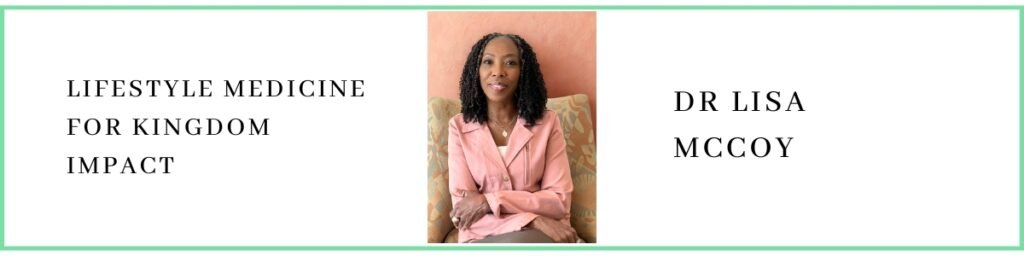
Dr. Lisa McCoy, a retired board-certified preventive and lifestyle medicine physician, explains lifestyle medicine as a mainstream subspecialty that targets root causes of chronic disease using six researched interventions—stress management, restorative sleep, strong connections with God and others, properly dosed physical activity, a whole-food plant-predominant diet, and avoiding risky substances and distractions—framed as biblically grounded. She shares a case of a Trinidadian woman whose prediabetes-related symptoms improved through dietary diversity, reduced sugar, and exercise, and notes 2025 research showing combined lifestyle interventions improved outcomes in early Alzheimer’s compared with usual care. The conversation emphasizes mindset, convictions, and discipline aligned with God’s purpose, and provides Dr. McCoy’s resources and contact details.
3 Takeaways
Understanding Lifestyle Medicine:
Despite lifestyle medicine being a formal medical subspecialty for nearly two decades, Dr. McCoy noted that many are unfamiliar with its tenets. Unlike traditional medicine, which often prioritizes medication for managing symptoms, lifestyle medicine focuses on identifying and eliminating the root causes of chronic conditions. Dr. Lisa detailed six key lifestyle interventions: effective stress management, restorative sleep, establishing strong connections with God and others, engaging in the right physical activities, maintaining a whole-food, plant-predominant diet, and avoiding risky substances and distractions.
The Biblical Foundation:
Dr. Lisa emphasized the power of connecting lifestyle changes to the principles outlined in the Word of God. She related how understanding the scriptural backing of these lifestyle interventions enables believers to profoundly embrace their wellness journey. By recognizing these factors as God-given tools for fulfilling their life purpose, individuals can foster transformational change in their health and overall life.
A Unique Approach to Education and Health:
Dr. Lisa stressed the importance of education in understanding one’s body as a “temple” that requires care and discipline. By educating believers about how their bodies were created to function, she empowers them to see their health as a crucial component of their spiritual and life mission.
ShowNotes
Click on the timestamps to go directly to that point in the episode
[01:58] What Lifestyle Medicine Is
[05:18] Six Biblical Pillars
[07:50] Mindset and Purpose
[10:14] Temple Design and Aging
[11:59] Serena Prediabetes Turnaround
[14:36] Whole Grains and Local Swaps
[16:26] Reverse Parables and Gut Health
[22:02] Lifestyle Medicine for Alzheimer’s
[25:47] Daniel and Mission Critical Health
Get In Touch:
If you’re interested in connecting with Dr Lisa McCoy, you can reach her via her website, via Instagram, via Substack, or via her LinkedIn.
You can check out her YT channel here.
For those interested in sharing their own stories on “Chatting with the Experts,” reach out to Paula Okonneh through her website or connect via LinkedIn.
Paula: [00:00:00] Hello and welcome to Chatting with the Experts where I speak with amazing women, fabulous women from Africa, from the Caribbean and in the diaspora. These women share my mission which is to educate, empower and encourage women all over the world. Today’s show is titled
The Purpose of Health: Maximizing Your Years for Kingdom Impact.
My guest is a retired board certified preventive and lifestyle medicine physician who now serves as an educator, an encourager and an author. And she helps people reverse chronic diseases using research proven biblically grounded lifestyle medicine intervention. She functions as a surgeon [00:01:00] general for the Kingdom of God and she uses her medical training and grounding in scripture to advise believers on protecting and maximizing their health.
Welcome Dr. Lisa McCoy to Chatting With the Experts
Dr Lisa: Thank you. Thank you. I’m so happy to be here, Paula. Just thank you so much for inviting me onto this podcast and, I’m just excited about this opportunity to talk with all the women
dear to my heart, so
Paula: Wow. I’m excited that you function as a surgeon general for the Kingdom of God, and that you’re using your medical training and grounding in the scripture to advise believers. That is so dear to my heart. So welcome to Chatting with the Experts because I know we gonna learn so much from you today.
Thank you.
Dr Lisa: Well, wonderful. Maybe I’ll just go ahead and get started then. You know, the interesting thing [00:02:00] is, you know, in lifestyle medicine even though it’s been around for, uh, about 20 some years, a lot of people that I run in really don’t know what lifestyle medicine is. So one of the things I usually start with is just helping people to understand what it is and what it’s not.
Okay? Now, I think one of the things that I love so much about lifestyle medicine is that it focuses on identifying the root causes of different chronic conditions, and then eliminating them instead of the more traditional medical approach which is sort of identify the disease and then figure out what medicine we wanna dose that person with to manage the symptoms or the consequences of that disease.
So in lifestyle medicine, what we do is we use lifestyle changes which are, um… we call them interventions, as the first and most important step in dealing with chronic diseases. And the thing is if you can use these interventions consistently, [00:03:00] you could actually reverse a lot of diseases; diabetes, heart disease, um, fatty liver disease, high blood pressure, even Alzheimer’s disease can be dramatically improved using these lifestyle interventions.
Or you can decide, “I’m going to try and prevent these diseases from ever developing in the first place,” because you’ve got that power. Now, as for what lifestyle medicine isn’t, um, as I said it’s only been around for about 20 years. It was formally organized in 2004 and so a lot of people I run into think that it’s sort of alternative medicine or some kind of complimentary medicine but it’s actually a mainstream medical subspecialty.
And so by what I mean by that is that in order for someone to be a lifestyle medicine physician they first have to be board certified in a primary discipline like, um, internal medicine or OBGYN or [00:04:00] pediatrics or preventive medicine like me. And what that does is it ensures that all lifestyle providers have the basic knowledge to know when medications are truly needed because we wanna make sure we’re practicing in a safe way.
But in most situations you, the patient, you’re in the driver seat. It’s a partnership. So if you want to manage your illness through medications, lifestyle medicine physicians can help with that. But if you wanna use these interventions to try to either reverse your condition or reduce your medication doses, lifestyle medicine physicians have teams in place including nutritionists, physical therapist relationships to help support you with that as well.
So this is really a huge change from how physicians have been traditionally trained practice because when I was in medical school back in, well, I won’t say [00:05:00] how far back but –
Paula: Not that long ago. You look pretty young for you saying back then.
Dr Lisa: Well late ’80s, I’ll say that. Um- Sure … we were, we were actually taught diagnose a disease, figure out what medication you’re going to prescribe or if they’re lucky we can maybe try surgery.
We really had not yet grasped the power of these six lifestyle medicine interventions which are: um, effective stress management; getting truly restorative sleep; strong connections, and I’ve changed this to strong connections with God and others; um, the right type of physical activity and dosing that correctly; a whole food plant predominant, um, diet; and then the last one I’ve also sort of tweaked.
Originally it is avoiding risky substances but there are so many, I call them risky distractions in our world today that can [00:06:00] do some of the same, um, have some of the same problems associated with substances so I talk about that as well when I talk with women or men. Now, as I’ve mentioned, these six lifestyle medicine interventions, they’re very well um, documented and researched.
But what I like most about them is that they were documented in this book, which is the word of God first .
Paula: I love that one.
Dr Lisa: This Word of God is the true source from which these interventions derive their power. So that’s what I love about it more than anything.
Paula: So can I stop you right there and say…
Dr Lisa: oh sure.
Paula: I’m not stopping you to stop you completely but just…
Dr Lisa: okay
Paula: … to get clarity.
Dr Lisa: Mm-hmm.
Paula: You said the six pillars, am, am I correct in using the word pillars?
Dr Lisa: Yeah, pillars-
Paula: Of lifestyle …
Dr Lisa: interventions, yes ….
Paula: or interventions if that’s the word.
Dr Lisa: Mm-hmm
Paula: …… I was trying to remember. Interventions that you outlined a few minutes ago.
Dr Lisa: Sure.
Paula: Are, [00:07:00] um, you were saying were always there because they’re outlined in the Word of God. And so for someone like me who’s a believer
Dr Lisa: Mm-hmm …..
Paula: It’s even more exciting.
Dr Lisa: Yes.
Paula: Okay let’s go on. Yes.
Dr Lisa: I’m ex-
Paula: I’m really, really excited.
Dr Lisa: And you know, and I’ll talk about this a little bit later but when I’m working with people to help them understand how these work, it makes it so rich to be able to draw on the Word of God from which these interventions came to help them understand, “Ah ha!
That’s how God intended this all to work.” So it’s just, it’s just a powerful process because it comes out of the Word of God itself.
Paula: All right, let’s get on to it because I’m excited. As I’m sure the rest of you in the audience are as well. So let’s go.
Dr Lisa: And you know, the other thing too when we talk about the word of God is that, well, in my experience as a physician, you know, and as a believer, we normally don’t change [00:08:00] our behaviors, whether it’s health related or otherwise until we change our mindset on a matter.
And one of the best ways that I’ve determined to change your mindset is to understand its significance to God.
Paula: Mm-hmm.
Dr Lisa: And you know what? These six factors, they matter to God, and I believe that’s why he put them in this book, okay? They matter when it comes to your purpose. They matter when it comes to so many things that God desires us to see happen in our lives and for us to access through him.
Hmm. So, that’s why I think it’s so important. Amen.
Paula: Amen, sister. Amen.
Dr Lisa: So now one other thing too. I mentioned that I’m retired, and I no longer see patients clinically, but one of the things I like to do that is, and we can do this at the end as well, you know, if people are interested in learning more about lifestyle medicine, there’s probably lots of lifestyle medicines in your state or country.
So later on in the show, what I can do is I [00:09:00] can put some information in there about the American Board of Lifestyle Medicine ’cause they have a little dialogue box where you can go in, put your state or country, and it will give you a list of board certified lifestyle medicine providers in your state or country.
And so you can explore this more with them if you want because as I said, I’m retired.
Paula: So quick question again. Sure. So because you’re retired- Uh-huh … does that give more leverage to do more things with, I mean- Yes … as a lifestyle … Oh, as a retired lifestyle medicine physician
Dr Lisa: Mm-hmm …
Paula: You’re capable of doing a lot more.
You’re not…
Dr Lisa: yes.
Paula: Okay.
Dr Lisa: Yes. What I did is I made sure, and I keep my board certification active in both preventive medicine, which is my primary discipline, and lifestyle medicine, which is my subspecialty. Right. So that way I still have the medical expertise and backing and training to deliver the information.
But because I’m retired and [00:10:00] I’m no longer working for a particular corporation or healthcare system, I have a lot more freedom to educate using the Word of God, mentioning the, mentioning the scriptures and things like that, so.
Paula: Thanks for clarifying that.
Dr Lisa: Sure. Sure Um, and maybe what I’ll do is I’ll just talk a little bit about kind of how I work with people around lifestyle medicine or what that looks like normally.
But, um, I think the most important thing that I wanna get across to people who are out there, not just people I work with but everybody ’cause I’m an educator, is that I want people to understand how God created their body to work more from a kingdom biblical perspective. Um, and, And the reason why is that when I told you all about those six lifestyle medicine interventions, you know, the eating, the sleeping, the stress, I can’t imagine that any of you had never heard of any of that.
You know, we, we know this. You know, we know we should eat better, we know [00:11:00] we should sleep more, we know we should exercise. We just don’t always do it consistently, and another checklist or 30-day reset isn’t really gonna change that. But what I find does change that is that when people understand how God created this temple to work in both sickness and in health, and in particular when they understand the difference between symptoms that are actual signs of normal helping, healthy aging and symptoms that are related to lifestyle choices, that really tends to make things click in their minds, so.
Paula: Okay. So recognizing the difference between symptoms that are related to natural… I mean, the process of aging because-
Dr Lisa: Mm-hmm …
Paula: yeah. And then the difference between actual lifestyle choices, the differ- okay.
Dr Lisa: Yeah, Yeah. So, [00:12:00] um, you know, and I’ll make one quick little story here just to kinda help clarify that.
You know- Great … one of, one of the folks that I worked with, a woman, I’ll call her Serena, she grew up in Trinidad, and so she grew up with a very plant based diet, but it was very heavy in a lot of what, um, we called provisions, you know, which are sort of starchy vegetables, yams, corn, rice, things of that sort.
Not a lot of green vegetables, not a lot of diversity. And so she came to me because she had been to a physician who had told her that, you know, she was becoming diabetic. She was pre-diabetic. And the reason she went to that physician is that she was starting to see changes in her vision. She was having joint pains in her knees, a lot of pains in her small joints of her fingers, and she’s like, “What is wrong?”
Hmm. And that’s when they diagnosed her. But when we started working around some of these concepts, getting a lot more diversity, green vegetables, beans, other things into her diet, helping her to exercise-
Paula: Hm …
Dr Lisa: the [00:13:00] pains in her hands went away. Her vision started clearing, and that’s before they ever put her on any medications for diabetes.
So those changes she was experiencing that she just thought, ‘Well, you know, I’m getting older. This is what happens,’ they weren’t. They were lifestyle, and, and that’s really what makes a difference for a lot of people.
Paula: Wow. That’s an eye opener. Mm-hmm. So she needed to make an adjustment in her lifestyle as opposed to just accept, “Well, I’m getting old.”
Dr Lisa: Right, right
Paula: So you added more, as you said, you added more leafy vegetables to her diet
Dr Lisa: Yes. Yeah, so, fruits and vegetables, a lot of different types of vegetables, and then grains, whole grains like quinoa, brown rice, barley, things of that sort, and introducing her to a lot of different types of beans, things of that sort, which she really didn’t eat a lot growing up.
Um, and so just that difference, that diversity, [00:14:00] those extra phytonutrients, and the other thing, um, limiting the amount of sugar in sweets that she was taking in. So those changes really turned around her health. You know, her hemoglobin A1C levels started coming down, and that is, just a medical term for a way that we um, monitor how someone’s diabetes is going.
So but her levels started coming down to a normal range. As I mentioned, her eyes started clearing, and she was so excited because she likes to braid hair, and now she can do that without pain, so
Paula: Now things that, um, like quinoa, barley, those are not natural to, like the part of the world that she’s from. Correct. And I only know that because I’m familiar with that part of the world.
Dr Lisa: Correct.
Paula: So, so if someone listening, because this is a global program.
Dr Lisa: Mm-hmm …
Paula: For someone who’s in the audience from that part of the world or listening later, would there be substitutes to that? I know they don’t [00:15:00] have quinoa growing.
Dr Lisa: Mm-hmm.
Paula: Barley, it may not be easily accessible there. Would there be local substitutes or that’s something that they may have to Google or use AI to find out?
Dr Lisa: Well, You know what, what I should say is she started eating whole grains.
Paula: Whole grains.
Dr Lisa: So by that I mean grains that are not processed. So for instance, if they have white rice, instead of having white rice, they have brown rice which has more of the original nutrients within it. Um, I like to tell people they wanna do, um, what’s the phrase, minimally processed foods- Hmm … um, which have nothing good taken away and nothing bad added.
And so
Paula: That’s a good way of looking at it.
Dr Lisa: Mm-hmm.
Paula: Yes.
Dr Lisa: Yeah. Go
Paula: as close to the ground, as close to natural as possible.
Dr Lisa: Perfect. That’s an excellent way. So if there are grains that are more familiar to them or easier for them to get, and they can get them in a more natural [00:16:00] form- Mm-hmm …that’s going to have the same effect.
Paula: Mm-hmm.
Dr Lisa: It’s just that when we humans try to process nutrients out of things that God has created for our good, that’s when we get into trouble, when we start substituting our idea of what is healthy for this temple with God’s idea,
Paula: so. So true.
Dr Lisa: Mm-hmm.
Paula: Excellent. All right. I’ve been interrupting you, so please go ahead.
Dr Lisa: Oh, no, no worries. No worries. And you know, see, this is what I love to do, helping people understand how their temples work and what they need. Because the more we can understand that, how they were designed to function, you know what the actual bonus is, is that people actually start reading the Word of God differently.
Paula: Mm-hmm.
Dr Lisa: Because you start seeing different correlations and different applications of the scriptures that you didn’t necessarily see before you understood how your body worked.
Paula: Mm-hmm.
Dr Lisa: Um, In a sense, because I work a lot with believers, I use this concept of well, I call them [00:17:00] reverse parables Mm-hmm … you know?
Um, In that when Jesus taught he would take examples that the listeners were very familiar with from fishing, farming, sheep or, you know, your own human body and he would use it to describe spiritual concepts. And so what I do is the reverse. I use spiritual concepts to help people understand how their body was created to function.
Um, because basically our body is a living mirror of the kingdom of God and so the principles that we can use are very similar. And if I have time can I give you a quick example of how that would work?
Paula: Oh yes let’s go.
Dr Lisa: Okay.
Paula: Let’s go.
Dr Lisa: Okay so now this is one that I like and we can maybe talk about this topic later but I tend to get a lot of questions around gut health in our gut community and how that impacts our health.
Mm-hmm.
Dr Lisa: And so one of things is that this balance that we have to maintain within [00:18:00] our gut in order to promote health its not unlike another um, balance that we have to manage on the spiritual realm. And that is the Apostle Paul in chapter five of Galatians around verse 19 he talks about this struggle that we have between expressing the fruit of Holy Spirit, you know love joy peace patience long suffering versus expressing the sort of lower human nature, you know the anger jealousy envy and that the likes.
And the interesting thing about that spiritual struggle is that one that struggle is gonna be here as long as we’re in this human body. You know, we may get better at managing it, but that tension’s not gonna go away. Two, it’s a very fluid situation in that it really can vary from day to day depending on which nature you feed.
Three, [00:19:00] the outcome of this struggle is really critical in terms of our character, our Christian walk and the… I will say the quality of our service to God. And then four, developing convictions, you know those beliefs that guide our actions and our choices, that’s important. But if you really wanna be successful, you have to put some discipline under those convictions to undergird them.
Okay? So likewise when it comes to this gut community, well there are two forces sort of struggling against each other. There are the microbes that are actually trying to promote health for us and then the microbes that are actually literally, literally trying to take us down . And so it’s interesting that that conflict in our gut, that’s gonna go on for as long as we’re in this human temple and it’s a fluid situation.
It can literally change from day to day based [00:20:00] on what side or what community we choose to feed. And the third thing is that based on all the research we have, there is little else that impacts the duration of our life, our health and therefore the duration of our service to God more severely. And then finally again, we have to have convictions about what we want out of life, what we want out of this physical temple, but we really need to make sure we’re putting the disciplines in place to undergird them. And so that’s a lot of what I love to do.
I love talking with people, helping them identify what is it that’s the most important thing for you to accomplish? What do you want to leave as your legacy? You know, how do we put that in place? And once they start to think through that, you know, we look at what the word of God says about their health, about His purposes.
We look at what the research says and then [00:21:00] we take those into the presence of God and we say, “Okay, God, you know what’s to come. You know the purposes that are down the road that I can’t even fathom. So give me the wisdom to know what do I focus on at this point of my life and how do I do it to prepare me for what you have coming down the road for me in terms of my life purpose, in terms of the legacy that you desire for me to leave in this earth?”
Um, and so that’s, that’s what I love. I love doing that. um, It’s definitely not a cookie cutter approach because everyone is unique. They have their own purpose, their own… God has a different vision for what each of us will accomplish and I’m just here to support that process.
Paula: I am absorbing everything that you’re saying Um- and musing over it. It’s definitely something that I would love to have even further discussion, as I [00:22:00] know people in the audience would. But before we open up the floor to them Mm-hmm … I am very interested in, you talking a bit of how we can or what you, you have used or you’ve seen through what you’re doing right now-
Dr Lisa: Mm-hmm …
Paula: um, when it comes to Alzheimer’s disease. You know…
Dr Lisa: mm-hmm
Paula: … that’s, that’s close to my heart ’cause I’ve seen so many loved ones affected by it, by Alzheimer’s disease. And if you can talk a little bit about that and what you have seen through it-
Dr Lisa: Sure …
Paula: this application of lifestyle medicine?
Dr Lisa: Sure. And that’s, that’s really a fairly new application, and in 2025 in the American Journal of Lifestyle Medicine they published some pretty earth shattering research in that, um, what they did is they used four lifestyle medicine interventions. They used a whole food plant predominant eating [00:23:00] plan, physical activity, stress management, and then I think the last one was restorative sleep.
And they combined those four interventions and they taught them to a group of people in their um, intervention group. Then they also had another group of people with early Alzheimer’s disease that they just got the normal Alzheimer’s care. And so they went forward for I think it was like 30, 30 or some weeks.
The people in the Alzheimer’s group who were the control, who got the normal care, they either got worse or they, um … well actually most of them continued to get a little bit worse, if I’m remembering the research right. But in the intervention group, one, nobody got worse, um, maybe one third of them stayed the same, and the other two actually regained some function.
So now this was only over a 35 week period, so they’re trying to extend this research out, but considering that at this point [00:24:00] we have nothing to help when it comes to the medications. You know, for the medications at most they might stop some of the physical manifestations in terms of the aggression that sometimes people demonstrate with Alzheimer’s.
Mm. But they don’t, they don’t improve the situation, and they don’t really even stop them from progressing, um, very much. So it was very exciting, for us to see this about lifestyle medicine because it’s one of the few things that we see that works. Now, I must say the results, the outcomes were best when you can catch it in the early stages of Alzheimer’s, but still it’s more than we’ve had in the past, so we’re excited about that.
Paula: That’s very exciting. And this is- It
Dr Lisa: is
Paula: This is researched done, oh, 2025. That’s not that very long ago.
Dr Lisa: No, no it’s not, you
Paula: know?
Dr Lisa: What’s happening is they’re starting, the original lifestyle medicine research had to [00:25:00] do with heart disease. And they did a similar sort of controls versus intervention groups to see whether people’s plaque in their arteries would um, progress on this diet or this plan versus another.
And so now that that was successful, they’re taking these same lifestyle principles and trying to apply it to lots of different areas. And the most recent one that they’re working with are things like Alzheimer’s disease. So.
Paula: With such a large uh, um, aging population, especially in the United States.
Dr Lisa: Yes
Paula: I see how, why that’s, you know, so important- Mm-hmm … and applicable, you know? Wow. Dr Lisa, this has been such an eyeopener I mean it’s so interesting. So interesting like I mean, uh, I don’t wanna stop. Give us one more story. Can you? I mean you’ve given us like two stories. Sure. Sure.
Dr Lisa: Yeah th… well, well this story kinda dovetails as to what I was saying in terms of the fact that with lifestyle medicine it really is um something we do in partnership with God.
You know he [00:26:00] knows the purposes that are coming ahead and when I try to explain this to people one of the stories that really helps is I refer them to the story of Daniel in The Old Testament. You know because what happened with Daniel is he was one of a group of folks from Jerusalem, Jewish young men from Jerusalem who were transported to Babylon when Jerusalem was destroyed yet even before he got there, there were some convictions. Some things that God put upon his heart around not defiling himself with certain foods about maintaining connections with God through prayer. That even when he got to Babylon He held onto those convictions like a dog with a bone And he didn’t give up And so the thing is at that time Daniel probably just thought “I’m just being obedient to what God had placed on my heart This is what I feel I should do And I’m gonna do it no matter what the cost” there’s no way he knew about [00:27:00] the purpose God had for his life. There’s no way he knew that he was going to end up In a lion’s den because of his desire to pray or of his because of conviction for prayer but that God would use that conviction to work an incredible miracle that touched the hearts of entire nation of Babylon .
Paula: Mm-hmm .
Dr Lisa: So again we just don’t know what God’s going to do with the convictions that he places on our hearts through this lifestyle medicine but as we’re obedient it’s just—we can just expect that He’s going to do Incredible, incredible things. And what I tell people Is that when you get to the point where your desire to fulfill your life purpose, your desire to hold onto the convictions that God has placed on your heart becomes greater than your desire to hold onto habits either health related or otherwise that can limit you as you go forward. That’s when things change. And that’s when [00:28:00] God can really move in your life. Not only in your health but in your purpose your, you reach everything changes at that point you know when you Start seeing this as a mission critical resource, things change so. Love that .When you start seeing this, your body the temple as a mission critical resource and not just
as this is me. Yep You know but
Paula: that
This me as we see it has a- Mm-hmm … purpose. Our purpose was determined long before we even knew who me was. Yeah. ‘Cause think of, think of you as a baby where you don’t even know who you are. You’re really dependent on your caregiver, your parents if it’s them or whoever it is, until you start coming into being and you’re knowing who you are.
And then understanding that you’re more than just a body, there’s a purpose Mm-hmm And that purpose needs to be fulfilled and [00:29:00] you alone can do your unique purpose.
Dr Lisa: Yeah, that’s really the kind of transformation that I want to create. You know? It’s not so much people chasing after longevity just for the sake of living 120 years or even three score years and 10.
It’s really to access the wisdom, the health, the strength, and the longevity we need to fulfill the purposes God has for us. So I always wanna make sure that people have that priority in place, um, because again, that’s gonna open the doors for God to do so much in their lives. Their health, their finances, their legacy, their family, everything.
Paula: Everything. Everything. Dr. Lisa, thank you. And whoa ’cause we gotta wrap up here but of course I notice what you said is impacting, has impacted my life and I know those who are listening online, those [00:30:00] who are listening in the audience, and those who are viewing this on YouTube if they’d like to get in touch with you how can they do that?
Dr Lisa: Sure. The ministry that I’ve transitioned to into this retirement phase of my life it’s called Kingdom Health For Kingdom Purposes and it’s simply drlisamccoy.org.
Paula: I can drop, I’ll drop that in the-
Dr Lisa: Okay … in
Paula: the
Dr Lisa: chat okay. Okay. Thanks, thanks. And I think one of the things that we may talk about a little later is one of the things God has placed on my heart is to just sort of take the information from the last 25, 30 years of what I’ve seen in lifestyle medicine and preventive medicine and just capture it in a book which is literally my legacy to believers across the world.
That’s another thing that I’ve done. And again, they can get information about that on the website as well. So.
Paula: So it’s simply your name dot org.
Yep.
drlisamccoy.org.
Dr Lisa: Dot org, yes.
Paula: Okay. [00:31:00] Are you on, um, any social media platforms? Substack I think you mentioned.
Dr Lisa: Yes. I’m on Substack at, drlisamccoy.substack.com.
Paula: Uh huh.
Dr Lisa: Also on YouTube, um, @drLisamccoy. Um, actually on, on, on Instagram and YouTube I have a channel where I really talk about things like, um, you know, like I was mentioning I get a lot of questions about probiotics. Do we need to take them? Are they really, what’s all the hoo-ha about? And so I developed a channel called The Real McCoy On Health. Lovely
Paula: The Real McCoy
Dr Lisa: McCoy on Health
Paula: On health, o- on health. Okay.
Dr Lisa: Yes, The Real McCoy on Health.
Paula: I will drop that also in the chat.
Dr Lisa: Mm-hmm.
Paula: All right. And as usual I always promise to bring you the best and I haven’t disappointed you. Dr. Lisa McCoy [00:32:00] is the best. Thank you so much for those of you who would like to be a guest on this show just like she has been, you can reach out to me on my website which is chattingwiththeexperts.com. I’m also on LinkedIn, my business page there is Chatting With the Experts. I’m on Facebook, my business page there is also Chatting with the Experts.
And if you’d like to view this episode um, on YouTube please subscribe to our YouTube channel which is Chatting With the Experts. You’ll see not just this episode but past episodes of other women who also share her mission which is to educate, empower, and to encourage women globally.
Ah, I almost forgot to mention that we’re also on Instagram. Our handle there is @chat_experts_podcast, and in there too you’ll [00:33:00] see all our episodes going way back, back to 2020, um, all the missions, the women who shared the same mission as I have and just as Dr. Lisa has done. So now we open up the floor to those who have joined us in the audience, and they’ll get a chance to speak with you about the amazing work you’re doing.
Thank you, Thank you again, and, I’m still shaking my head in wonder at all what I’ve learnt today. Thank you.