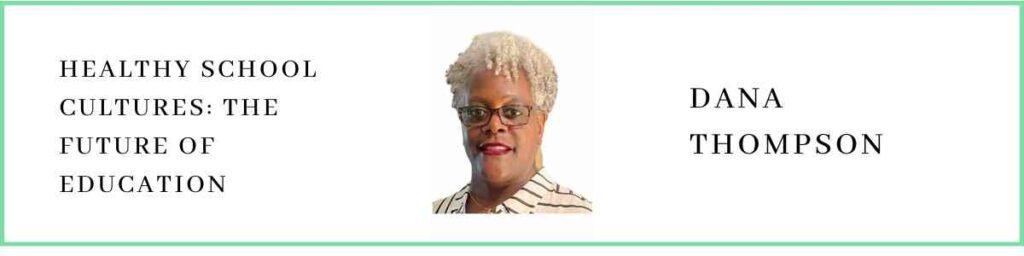
Dana Thompson brings 20 years of educational expertise to explore hybrid and micro schools—innovative models transforming education. She explains how hybrid schools blend 3 days of in-person instruction with 2 days of parent-facilitated home learning, while micro schools create intimate environments for 5-20 students across multiple ages. Dana identifies five critical pitfalls derailing schools: neglecting culture, overloading teachers, ignoring student voice, inconsistent communication, and reactive leadership. She provides practical strategies including modeling behaviors, setting boundaries, and prioritizing professional development. The core message: healthy school culture built on strong relationships is the foundation of educational success.
3 Key Takeaways
The Micro School Revolution
If hybrid schools blend home and school, micro schools take a different approach entirely—one that harkens back to one-room schoolhouses of the past.”Picture Little House on the Prairie,” Dana suggests. “You have one building, one teacher, and students ranging from the littlest ones to teenagers—anywhere from five to twenty children in a personalized learning environment.”Far from being chaotic, this multi-age structure offers unique benefits. Older students develop leadership skills by helping younger ones, while younger students learn by observing their older peers. The small class size enables truly personalized, project-based learning that addresses individual student needs in ways large classrooms cannot.
Why Healthy School Culture Matters
Throughout the conversation, Dana repeatedly returned to one central theme: culture is everything. “Culture shapes everything we do in society, and it’s no different within the framework of a school building,” she explains. “Without healthy school cultures, it’s almost like you are designing a program not to be successful.”This “invisible curriculum” encompasses trust, respect, high expectations, and meaningful relationships among all stakeholders—teachers, students, parents, and administrators. It’s the foundation upon which all academic success is built.
Ignoring Student Voice
Giving students a voice doesn’t mean letting them control the classroom—it means creating space for them to engage meaningfully. Dana shares a powerful example from her teaching days when her fifth-grade students came to class lethargic and unresponsive. Instead of pushing through her lesson, she stopped and asked what was wrong.”Come to find out, they were hungry and tired,” she recalls. The simple solution—allowing snacks and adjusting the schedule—came from listening to student voices. She even created a “voice box” where quieter students could share concerns in writing, ensuring every child had a way to be heard.
ShowNotes
Click on the timestamps to go directly to that point in the episode
[00:03:00] – Why healthy school culture is essential for effective teaching
[00:04:00] – Understanding hybrid schools: 3 days in-building, 2 days at-home
[00:05:00] – Classical education: Paper and pencil over technology
[00:07:00] – Hybrid model across K-12 grade levels
[00:08:00] – What are micro schools? The “Little House on Prairie” model
[00:10:00] – Can hybrid and micro models be combined?
[00:11:00] – Dana’s consulting services for schools
[00:13:00] – Pitfall #1: Neglecting school culture and relationships
[00:18:00] – Pitfall #2: Overloading teachers with too many initiatives
[00:20:00] – Pitfall #3: Ignoring student voice
[00:23:00] – Personal story: The lethargic class and the “voice box” solution
[00:25:00] – Pitfall #4: Inconsistent communication
[00:28:00] – Pitfall #5: Reactive vs. proactive leadership
[00:29:00] – Practical leadership strategies: Modeling behavior
[00:31:00] – Setting healthy boundaries (no emails after 8 PM!)
[00:33:00] – Prioritizing professional growth and celebrating wins
Get In Touch:
If you’re interested in connecting with Dana Thompson, you can reach her via her website, via email, via LinkedIn, or on Facebook.
For those interested in sharing their own stories on “Chatting with the Experts,” reach out to Paula Okonneh through her website or connect via LinkedIn.
Paula: [00:00:00] Hello everyone and welcome to another episode of Chatting with the Experts with me, Paula Okonneh, the host where I speak with women from Africa, from the Caribbean, and in the diaspora. They share with me my mission, which is to educate and empower and inspire women globally. And the women that I’m speaking with, who are my guests are solopreneurs and professionals who are successful in this space. Today, our title is Healthy School Cultures and the Future of Hybrids, and my guest who will be joining me in a few minutes says that she is passionate about shaping the future of education by helping schools build healthy school cultures. She explores how hybrid [00:01:00] and micro schools are changing education and why strong cultures matter. She’s had 20 years of experience in education and brings a dynamic approach to learning that blends tradition with innovation. From the classroom to administration, she served as a teacher as also a reading interventionist and gift-endorsed educator shaping the future of students through personalized learning strategies. She’s very passionate about hybrid education and empowers schools, teachers and families to navigate the evolving landscape of education with expertise and vision.
And with that, I want to welcome to Chatting with the Experts, Dana Thompson of Britt Thompson [00:02:00] Education Consulting. Welcome, Dana.
Dana Thompson: Hello, how are you?
Paula: I’m excellent. Thank you for joining me today and those who have joined us because this is such an interesting topic, Healthy School Cultures and the Future of Hybrid.
Dana Thompson: Yes. Thank you for inviting me.
Paula: Absolutely. So why is healthy school culture, the cornerstone of effective teaching and learning?
Dana Thompson: Well, you know, culture shapes everything we do in society and it’s no different within the framework of a school building. So, you know, it’s that invisible curriculum of sorts that’s there that students and teachers are involved in with every single day. So we have to make sure that we’re providing opportunities for that healthy school culture so that there’s trust that there’s respect and high expectations are [00:03:00] established for all, whether it is the staff and faculty or the students and even the parents who are involved. And really truly without healthy school cultures it’s almost like you are designing a program to not be successful. So you gotta start with the health of a school in mind whenever you’re working through it, establishing it, starting a new school year, whatever it may be.
Paula: Wow. I agree. I agree. But you know, one thing that I didn’t know about you told me about it and I’ve done some research is hybrid and micro schools.
Dana Thompson: Yeah.
Paula: And so yeah, tell us a bit about that and why the rise of these schools are so important in the future of education, especially within the classical Christian model. Let’s talk a bit about that.
Dana Thompson: Sure. Yeah, absolutely. Well, as part of my background, I’m a formerly educated [00:04:00] public school educator, administrator. But I have been very blessed to have been the head of school for a small Christian private school in North Charleston, South Carolina. It’s a Lowcountry Christian community school, and that’s where I got my first taste of a hybrid environment. And a lot of people, when they talk about a hybrid environment, they think only of kind of those COVID days where you know, it was the technology-enhanced platform used at home, and then oftentimes, you know, the kids are in the school building for a period of time, maybe three days. Well, that’s not the only structure of a hybrid environment for a school setting. You also have, for instance, that particular school is three days in the building with teachers who are teaching using a robust curriculum for math, English, and so on.
And then at home, those teachers are also providing lessons, but the parents are carrying out instruction with the students at home, almost like a [00:05:00] homeschool component, but it’s hybrid because you’re mixing the in-school, the brick and mortar component with that high school, excuse me, that homeschool environment. And with the classical aspect of it, while technology may be used in the classroom, it’s not used as often as people would think. Matter of fact, paper and pencil is the mainstay for the educational process that’s set. And that’s a good thing because, you know, let’s be real, we still have to write certain things. I know we use computers for a lot of things but children need to understand how to write things, how to write legibly.
So you know, that’s something that’s very important. And so, with that hybrid environment that I was exposed to, I have also been able to work with another school and I I work with them now and they are called Hope Scholars Academy. And this is the high school portion of it. So where I was before is a K-8 environment [00:06:00] and where I am now, working with them about one day a week, is a high school setting and they really embody that classical education as well. Making sure that yes, of course we know grades have to be entered via a computer. Work has to be pushed out to the students via a computer. But when the students are completing the work, that’s when we want the paper pencil. But of course, when, you know, say it’s a writing assignment, then they’re going to use a computer in order to type it and print it out and all that. But for the most part it’s that paper and pencil. It’s the discussion, it’s the hands-on learning that’s there. That’s not technology-driven.
Paula: Okay. So I’m sure other people have the same question as I…
Dana Thompson: sure.
Paula: I do. So it’s hybrid in that it’s three days in the building, two days at home with the parents’ help, right?
Dana Thompson: Correct. And with [00:07:00] high school, you know, it is that accountability, that independence, that hopefully is at that point where the parents don’t have to be involved, but they still need to be because they need to know what their student is doing and that they’re doing it. So, yeah.
Paula: Okay. So I think that was the other question I was gonna get to, is that the hybrid model, is it primarily for high school or could it be mixed with middle school ? Middle schools can do it as well as high school.
Dana Thompson: Oh, absolutely.
Paula: Or could it go from three A?
Dana Thompson: Okay. It can go from the youngest grades, from kindergarten to high school. Matter of fact, where I was before at LCCS, it is a K-8 school. So it’s kindergarten through eighth grade. And then Hope Scholars is ninth through 12th, getting them ready for the next level, getting them ready for college, whatever type of environment or you know, from school to work, whatever, getting them ready for it. So, yeah. Yeah.
Paula: Alright. Now I’m clear.
Dana Thompson: Mm-hmm.
Paula: Alright.
Dana Thompson: Yeah.
Paula: So what about the micro?
Dana Thompson: Yeah, [00:08:00] well, micro schools. If you could kind of picture for those of us who are from that era of the little house in the prairie watching it kind of growing up a little bit and you think about that one building, you know, you got that one teacher and you have the littles and you, they go on up to the teenage, and it’s kind of like that, kind of like that setting, like anywhere from five to 20 children in a personalized learning environment where it’s project-based learning. But the beauty in a micro school, ’cause some people are like, oh my gosh, all those ages kind of mixed together. Well, the olders, you know, the older kids, they can help the littles as they’re working on their work, building those leadership skills in them. And then the young ones have the opportunity to see from the older ones how things should be done. There’s still a teacher there. There’s still a teacher. There’s still a curriculum. There’s still expectations that are there as it is in a regular school environment. It’s just that it’s more [00:09:00] opportunities for the one-on-one for those families and for those students specifically who really, really need that. And maybe just maybe because, you know, public school can serve a great purpose. But for those who feel like they need something else, that’s also a good opportunity for them to explore micro schools. And maybe they don’t want the hybrid environment at all, so, yeah.
Paula: Okay. So they’re mutually exclusive in that it’s either hybrid or micro. Because I was gonna say, can you have a hybrid base within the micro, or no?
Dana Thompson: Well… I mean, you probably could. I don’t see why you couldn’t, but you know, you have to structure it in such a way that it serves that purpose. But I know like for instance, some of the homeschool environments, right? They have co-ops where they might meet once or twice a week or for a specific subject. So, you know, you can still [00:10:00] kinda fuse that into even your hybrid model where you’re offering that co-op so other people can come, but it’s only maybe for one subject or what have you.
Paula: Mm-hmm.
Dana Thompson: So I would say yes, but you have to do it very delicately, you know, making sure that you are still meeting the needs of everyone there. And structurally it can get kind of, off kilter a little bit. Mainly when you’re looking at who you’re putting in place to do the instruction for the students. So you gotta take into account all of that. But again, that’s where I come in and I can help those, maybe looking at maybe a combination of those structures in order to implement it and implement it well.
Paula: I got you. And you said that’s where you come in. So that’s kind of like your specialty.
Dana Thompson: Yes. I can go in and I can help with various aspects of a school whether it is. The professional development at the beginning of the year, end of the year, [00:11:00] throughout the year, I can come in and help those who are wanting to start a hybrid school or a micro school and give them some pointers and guide them along the way, not just give them pointers. I can also, help them with various aspects of school cultures and what that needs to look like and what they want their school, their mission and their vision, and how that will be put in place when we’re talking about healthy school cultures. So, yeah.
Paula: If you see me looking away, that’s because I’m taking notes.
Dana Thompson: Yeah, yeah, you’re good.
Paula: This is all new to me.
Dana Thompson: You’re good, you’re good. Well, if you see me looking away, I might be taking notes too, you know, just from the conversation. So, yeah, no problem.
Paula: Oh. Okay. Okay. So we are learning together.
Dana Thompson: Yes, yes. Yeah. Growing and learning together. That’s what it’s about. You know, it really is.
Paula: That’s what it’s about. Yeah. I tell everyone I learn something new every day and it’s more than one thing. At the end of the day, I need to start having a notebook of what [00:12:00] did I learn new today so that I can compile it, you know,
Dana Thompson: Uhhuh to have it at your fingertips. Yeah.
Paula: Yeah. So I know when we spoke offline, you mentioned that there were some common pitfalls that derail schools.
Dana Thompson: Yeah.
Paula: Now I am as can we talk a bit about that? Because I’m assuming with the hybrid and the micro schools, you may be saying that as an educator you help people, you know, you help educators…
Dana Thompson: Right.
Paula: Avoid these common pitfalls.
Dana Thompson: Yeah. Yeah. So there are a number of pitfalls that can take place such as neglecting school culture. You know, you can’t expect something to be healthy if you’re not putting in healthy components. So while the emphasis of school is to teach children. Just focusing on the academics themselves does not produce a [00:13:00] healthy school culture. You’ve gotta look at nurturing relationships, whether they’re relationships between the adults in the building or between the adults and the children, or between the parents and the adults in the building. The parents and their own students because sometimes students come to school and they’re broken, right?
And you figure out what’s going on by way of a conversation that maybe something happened at school or what, excuse me, at home or what have you. And you have to intervene very delicately. You know, because these are families and they cherish their privacy, but at the same time, you want them to know that you are there, you’re a viable part, or you want to be a viable part of the solution as to why their child now is not wanting to participate. They don’t want to socialize with their friends. They don’t want to answer questions in the classroom. There could be a very basic reason, very basic [00:14:00] solution. That can be put in place. But if all you’re focusing on is the academics and not the relationship building, you can’t build a healthy school culture. You have to have relationships and they have to be good relationships. Yeah.
Paula: Alright. Because we are human.
Dana Thompson: We are made. We were made for that purpose to live in community. And in community. It’s that communing together. It is that conversation. It’s that all of that that goes into relationship building and living and working together and growing together. All those things. Yeah.
Paula: Yes. Yes. And especially you pointed out, you know, because it’s kind of the micro and the hybrid. Well I know with micro you said old school house kind of thing.
Dana Thompson: Yeah.
Paula: And maximum 20 children. I see how it’s easy to to see as an educator or administrator to see, you know, if [00:15:00] there’s a change in a child’s behavior and you know, then be able to approach that. But like in the hybrid where you have kindergarten, all three elements from the youngest to probably about 18, 19 dependent that make it a little bit complicated. But that’s where you come in, you said?
Dana Thompson: Well, yes and I think about honestly, with the way that a hybrid school is made up when you’re in that school building, it’s actually. And I don’t wanna say no different, but in some ways it’s no different than that child being in a public school in that moment because they’re sitting in a desk or you know, at a table, what have you. However the teacher has structured the classroom to be, but they’re in there and they’re with the teacher and they’re with their fellow classmates who are of the same grade level of the same age.
Paula: Okay.
Dana Thompson: And so you have that opportunity to build community [00:16:00] even within that specific classroom environment, just as you do even in a public school setting, which should be done and which honestly a lot of teachers are doing, even in that public school setting, because they want their classroom to be an extension of their home. They want it to be a family enriched environment. Where in which they’re pouring into the students and the students are all honestly, giving them some things. ’cause we learn from students too, you know, all the little…
Paula: Mm-hmm.
Dana Thompson: The games and whatever that goes on within society, within their homes. But within that hybrid community in a classroom, you still have that opportunity to get to know those individual students especially if you’re teaching all subjects in a K-5 environment. What a great opportunity it actually is when you can go from subject to subject and these kids are talking about things and you’re getting to learn about them, their siblings, their pets, their hobbies. All the things that they want to definitely talk to you about. But then there are some [00:17:00] teachers who don’t really know how to pull that out of the students. And then there are some leaders who don’t know how to show those teachers how to do that. And so I can do that as well. I can help with that.
Paula: Gotcha now.
Dana Thompson: Yeah.
Paula: Gotcha. Gotcha. Wow.
Dana Thompson: Yeah.
Paula: Just in my mind’s eye, just picturing, you know, both the hybrid and the micro and how you can get involved.
Dana Thompson: Yeah.
Paula: Because as you said, relationships make us human and God created us in that way, you know?
Dana Thompson: Exactly.
Paula: To go with each other.
Dana Thompson: Yes. To co-exist, to be in relationship with each other. Absolutely. And then there’s the other pitfalls of like overloading teachers, and we’ll talk about that a little bit. Ignoring student voice. And then when you have inconsistent communication and reactive leadership, those can be pitfalls as well, because you’re not actually doing the things you need to do in the time that you need to do it. So when we talk about overloading teachers, I mean …
Paula: mm-hmm.
Dana Thompson: Let’s think about that word overloading. [00:18:00] We all know what that feels like to be overloaded, to be stretched and spread so thin that you can’t get it all done. Now we know that there are different things that have to be done. Those non-negotiables within a classroom setting, for the teachers that they have to get the grades done, they have to get the grades in. But piling on various initiatives, especially all at one time, that’s never a good thing. You know, we talk about best practices within education, and that’s no different within a hybrid school or micro school. You just have to figure out what those best practices are within those particular environments and implement them in the way that they need to be implemented versus how it may be implemented in a public school.
But when you’re piling on initiative after initiative, and you’re not providing direction or clarity or support. You are asking for those teachers to feel overloaded and neglected. You know? So you gotta give them time, you gotta give them the support, you gotta give them the [00:19:00] roadmap to take when you’re implementing these new initiatives, and don’t give them so many at a time, because that’s overwhelming. I mean, how do we feel when we’re given task after task, after task, after task with no clear direction, but to get it done? So, you know, that’s a definite pitfall in any school environment, be it public, be it private, hybrid, micro, whatever it may be. Because you have to think about your who, when you’re dealing with all that.
And that’s one of the things, well my mentor, and she’s been my mentor since I started within education and she’s just phenomenal and I still talk to her. She would always say, you gotta know your who.
Paula: Yes.
Dana Thompson: And because there is a one person who’s different than another, that doesn’t mean the job doesn’t still need to be done. You’ve just got to, as a leader, know how to direct them in the best way possible to get that thing accomplished, whatever that thing may be, whatever that initiative may be. And [00:20:00] that’s when even as leaders, we have to personalize how we do things with our educators in the building, we talk about personalized learning for the students, but there’s personalization that needs to take place even for the teachers there so that they can be the very best that they can’t be in those settings. And so then you know, stop me whenever you want to, but I was just gonna go on into the next one about ignoring…
Paula: Yes, please.
Dana Thompson: Voice. Yeah. When we ignore student voice, that doesn’t mean that that student is controlling the environment in that classroom, but what that means is they have an opportunity to engage with one another with the teacher using their voice. Not just in a answering questions kind of setting. ’cause again, academics is important, but we’re still building relationships and how can you build relationships if one particular person within that relationship building community doesn’t have a voice? So you can’t ignore student voice. [00:21:00] Now, you have to put things in their proper perspective, especially when you’re well with all of them.
But when you’re getting into high school, for instance, you know, it’s even more important to them that they’re heard, especially during certain types of conversations, whatever the subjects may be, within whatever setting, they wanna be heard. They want to know that their opinions are valued, their voice matters. That their voice matters. So we gotta make sure we do that. Now, on the flip side of that, in an elementary setting, their voice still does matter. But that’s where the teacher has to really help guide them to even owning their own voice. Sometimes kids won’t say anything ’cause they’re not even used to hearing their own voice out loud.
So they’re not gonna contribute to whatever’s happening because maybe in their environment at home or wherever they may be when they leave the school building, they don’t really have a voice, so they’re not gonna have a voice in the classrooms. [00:22:00] So that classroom environment being set up where it is conducive to learning, but it’s also conducive to building community within that classroom is still very important so that they know that they are part of something special that’s being built and established for that school year.
And that’s something that has always been important to me. I started as a fifth grade educator. And I remember one year, I had a group of students and I team-taught this particular year. And so my homeroom students, they would check in with me and then they would go over to the other teacher’s classroom.
Well, you know, it was all morning. These are fifth grade students. And they would come back to me right before, you know, I went into the lesson or what have you, and we had maybe an hour or so before we went out for recess or lunch or whatever. ’cause I really don’t remember the specific schedule, but I do remember this.
I remember they came in and they were just like lethargic, just [00:23:00] nonresponsive. And I just stopped teaching and I said, what is wrong? What’s wrong? And they just sat there for a minute and I said, I’m not talking until you talk. And so come to find out, you know, they, they started raising their hand. Ms. Dana, I’m hungry, I’m tired. I said, oh, okay. We have a quick fix to that. You can bring a snack. You can’t bring something where it’s a full course meal, where it’s a fork and knife, but you know, you can bring a snack and we can eat it. And then I told him, I said, we’ll see about, you know, changing our recess schedule so that we can go out so that you all can have a little bit of a break before we move on to anything else.
And even if we couldn’t do that, I just made sure they had just at least a little break in the classroom. Well, they had voice there. I gave them an opportunity for their voice to be heard so that I knew what was going on with them. And then I also had this little box and I actually still have it. I thought I had it here. That’s why I’m looking. And I may somewhere, you know, when the bedazzling, you know, that was taking place where they were putting [00:24:00] all the rhinestones on everything, you know? Oh. And when the students made me a little box that was basically a wooden box, like an index card box, and she put my name on it.
And so I used that in the classroom that if they needed to tell me something, but they didn’t feel safe enough to say it out loud they could put it in there. And I would look at it, you know, I would read it. And respond to it in the way that it needed to be responded to. That’s another way where you’re giving them voice, because some of them, let’s be real, they’re quiet, they’re never gonna talk out loud too often too, you know, too much. So you gotta make sure that you’re providing even opportunities for them where they feel safe and expressing themselves. And so then as far as communication, communication…
Paula: Is that number four?
Dana Thompson: Yes, number four. Communication in relationships.
Paula: Communication. Okay.
Dana Thompson: I mean, you know, inconsistent communication, ineffective communication, all of that can be a great [00:25:00] pitfall. And maybe I should have put that one as number one, because communication oftentimes can be the it’s like the Achilles heel, you know? It can be great, but when it’s not, it’s not. And when it’s inconsistent, that brokenness doesn’t allow for growth. It doesn’t allow for those adults in the building to have conversations where they are producing, you know, they’re moving forward. It’s like they’re stuck. In whatever it is that they’re talking about. So it has to be consistent. It has to be a certain fluidity and a bit of transparency, even from the leadership and saying, Hey, yeah, I got this wrong. Let me fix this. You know, there’s a way to communicate that produces the results that we all need in order to grow and thrive in an environment. And then there’s communication that doesn’t allow [00:26:00] growth. It actually creates a fractured environment and we don’t wanna do that.
Paula: Yeah, yeah. And you know, as you said, so I’m just thinking if it’s all about relationship, we say as human we are built to relate to each other relationships.
Dana Thompson: Yeah.
Paula: So relationships without communication…
Dana Thompson: Mm-hmm.
Paula: Means there’s no relationship.
Dana Thompson: A relationship.
Paula: Yeah.
Dana Thompson: There’s no relationship. You know.
Paula: There’s no relationship. Yeah.
Dana Thompson: And then if the communication is inconsistent, you know, that person doesn’t know, okay, can I go to her or him today? You know, what’s their temperament like? What’s their this? So this that inconsistent communication because you don’t know how to approach a person because you don’t know what you’re gonna get at any given time. Or it could just be maybe they’re unavailable, you know, you’re going to that particular leader and they’re always unavailable. Well…
Paula: mm-hmm.
Dana Thompson: While we know that the leaders in a building are truly busy, [00:27:00] that’s a thing, but leaders still need to make sure that they’re available so that when the teachers or when the staff, when the students need to talk with them, they can create that space, that safe space where they can come and talk. Will it be all the time? No, because as I said, leaders are very busy, but if you’re a visible leader, I mean, they can catch you in the hall instead of behind closed doors all the time. You know, we know meetings exist and you have to go through them. You have to attend them and conduct them, but it’s important that you’re still visible and that’s gonna create that opportunity for communication and for consistent communication.
Paula: Consistent. And what’s the last one? Number five.
Dana Thompson: Active leadership. Look, we have to make sure that we’re not waiting active chips to fall. We’re not waiting for that crisis. We have to think about and be proactive. You know, not reactive. Now there are some things that you are going to have to react to, but you still should have [00:28:00] within your frame of thinking, within your structure, within your organization, some tools that are just readily available that you can put in place for you to respond to a situation. There should never be a situation where it is just totally reactive, because that’s not gonna make the teachers, the parents, or any of the stakeholders feel safe because you’re always reacting. You never have a plan. You never, you didn’t think about X, Y, Z. You gotta think about X, Y, Z.
Paula: Ahead of time. Yes.
Dana Thompson: Ahead of…
Paula: Planning, planning, planning.
Dana Thompson: Yeah. Yeah. Yeah.
Paula: Woo.
Dana Thompson: Yeah.
Paula: So before we wrap up, are there any practical ways that, you know, leaders can create balance, also support you, teachers and administration, and of course, main thing being to drive positive students’ outcome based on what you’ve said.
Dana Thompson: I’ve [00:29:00] always been one to model the behavior I want of my teachers and my students. So let’s talk about me modeling for, or talk about me or teachers, other teachers modeling for their students. If you don’t want that child to yell down the hall, then you don’t yell down the hall. Like that’s something, but we think as adults, oh, ’cause I’m talking to Miss so-and-so down the hall. Yeah. Okay. Walk to her and talk to her. You know, if it’s where you want the kids to always close the door when they’re coming. Maybe it’s a building that has different pods, for instance, and you have to go walk out of the building and go back into another. Well, if you are walking with a group of teachers or whatever, close the door. Don’t leave it open. You’re modeling behavior ’cause you don’t know what child is standing there looking at what you’re saying. Looking at what you’re doing rather. And then the types of conversations that we have with each other. One of the things I [00:30:00] absolutely, it’s a non-negotiable for me, likes. Teachers don’t need to talk about the performance of another student or what have you in a hallway saying they you know, we can’t do that because you don’t know who’s listening and who may misinterpret because it can be a purely innocent conversation where you are really discussing the needs of a particular child, but someone else is overhearing that.
You don’t know how they’re gonna take the conversation. So you gotta make sure those conversations are done in the proper setting, in the proper, you know, way. You can’t assume that those listening ears aren’t listening. ’cause they oftentimes are, and then you have to set boundaries. One of the things…
Paula: Very important.
Dana Thompson: It’s absolutely important. ’cause one of the things I try not to do with my teachers is contact them after [8:00] PM. Really I try not after seven. ’cause I don’t want people contacting me. Unless it’s emergent, right? Because I have to [00:31:00] decompress. I have to have time with my family. I have to have time to do some of the things I enjoy doing, so then I’m not gonna contact them.
And then sometimes you have to send certain messages out, but it can’t be where you’re sending a message out on a Sunday. ’cause let’s be honest, a lot of schools, they roll out their announcements on a Sunday afternoon because they know parents are home and they’re gonna listen to the messages. The teachers are there, they’re gonna listen and read the messages, but don’t send something out where you need an immediate response. And it’s on Sunday and this thing is due on Monday morning. No, no.
Paula: No, no, no.
Dana Thompson: No, no, no. Because that’s not respecting their time. That’s not respecting their time with their families or time doing anything else. Even their time to grade the papers. ’cause let’s be honest, teachers take work home all the time. They’re grading papers or hearing grades are all the things. So set those boundaries, those healthy boundaries. And it’s okay to say no, you know, a healthy no. A respectful no [00:32:00] is better than a yes where it’s laced with, oh my gosh, I feel overloaded, but I’m gonna say, yes, I feel overwhelmed, but I’m gonna say yes, no don’t do the thing.
Have a conversation and say, I can do this part of it, but maybe not the other part. Maybe we need to get someone else involved, set boundaries, and then prioritize professional growth. Professional development is so very important. At the beginning of the year, schools, school districts that have that time where they have in-service with their teachers talking about all the things they need to do for the school year, what they need to do immediately, what they need to do a month from now, six months from now, what have you.
But that professional growth time is important at the beginning of the year and periodically throughout the year. You have to determine what works best for your school environment based on the needs in your building. And that’s one of the things you have to always make sure that you are aware of the needs in your building. So doing like a survey of some sort to say, okay, what are you working on [00:33:00] this year that you may need help with? And then determining from that what you need to do in order to do that. And so celebrate wins and then listen and adapt. You gotta celebrate the wins. Don’t just look at what’s going wrong and listen and adapt. Listen for the purpose of really understanding, not for the purpose of you talking, but you understanding so that you can give feedback in the way that it needs to be given. So yeah.
Paula: That’s really very helpful. You know, very helpful tips . Modeling, be aware of the type of conversations you’re having with the students and not, and with the students, you said with the teachers, but with the students too.
Dana Thompson: Yeah.
Paula: Doing the teachers. Yeah. Healthy boundaries, professional growth and development. It’s so important. For many years, I don’t think that was the culture, not just in school, but just, you know, overall.
Dana Thompson: Oh yeah.
Paula: You didn’t think, you know, you learn sometimes you just kept with that, forgetting that things [00:34:00] change.
Dana Thompson: Mm-hmm.
Paula: You know?
Dana Thompson: Mm-hmm.
Paula: And celebrating wins.
Dana Thompson: Yeah.
Paula: Absolutely love this, Dana. You know, you talked about you bring a dynamic approach that blends traditional with innovation, and definitely from all the things we’ve addressed today, that’s what you have done.
Dana Thompson: Hmm.
Paula: So for those in the audience who will have a chance to talk with you, they’ll have a chance to talk with you. But for those who are watching later on. Listening to this later on as the podcast, how can they get in touch with you because you’ve shared so much.
Dana Thompson: Yes, yes. Well, email of course, is one of the best ways. Contact@btdconsulting.com. That’s Britt Thompson Education Consulting. I’m also on Facebook, Britt Thompson Education Consulting, and I’m on LinkedIn, same name. Instagram, same name. So, yeah.
Paula: All right. All right. You are easy to get in touch with.
Dana Thompson: Very easy.
Paula: [00:35:00] And for those of you who have listened to Dana, I mean, I’m blown away. I still have a lot more questions, but we’ll do that during the Q and A session. If you would like to be a guest on Chatting with the Experts and you are professional or entrepreneur woman from Africa, from the Caribbean, or in the diaspora, you can reach out to me on chattingwiththeexperts.com, which is my website. I’m also on LinkedIn as Paula Okonneh. I’m on Instagram. My handle there is at chat_experts_podcast, Facebook as Paula Okonneh. And we have a YouTube channel that you can subscribe to too. As I said, these women share my passion, which is to educate, empower, and inspire women globally. And that’s exactly what Dana has done today. So Dana, as we get ready to open up the floor, [00:36:00] to those who have joined us, I wanna say a big thank you for educating me.
Dana Thompson: Oh, you’re very welcome.
Paula: What do
Dana Thompson: You’re very welcome and thank you again.
Paula: Thank you. Thank you.