
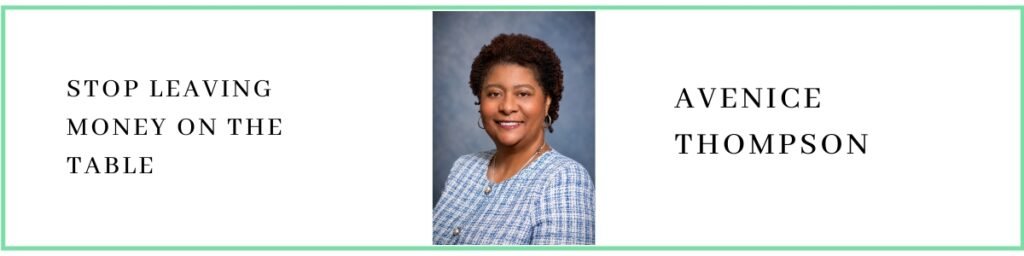
Avenice Thompson, profit-acceleration strategist, focuses on doubling profit without spending on marketing. Avenice shares common business-owner mistakes she observed in her corporate career, including underpricing, poor invoicing, and weak cashflow management, illustrated by a vendor unaware he’d been paid $1.2 million. She explains her proprietary profit acceleration tool that benchmarks a company’s profit margin against industry standards and sets short-term goals. Avenice emphasizes “mindset over money” and her success formula: mindset and movement plus competence, confidence, and commitment. She offers no-cost strategies like the “three 5s” (cut cost of goods sold 5%, cut overhead 5%, raise revenue 5%), reactivating past clients, eliminating unused subscriptions, negotiating rent, and defining a market-dominating position through differentiation and joint ventures.
3 Takeaways
Common Mistakes- Business Cashflow Management:
Avenice notes that one common pitfall for small business owners is poor cash flow management. She shares an anecdote about a businessman who was unaware of his substantial earnings due to lack of financial oversight. According to Avenice, understanding and managing cash flow is vital for business growth. Many business owners fail to track their invoicing and expenses, leading to unwarranted financial strain.
Mindset over Money- Embracing Success:
A major theme Avenice touches on is the significance of mindset in business. She emphasizes the need for entrepreneurs to embrace success without fear. Many, she argues, are held back by limiting beliefs such as the idea that money doesn’t grow on trees. By shifting their mindset and embracing success, business owners can unlock their potential and propel their businesses forward.
The Power of Market Dominating Position (MDP):
One of Avenice’s favorite strategies is defining a Market Dominating Position (MDP). She advises businesses to distinguish themselves from competitors by offering unique value propositions. Collaborations and alliances can also enhance differentiation, allowing businesses to leverage each other’s strengths.
ShowNotes
Click on the timestamps to go directly to that point in the episode
[01:25] Money Left Behind
[04:40] Profit Tool Benchmarking
[06:11] Mindset Over Money
[08:05] 2M Plus 3C Formula
[11:07] Three 5s Profit Boost
[13:36] Reactivating Past Clients
[16:01] Cut Costs and Negotiate
[17:27] Market Dominating Position
[19:56] Joint Ventures Referrals
[23:42] No Cost Differentiation
[24:41] Daycare Value Example
[28:03] Contact and Programs
Get In Touch:
If you’re interested in connecting with Avenice Thompson, you can reach her via her website, via Facebook, via Instagram, or via her LinkedIn.
For those interested in sharing their own stories on “Chatting with the Experts,” reach out to Paula Okonneh through her website or connect via LinkedIn.
Paula: [00:00:00] Hello, and welcome to another episode of Chatting With The Experts where I speak with phenomenal women from Africa, from the Caribbean, and in the diaspora. Today’s episode I’ll have an amazing woman, as usual, and our title is Unlocking Profits That Are Sitting on the Table. And my guest says, “Did you know that you could double your profit without spending on marketing?”
She is dedicated to empowering business owners to achieve exceptional results, and her mission is simple: she helps you generate more clients, close more sales, and significantly increase your revenue and profits efficiently and cost-effectively. And with that, I am going to invite Avenice Thompson to Chatting With The Experts.
[00:01:00] Welcome.
Avenice: Thank you. Thank you. I’m delighted to be here, Paula.
Paula: Thanks, thanks, thanks. I deliberately did not expand on your very impressive bio because I want you to talk about that, because I know you have an expertise in profit acceleration and growth strategies, and you said you will talk about mindset over money and so many other things. So let’s begin.
Avenice: Yes.
Paula: What do you say that there are some common mistakes that business owners make?
Avenice: Yeah, certainly. I wanna start by first saying during my corporate world I had interaction with several small vendors, and that is what really prompted me to do what I’m doing, because I saw the gaps. Many of them were leaving money on the table.
Paula: Hmm.
Avenice: You know, they would submit their invoices, for example, and I would look at the invoice and say, “They can’t be making money from this [00:02:00] service-
Paula: Hmm …
Avenice: because it’s crazy in terms of the pricing,” right? They were underpricing themselves in some regard. And in other situations you would realize, “Well, this is, like, two months and I haven’t received an invoice”.
Paula: Hmm.
Avenice: So you know they’re having problems managing their cashflow. And I remember one day I saw one small business owner. On the side of the road, his car was broken down, but I knew that weeks ago I was going through my statistics and realized I had paid him $1.2 million.
Paula: No.
Avenice: I’m telling you. No. So I stopped and I said, “What’s going on?”
“Oh, my car’s broken down.” And I said to him, “Why do you have a broken car when I just paid you $1.2 million?” He’s like, “You did what?” I kid you not. He was [00:03:00] shocked. At that point, it proved to me he wasn’t managing his funds Could you imagine me paying you $1.2 million?
Paula: You can see I’m speechless.
Avenice: Exactly, and I was too, right?
But he was even more speechless than both of us put together because he clearly- … didn’t realize how much money he was making.
Paula: Okay.
Avenice: And I said to him, “Let’s talk.” So we spoke. Um, I saw him maybe about three months ago, and I said, “How is business going?” “Good, man, good.” And I have some goose pimples just thinking about it
Paula: Mm-hmm
Avenice: because I know his business is going good because of the strategies I shared with him. And so that is what prompted me. Now, he had money leaving on the table.
Paula: Mm.
Avenice: He wasn’t managing his cashflow, and that’s a common mistake that many businesses make. They don’t manage their cashflow. They have [00:04:00] invoices outstanding. They don’t put the systems in place to make sure that when the money, um, when the service has been offered or the good has been sold, then the payment does not coming on time. And so that then prevents them from growing. Sometimes it’s because of the amount of financial expenses, their interest rates, all of that, that happens when you don’t manage your cashflow.
A lot of them are doing that. So that’s why I started doing what I’m doing now.
Paula: Awesome. So are you using some software for that? Because, I mean, you may know, some people may know that they are, you know, leaving money on the table, but they still don’t understand what they can do. They need a tool, they need some understanding. Is there a software that you, you, you help them with?
Avenice: So there’s a proprietary software- Mm-hmm … that assists [00:05:00] me
Paula: Mm-hmm …
Avenice: to a certain extent.
Paula: Okay.
Avenice: Um, to the extent to which I can actually do that proper assessment of their current business,
Paula: Mm-hmm …
Avenice: benchmark it against the industry standard. If you’re a painter, if you’re a builder, we can see, okay, fine, your current profit margin is 40%, but the industry standard is 60, just drawing a reference.
Mm-hmm. So at that point in time, I have benchmarked the industry, um, where you are versus the industry standard, and then we can determine, okay, you’re at 40, we need to get you in line to where the industry standard sits. And that’s the extent to which the software is. It also uh, provides us the opportunity to visualize the expected goal.
Um, What can we do in the next 90 days? What can we do in the next 100 days based on the gaps we’ve established in your [00:06:00] business? So it’s called a profit acceleration tool, and, and so it allows me to visualize but also benchmark. Mm-hmm.
Paula: Love it. Love it. So there’s something I think offline, because you and I have spoken of course before we did this.
Avenice: Yes.
Paula: And it’s mindset over money. A lot of us come into or go into business thinking, you know, we have to make money, or we have come from a background where you say money doesn’t grow on trees, you know?
Avenice: Yes.
Paula: And so
Avenice: Yes …
Paula: we can come into business with that, and that in itself can be a stumbling block, right?
Avenice: For sure. For sure. And many of us are afraid of being successful, and we don’t know it.
Paula: Yes. Yes, definitely.
Avenice: Um, I grew up, you know, in humble surroundings, but because of my mindset, I have learnt to embrace, and I’m also a
child of God.
Paula: Amen.
Avenice: And I know definitely… Oh, great. And I know definitely that if God was supposed [00:07:00] to put additional funds in my way-
Paula: Mm-hmm …
Avenice: I would be able to use it to build his kingdom.
Paula: Amen to that again.
Avenice: So in my mind, there’s absolutely no fear for more money. None. None whatsoever. Because I know everything I do is aligned with God’s kingdom, and so everything that happens to me is what God wants for me.
And so even if persons are not aligned in my faith, there is a higher being, yes? And we don’t control ourselves. We think we do, but we don’t.
Paula: Okay.
Avenice: And so we have to condition our minds to say, “Listen, I will embrace what’s in store for me.” Because once I get it, I will use it to empower and help others.
Paula: Yes.
Avenice: Take that mindset, and you would see things happen.
Paula: Yeah.
Avenice: You would see things [00:08:00] happen, and sometimes we have to speak it and just make it happen. You know, One of the formulas I have created and I’ve told myself, and each time I’m interacting with a business owner as a client or otherwise, I share this with them because this is what I believe is a true formula for success.
I say 2 M, 2 meaning mindset and movement. You have to take action. You can have all the mindset, but unless you take action… So it’s 2 M plus 3 C. Yes, what is 3 C?
Paula: I’m writing it down, 2 M and-
Avenice: Go
Paula: ahead
Avenice: and write it down … M,
Paula: okay.
Avenice: 2 M-
Paula: And 3 C …
Avenice: plus 3 C-
Paula: Mm-hmm …
Avenice: equals success.
Paula: Okay.
Avenice: And that’s what I use, and the three Cs, you must be competent at what you’re doing.
Paula: Competent.
Avenice: You must exude confidence.
Paula: Mm-hmm.
Avenice: And you must be committed. [00:09:00]
Paula: Important.
Avenice: Important. Everything else will flow. If you’re committed, then you’re gonna be consistent, you’re gonna be… You know, you’re gonna be diligent, you’re gonna be all of that. So that’s my formula for success, and I believe as business owners, um, the difference between those persons who succeed and those who don’t a lot of times starts with mindset.
Mindset. It can be a very lonely world, you know that. Yeah. It can be very lonely when you’re an entrepreneur.
Paula: Mm-hmm.
Avenice: But if you have the mindset that I’m going to put myself in the right room and meet the right persons, if you have the right mindset that, listen, it’s not as lonely as it feels, Mm-hmm
I am actually the one who’s making it lonely, I have to shift my gear, take action, and move forward, you’d [00:10:00] realize you make a big difference.
Paula: Loving it, loving it, loving it. But something I didn’t get, I got the Cs, but what are the Ms for? Mindset is? Mindset-
Avenice: Mindset and movement …
Paula: mindset and movement, okay.
Movement. All right, let me say this now. So two Ms, so mindset plus movement, plus three Cs, competent, confidence, and commitment give you success. I love it, Avenice. This is a great formula. Who made that up? Who came up with it?
Avenice: I did.
Paula: With the help of God.
Avenice: With the help, of course.
Paula: All right. I love that. I love that. I love it. Okay. So now I know you talked about how business, we started off by saying businesses are leaving money on the table.
Avenice: Yes.
Paula: And that example of the man who had $1.2 million.
Avenice: I’m telling you.
Paula: Oh, Lord. How won’t you know when $1.2 million hits [00:11:00] your account, except you’re not looking at it, you’re not managing it yourself?
Avenice: Exactly. Exactly. Exactly. Exactly.
Paula: But I know you mentioned that businesses can grow without spending tons on marketing. Yes. Let’s talk about that.
Avenice: Yes, for sure. Um, and in my wheelhouse, there are like 40 different strategies.
Paula: Okay.
Avenice: Yes, it sounds a lot, but that just tells you that there are so many gaps that we can plug, right?
Mm-hmm. There are like 40 different strategies, but I like to go after the low-hanging fruits.
Paula: Mm-hmm. Love
Avenice: that. And some of the low-hanging fruits I really wanna drop today because I want your, your listeners to get some value. And at the end of this podcast, when they walk away, I want them to just go and just make these small changes and watch what happens
Paula: Mm-hmm
Avenice: without spending anything.
Paula: Mm-hmm.
Avenice: Look at their cost of goods sold.
Paula: Mm-hmm.
Avenice: Just reduce your cost by 5%, just a measly 5%. 5% is really [00:12:00] child’s play, and so that’s not too much to ask. Look at your cost of goods sold by 5%. Look at your overheads. You know, Sometimes we have a lot of expenses that we don’t pay attention to, but make a deliberate and intentional effort to look at your costs.
Try and reduce that by just 5%. Those are two areas, the cost of goods sold, 5%, you reduce that by 5%, but you also reduce your overhead by 5%, and then increase your revenue by another 5%. I call that, I like formulas, right? Because they’re easy to remember. I call that the three 5s formula.
Paula: The three 5s.
Avenice: Because it’s making small changes in these three areas that can make a huge difference.
Now, if they were to do that, I guarantee they’d find at [00:13:00] least 25% increase in their profit. I’m not saying revenue, I’m saying profit.
Paula: And that’s clearly the big difference.
Avenice: Because all my strategies are geared towards profit. As we say, revenue feeds your ego, but profit feeds your family.
Paula: I like that.
Avenice: We want to feed your family. That’s what we wanna do. So just make those, for all the listeners out there, go right ahead, look in your business, reduce your cost of goods sold by 5%, reduce your overheads by 5%, and increase your revenue by 5%. You may ask, how can I increase my revenue by 5%? Here is one strategy. Look at all the clients you’ve ever had from the minute you started your business until now.
Look at all of them. Go back and reach out to 20 of them. Just 20. Just 20, [00:14:00] because I guarantee you that they’re not all still doing business with you. We have that funnel that’s just there filled with leads, filled with customers, but we have not been touching them. Go back, reach out to 20 of them. Ask them some engaging question.
Whatever your business is, give them an offer. Make them an offer. Invite them to do business with you again. Send them one of your promotional items and look at, look at things turn around. You’d realize there must be a few of them that will come and say, “Ah- I didn’t even remember Paula had that. That’s good.
They’ll take action. You see, A lot of times we’re not top of mind of our clients because we’re, we, we get them as a client and that’s it. Our goal should be to extend what we [00:15:00] call the C- um, V- L the Customer Value Lifespan. We should aim to do that so they continue to do business with us longer than they currently do.
That costs us nothing. It costs us nothing to go in your inbox and look at those clients, or in your CRM, and see your list of clients that have not done business with you for a while and re-engage them. Costs you nothing at all, but it can bring a lot of profit.
Paula: So true. So that’s part of the low-hanging fruit.
They’re already there. They’re already in your contact.
Avenice: Exactly. Already there. Already there. Already in your contact
Paula: That’s a good one. That’s a good one. Okay, you said there were 40, so you’ve given us one strategy. Can you give us, like, two more? Sure. Show me two out of the 40, three out of the 40.
Avenice: [00:16:00] Sure.
Let’s look at cutting costs.
Paula: Mm-hmm.
Avenice: That’s a big one because oftentimes we’ve signed up for a lot of, um, especially now that AI has all these, I call them shiny tools.
Paula: Mm.
Avenice: We sign up for this and we sign up for that, and we have this um, ongoing subscription that we don’t even use.
Paula: Right, so easy.
Avenice: Make that deliberate effort. It could be a subscription to a magazine. It could be a subscription to even an association that you thought you would have been attending or being a part of that you’ve never really taken advantage of. Look at those costs. Eliminate them totally. And once you do that, that goes straight to the bottom line, so that’s money right in your pocket.
When was the last time you actually negotiated your rent for your property where you live? Sign a five-year lease [00:17:00] and negotiate a rent. “I guarantee you my rent for the next five years. Things are getting tougher, but I want to stay in this location. How about you giving me a 10% break if I sign a five-year lease and I commit to remaining here?”
Now, you know you want to be there, right?
Paula: Mm-hmm. That’s a good one.
Avenice: That, again, sends right to the bottom line. Now, the other one I really, which is my favorite of all the strategies. Why is it the favorite? Because it’s one that people take for granted, and it excites me whenever I get the opportunity to work with a client to implement it, and it’s called your market dominating position, your MDP.
What is that? I’m going to use the example of an accountant. You’re an accountant. [00:18:00] There are several other accountants all over the place. Ask yourself the question, why should they come to me? What makes me different? A lot of businesses, they get into business, and they just duplicate what’s already there.
They don’t aspire to differentiate themselves. And working with clients, you’d realize it is what differentiates you that helps you to grow. That makes you stand out. So even though you are an accountant, you can be an accountant that’s offering an accountant plus other services, an accountant with a difference, right?
You can be a painter. You could be a landscaper. You could be a roofer. Um, I remember speaking to a roofer a couple weeks ago actually, and he was, [00:19:00] “Well, I just fix roofs. What else can I do?” And I went the extra mile to have this conversation with him. I said, “Let me ask you a question. Have you ever been in a situation where you’re replacing someone’s roof, right?
And in doing so, you mess up their landscaping. What happens? You leave because you’re focusing on a roof, and that person now has to go and spend money to replace the landscaping that’s around that you’ve just destroyed. I’m not asking you to be a roofer and a landscaper, but what I’m asking you to do is build a relationship with a landscaper who can then come to your clients and secure, protect the landscaping that other roofers don’t do.
They don’t focus on that.”
Paula: So collaboration.
Avenice: [00:20:00] Exactly.
Paula: That’s a good one.
Avenice: And sometimes when you’re seeking to um, differentiate yourself, it doesn’t necessarily mean that you’re doing it alone. It also enables you to collaborate, form joint venture partners, Hmm … form alliances.
Alliances, that’s one of the big strategies that help you to generate profit.
Paula: That is so true. I just, um, a few, well, not a few weeks. I mean, This keeps coming up with a lot of my guests, like if you want to go far… Uh, was it if you want to go fast, go alone, but if you want to-
Avenice: Go alone, but if you want to go far Uh take someone with you …
Paula: take someone with you, yes.
Avenice: Yes.
Paula: So that’s a great point. Alliances, collaboration-
Avenice: Yes
Paula: … joint ventures.
Avenice: Yes, yes, yes.
Paula: The whole burden is not just on you. Yes, as you say, you damage-
Avenice: Yes
Paula: … like in the example you just gave-
Avenice: Yes
Paula: … the roofer damages the landscape, but they just got on the landscape, I mean, of [00:21:00] the customer.
You get on the phone, you call the person you are in partnership or have a collaboration, collaborative, um, relationship with. They come and they fix it. You’ve got a customer for life. They’re like, “Wow, this just happened. They fixed it.” They call their friend. You know? Exactly,
Avenice: exactly.
Paula: Now you’ve got two customers, two satisfied customers.
Avenice: Exactly. And you can actually promote that as we don’t just take care of your roof, we protect your landscaping.
Paula: Yes.
Avenice: So you make sure your messaging is reflective of the differentiation that you’ve created based on that joint venture. You know what’s gonna happen? That landscaper, when they’re in the area doing landscaping, they look up, they say, “That roof is about the 25-year mark to be replaced.”
Paula: Yes.
Avenice: They’re gonna call the same roofing company-
Paula: And say, “Yeah, hey” …
Avenice: and say, “Listen.” Or they might tell their client, “Listen, I have a roofer who I work with who does an excellent job.”
Paula: Mm-hmm.
Avenice: Right? Here is an opportunity. Here is his card, or here is his contact, or here’s her card, and here is [00:22:00] her contact.
Paula: Mm.
Avenice: Right away, you didn’t pay for that advertisement. It cost you nothing other than a relationship to get that additional business.
Paula: That’s, that’s so true. That’s free advertisement.
Avenice: Exactly.
Paula: Free ad.
Avenice: Yes, we have to be collaborative, and again, this comes back to the point that I made when we, when we began, mindset.
Paula: Yes.
Avenice: Mindset. Our mindset would be such that I am open to collaborate with those who I can enrich and those who can enrich me in the process.
Paula: Yes. Bring in value at all ends.
Avenice: Bring in value, exactly. And just one other hint, one tip. How do you find good joint venture and alliances? Ask yourself this fundamental question.[00:23:00]
What do my customers need before they do business with me and after?
Paula: Good point.
Avenice: Those persons are going to be excellent joint venture partners because they’re going to send business to you, you’re going to send business to them, and it’s just going to be a domino effect, right?
Paula: Like a circle too, right?
Avenice: And like a circle. You’re gonna be ending up closing that loop every time.
Paula: Mm-hmm.
Avenice: Right?
Paula: So good. So good. Oh my gosh, Avenice, we could talk forever.
Avenice: I know we can.
Paula: But there’s something you mentioned about a no-cost strategy as a game changer. What exactly is that? Is that the same thing?
Avenice: Yeah, these are all no-cost strategies.
Paula: Got you.
Avenice: Because they cost you nothing to implement. Nothing.
Paula: No cost for the client.
Avenice: No cost.
Paula: Yes.
Avenice: No cost. They cost you nothing. You have [00:24:00] a relationship with someone, you tell them the value you’re offering them, they tell you the value that they can give to you, and you sign on the dotted line. It doesn’t cost you anything.
You move along. You get a referral. It doesn’t cost you anything to sit down and say, “What is my market dominating position?”
Paula: Mm-hmm. Right?
Avenice: Yeah, it costs you time.
Paula: Only. Not that only
Avenice: But you’re spending time, you’re spending time scrolling on TikTok anyway- Right … so you might as well spend time
Paula: Get in some business.
Avenice: Exactly. Mm-hmm. And spend that time… And you know, again, this excites me, because when you start to dig deep and say, “Why you?” You ask the questions. So ask yourself your questions. For the listeners out there, ask yourself the questions, “Why me?” Okay, I’m offering, I have daycare services. Then why should they bring their child to me?
Right? Why me and not the daycare across the road or over in the next city? Why me? You know they should bring their child to me [00:25:00] because I guarantee them that their child would read by the age of two. That’s why they should come to me. You know why they should come to me? Because I’m not just a daycare, I’m also making sure that the children get food that is of nutritional value to them.
I create specific menus, and I make sure that I pay attention to what I’m feeding my children. No corn curls and no chips. We’re feeding them good, nutritious food. So nutrition is a big part of my daycare service. That’s why they should come to me.
Paula: And I notice you personalized it. You didn’t say, “They should come to me so that their children…”
You said, “My children- Exactly … are being taken care of.” So you-
Avenice: Exactly
Paula: … personalized it.
Avenice: Personalized. They become mine once they’re with me.
Paula: Yes. Love it.
Avenice: And as a parent, we feel comfortable when that person [00:26:00] then shows that, aha, you are the extension of me. Yes.
Paula: Yes.
Avenice: I’m leaving my child in a safe environment.
Paula: Safe, yes.
Avenice: Continuing on the daycare, why should they come to me? Because I have cameras. You can look at your child throughout the day. Why should they come to me? Because all my assistants are certified, trained, and they have teachable moments for the children. That’s why the children who have graduated from my daycare can all read by the age of two.
Wow, I want to send my child there, wouldn’t you?
Paula: I love it. I love it. It’s more than just daycare. This is
Avenice: exactly
Paula: bringing value to the next generation-
Avenice: Exactly …
Paula: so they in turn can impact the next generation.
Avenice: [00:27:00] Exactly. Exactly. Exactly. You bring peace and comfort to that parent as well. Mm-hmm.
Paula: Mm-hmm. Mm-hmm.
Avenice: Right? Mm-hmm. So again, this is why it excites me, and I sure you can see the passion that’s coming out.
Paula: Absolutely. I’m looking at your face, I’m looking at your smile, I’m looking at your eyes.
Avenice: Yes
Paula: … they lit up as you spoke about these things.
Avenice: Because, because it costs you nothing. Mm-hmm. It costs you nothing.
Paula: Mm-hmm.
Avenice: But these are the same strategies that the big businesses use And they have us spending our money with them. Every day we walk into a Walmart, a Home Depot or whatever, it’s the same strategies that they’ve been using over the years, right?
Paula: And we just didn’t know.
Avenice: We just didn’t know.
Paula: As you walk in, they say, “Hi, welcome to wherever.”
Avenice: Exactly.
Paula: Yeah. And you feel, “Oh, they noticed me. Why can’t we do the same?”
Avenice: Exactly. Simple things that we can do.
Paula: Yes.
Avenice: Right? Yeah. And the same way we run to spend money with them, so people can come to [00:28:00] spend money with us as well.
Paula: I love it. I love it. Well, just for the sake of time-
Avenice: Yes, for sure. … we,
Paula: We are actually rounding up.
How can people get in touch with you, those who are listening who haven’t been able to join us, so that they can ask you questions? How can they get in touch with you, Avenice?
Avenice: Sure. Thanks for asking. I’m on LinkedIn. Um, I’m also on Facebook, but my website- Mm … is your, Y-O-U-R, business, B-I-Z N-E-S-S, bar.com.
That’s my website. And at that point in time, you can select a time, you know, just choose a time for us to meet, connect, and I’ll be happy to do that, yourbusinessbar.com. They can send me an email at info, I-N-F-O, @yourbusinessbar.com, and be sure to say, “I was listening to Paula’s podcast,” and you’ll be treated like a [00:29:00] VIP.
Paula: Because you are.
Avenice: So be sure to say that when you connect with me.
Paula: Absolutely.
Avenice: Yes. I have one-on-one coaching program. I have um, group coaching option, and I have a business academy for those persons who just want the strategies. They wanna learn on their own time, they wanna do their own thing, and they can just go right ahead and get it.
Obviously, it won’t be the same value, but it gives them a start because sometimes, again, once you have the mindset you wanna start, you have to take action, right?
Paula: Yes.
Avenice: Yes. That’s where the M comes in. Mindset, move. You gotta move towards that.
Paula: I love it. I love it. And you’re gonna love it.
Avenice: And social media?
Paula: I know you’re on LinkedIn.
Avenice: Yes, I am. I am on LinkedIn, and I’m also on Facebook, Your Business Bar. I take it right through, um, Instagram. Don’t use Instagram that much, but it’s still there. It’s still active, Your Business Bar all the way through.
Paula: All right, great. And for those of you listening or viewing on [00:30:00] YouTube- If you’d like to be a guest just like Avenice has been, reach out to me on my website, which is chattingwiththeexperts.com.
I’m also on LinkedIn, my business page there is Chatting With the Experts. I’m on YouTube. Please subscribe to my YouTube channel where you can see this episode with Avenice Thompson and all the other phenomenal women who have shared their expertise. And I’m also on Instagram. My handle there is @chat_experts_podcast. And now we will open up the floor to all who joined us so that they get to speak with the wonderful and dynamic Avenice Thompson and ask her all the questions that I either forgot or didn’t have enough time to ask her.
Thank you again, Avenice, for saying yes to being a guest.
Avenice: Oh, it’s been my pleasure.
It’s been my pleasure. I hope someone out there can take action, [00:31:00] just use those strategies and change your business around. It’s not that you don’t have a good product or good service, it’s about implementing the right strategies, the right strategies. I also offer a free assessment. If someone wants to, you know, have a free strategy call, we can hop on a strategy call.
I offer that because the truth is the difference between those who succeed and those who don’t is support, and I’m here to support them.
Paula: So true. Thanks.