
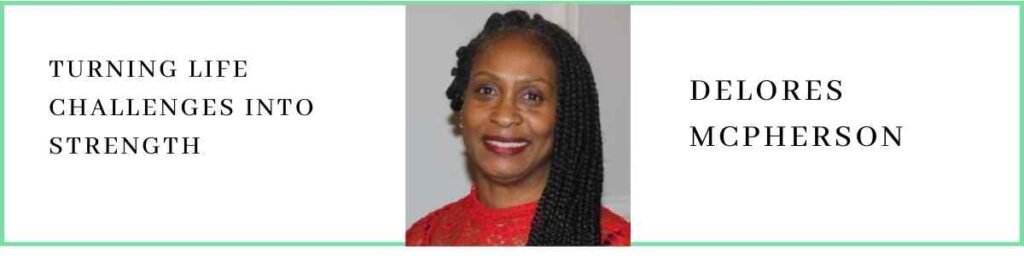
Delores McPherson, a seasoned professional in mental health with extensive qualifications and experience, discusses her career journey, shaped by personal grief and a challenging relationship, and describes her work with children and families in the NHS. The conversation highlights the cultural stigma around mental health in African and Caribbean communities and emphasizes the importance of discussing emotions and involving the whole family in mental health interventions. Delores also shares a deeply personal story about her son Kieran’s diagnosis with a life-threatening illness and subsequent liver transplant, illustrating the themes of adversity, strength, and healing.
3 Takeaways
The Power of Community and Faith:
Delores emphasizes the importance of a supportive community and faith in overcoming life’s adversities. Her family’s journey through the liver transplant process is a profound example of resilience. With a community of prayer warriors by her side, Delores navigated the challenges with hope and gratitude.
The concept of a “village” raising a child resonates deeply with Delores. She integrates this philosophy into her work, emphasizing cultural sensitivity and systemic support as crucial elements in mental health care.
Transforming Trauma Into Purpose:
Delores’s journey with her son has profoundly impacted her professional life. She approaches trauma with a renewed understanding, recognizing that every individual’s adversity is unique and meaningful. Her experience has strengthened her commitment to supporting children and families dealing with mental health challenges.
Inspiring Strength and Healing:
Delores’s story is one of transformation, demonstrating how adversity can lead to strength and healing. She and Paula reflect on the importance of recognizing personal resilience, appreciating life’s every moment, and valuing the strength that comes from facing difficulties head-on.
ShowNotes
Click on the timestamps to go directly to that point in the episode
[02:15] Delores’ Professional Journey
[05:29] Working with Children and Families
[07:01] Mental Health in African-Caribbean Communities
[13:41] Tools for Managing Emotions
[16:22] Delores’ Personal Story: Her Son’s Illness
[27:09] Impact on Professional Life
Get In Touch:
If Delores’s inspiring journey has resonated with you, she is available on Instagram under the handle mymindmatters_uk, and on LinkedIn.
For those interested in sharing their own stories on “Chatting with the Experts,” reach out to Paula Okonneh through her website or connect via LinkedIn.
Paula: [00:00:00] Hello everyone, and welcome to another episode of Chatting with the Experts with me, your host, Paula Okonneh, where I speak with women from Africa, from the Caribbean, and in the diaspora. These are professional women, these are entrepreneurs who have been very successful at what they do, and our mission jointly is to educate, empower, and inspire women globally. Today, we are gonna be talking about how from adversity comes strength, and from strength comes healing. My guest is Delores McPherson, and I’ll tell you a bit about her. She has worked in mental health and with children and families for over 25 years and holds professional qualifications in psychology, clinical supervision, trauma focused intervention counseling and neurolinguistic [00:01:00] programming, also known as NLP.
She’s also an accredited member of the British Association for Counseling and Psychotherapy, BACP. That means she’s in England. She’s a proud mom of two children aged 38 and 28 and you see me looking surprised ’cause when she comes on the show, you’ll be surprised as well. She looks so good and she’s a loving grandmother of a 15-year-old grandson. That was my biggest shock. She has also faced her own personal challenges when her younger son was diagnosed with a life-threatening illness at the age of 15. It marked the beginning of a long traumatic journey. Over the last 13 years, Delores has had to juggle demanding work responsibilities while at the same time navigating [00:02:00] deeply emotional and trying times in her personal life. I’ve said a bit about her, but she’ll tell you even more. When she joins us in a few seconds. Welcome to Chatting with the Experts, Delores.
Delores: Hi Paula.
Paula: Thank you so much for saying yes. I never take it for granted when I have guests because there’s so many other things you could have done, but you said yes. So thank you for being a guest.
Delores: You’re welcome. I appreciate it.
Paula: Oh. I said a little bit about you because I always have the best guests. The bios are always so impressive. I’m like, oh my word, where do I start? Where do I end? So I know I didn’t say everything. Is there anything I left out that you’d like to talk about or tell the audience before we jump into the show?
Delores: I suppose it’s really about, you know, [00:03:00] in the center of all of this, God. God’s in the center really. In all of the years I’ve worked in mental health as you, you know, rightly said that there’s been some really challenging times, but prayer has been so important part of my life and I think that’s, you know, all I would really wanted to add at this time, at this stage.
Paula: Mm-hmm. Oh yes. Without God, where will we be? Where will I be? I know that for sure.
Delores: Same here. Absolutely. Yeah.
Paula: Yeah. So, you worked for over 25 years in the mental health profession with children. Let’s talk about that, your experience and how did you get into it? Did the profession and, you know, what’s your experience there?
Delores: Yeah, it’s quite interesting and that’s a really good question because, you know, I started my studying later in life. My father passed away in 2002 and I just started to do my psychology degree. And then it was, I was coming to the end of a really difficult [00:04:00] relationship that I was in, and I remember prior to starting the psychology course, I remember going to the open day. They do open days in the universities. And the lecturer that was facilitating said, I remember him clearly, and he said, if you are in a rocky relationship, by the end of this three year degree, you will end because of the growth and the development and the learning that you’ll have in oneself.
And that’s exactly what happened. And you know what that self-learning enabled me to do is build my self-esteem, build my confidence, recognize that actually I do have self-worth and confidence. And so it’s what got me into it really. So my own personal grief, but also coming to the end of a relationship that wasn’t healthy for me at that time. So from there I went into, I decided I wanted to do counseling as a qualification. So went into that room after the [00:05:00] psychology and then that’s been, it got into the voluntary sector, worked in different VSOs and also within the statutory NHS, and that’s where I currently am working at the moment in mental health.
Paula: Wow. Wow. I’m sorry to hear about your dad passing. I know loss, grief.
Delores: Yeah.
Paula: It’s difficult. It’s a long journey.
Delores: It is.
Paula: Yeah.
Delores: Absolutely. A long journey. Yeah.
Paula: Mm-hmm. Mm-hmm. I noticed that you work with children and family. Why children and families? Why not? You know, teens, young adults, older adults?
Delores: Yeah.
Paula: Any reason?
Delores: Absolutely. And I think it’s really important, you know, when we work with the entire family, it’s the systemic issues and sometimes there’s the intergenerational trauma that is just a thread that goes all the way through. So if I work with just for instance, a young [00:06:00] person. They’re going into the same family home, they’re going back into the same environment where there could be issues. There’s adversities. So working with the entire family unit just enables everyone to come from a different lens and understand and acknowledge and take their own responsibility and accountability. I think it’s really important that will enable the change , enable the empower and enable the environment to change. You can’t just leave it to one person, one child, or one parent to change. It’s the entire environment.
Paula: I agree. And what ages are the children? Are they, you know, like from, I mean from four, from seven till 18? How, what age range do you…
Delores: So , in terms of within the NHS where I work, it’s from about four to up to 18.
Paula: Okay.
Delores: Yeah. And then parents will get invited to sessions as well. [00:07:00]
Paula: Okay. Okay, so you know mental health, I mean, between when you started and you said, I think it was shortly after your dad passed or while, or during the time he passed? So that was 2002, and now mental health has become, you know, more mainstream. We can talk about it a bit more, but is there still, do you find there’s still a stigma or is it still taboo? Or how has that changed in between the time that you started and now?
Delores: Well, in comparison when I started in 2002, it’s such a taboo, particularly in the African-Caribbean community.
Paula: Mm-hmm.
Delores: And so, you know, no one wants to talk about their business outside of the door. Everyone brushes things under the carpet and it’s almost like, don’t my business outside of the door.
Paula: Yeah.
Delores: What you doing that for? You know?
Paula: Yeah.
Delores: And I suppose it’s over the time. We’re now in 2025 and you know, it has [00:08:00] changed, but we still have a way to go. So I even think about going into churches and talking about mental health, going into, you know, schools and going into other agencies so that we can ensure that mental health is being spoken about. Mental health is spoken about within the home because where else would we recognize changes in our children or in our parents? You know, as far as I’m concerned, we all suffer from low mood without a doubt. However, it’s how we manage to get out of that low mood. Does it then escalate? Into, you know, depression, clinical depression, or, you know, is that low mood? Let me put some things into place. Like, let’s go to the gym. Let’s go along family walks together because all of those things help with the, you know, stimulating the endorphins in the brain.
And so it is important that we talk, we talk, we talk, we talk about what’s going on, changes. We have to recognize that in [00:09:00] our young people because otherwise the schools or you know, other agencies don’t do it for us. We’re the first point of contact as parents. Let’s think about how we can support our children and young people. You know, I’ve got a thing as it’s the first five years of a young person’s life. So the attachment, the communication, how the children see, how the parents interact with each other. The first five years are important because it shapes the next, the last 70 years of someone’s life. That’s so real, really, really real.
Paula: Yes, yes, yes. And you said, you know, the first five years of a child’s life is so important because it affects the next 70 years. And, you know, you, you mentioned that you noticed that among African and Caribbean communities, and this is worldwide, not just in England. ’cause I know you’re in England, you know, mental, mental health is regarded as a taboo or stigma. Yeah. [00:10:00] Because, especially when you said the word 70 years, I know that as a people, as a race, even if we are not from the Caribbean or from Africa. But you know, like I know even among African American, we believe in extended families.
So we have, you know, multi-generations, I mean, in one family. So how do you find in your work, you know, that this. How do you address that? Because you know, most size is not just the child or the children and their fam and their mom and dad. You have aunties, uncles, and then you have the grandparents. Yeah. How do you, you know, deal with that?
Delores: Culture is very, very important. When I’m doing assessments for the service that I work with, it’s important to, you know, include culture. For me, I think about the village. As a village. We work together, you know, the elders and, and the elders compared to the youngest. So it’s really important that if a young person’s not bringing in a parent, they’re bringing in an older sister, that is fine also, you know, [00:11:00] because it’s about the systemic way of thinking. It’s a village. And even, you know, I’m a manager within the NHS and even within my team, I say to them, talk about culture. We don’t always get it right if you don’t understand, ask. So talk about, you know, what are the, you know, there’s something called a social graces. And within the social graces, it talks about culture, it talks about race, identity, religion. All of those things are really important for an individual’s identity. If we leave our culture, that’s part of our identity. That’s minus something of a young person. So talk about it, village mentality.
Paula: So, you know, somebody said, I think the first time I heard they said was Hillary Clinton, that is a village that raises a child. But she said, of course that comes from Africa. And it’s true. I mean, we grew up with, you know, grandparents, sometimes even great-grandparents influencing what you did.
Delores: Absolutely.
Paula: Extended [00:12:00] families were just part of the family. Your grandma, her mom, her uncle, a brother. You do something by the time you get home it’s reached, you know it’s already at home and they know what has happened and they’re waiting for you. So in other words, what you’re saying is that you talk about culture and embrace culture and you know, educate too because you know, that’s education that sometimes or many times changes the mindset.
Delores: Yeah.
Paula: We were brought up in a culture mean, I was brought up in a culture where feelings weren’t talked about, you know?
Delores: Yeah.
Paula: The only feelings my mom used to always say, if you can’t hear, you’ll feel, and it was a physical smack.
Delores: Right, right.
Paula: People express their feelings.
Delores: Yeah, it’s very important. And sometimes, you know, even the word anger, when we about the word anger and you know, for particularly some of our young males that come through and the schools will put you in the referral, oh, he gets really angry. Angry is an okay emotion. It’s an emotion but it’s how we manage to regulate [00:13:00] that anger. Yes. And so it’s giving the young person the tools to talk about, I am angry right now. But what are the tools for you to regulate that? And that’s my job to ensure that they are able to manage all of those emotions, but talk about the emotions, not just I’m angry or I’m rage for, or I’m, you know, because sometimes those are the labels that get impressed onto these young people. And so it’s important that, you know, they talk about these labels, they talk about their emotions, and you know, not to be called, oh, you are just sensitive. It’s not about sensitive. It’s about I want to be accountable for my feelings and my emotions.
Paula: So let’s talk about one or two of those tools, because yes, are young males are stigmatized, I wanna say with, you know, that angry label and dealing with that and the appropriate manner can take away some of that, you know, stigma, I wanna say, or, you know, [00:14:00] the negative association you see a young male and it’s like, oh my gosh.
Delores: Yeah.
Paula: If you get to know him, you may know the reason why. Yeah. So what are some of those tools?
Delores: So some of those tools are that you just identified getting to know that young person because sometimes these young people don’t feel heard. So what are some of the, you know, reframing some of the questions. Don’t say, oh, you are angry. What’s happening for you right now? You know, because often it’s from zero to a hundred quite quickly. Let’s think back from zero to 10 what’s going on there from zero to 20. Break it down so that they can understand that actually, yes, it was that thing that happened two weeks ago that I’ve just built up over time and now I’ve exploded and it’s being called you’re rageful, you’re angry.
So it’s really listening, talking, communicating, understanding that young people thinking [00:15:00] about what adversities they have may have been through in life at that time so far. You know, they could be 16, 17. We dunno what their life story is, so let’s think about that. Let’s talk to them about that. Really highlight their strengths. Sometimes it’s, you are negative, you are this, you are that, but what are your strengths? What are your protective factors? What, what do you want to do when you, you know, get older? Who knows? I’m still thinking about what do I need to do when I get older? But a young person, you know, sometimes we’re asked that question, what do you wanna be when you are older?
I dunno, you know, but let’s work with that. Let’s unpick that. Let’s do, I don’t know, some sort of support, a linear timeline. They’re some of the things, they’re your qualities really highlight qualities rather than staying on onto to negatives all the time because that’s probably what they hear all the time at school and elsewhere that causes them to get really angry. No one listens.
Paula: No one listens. Yeah. [00:16:00] You are so right.
Delores: Yeah.
Paula: You are so right. Many just want to be seen.
Delores: Yeah.
Paula: And recognize that you are someone. You are important. You’re important to me, and so
Delores: yeah.
Paula: Love yourself.
Delores: Yeah, absolutely.
Paula: Talking about young men, young boys, boys, you mentioned the personal story. Your son, your 15-year-old son was diagnosed with an illness and a life threatening disease actually. Let’s talk about that because I know that has kind of influenced you, you know, what you do and the way you deal with trauma.
Delores: Yeah, yeah. So my youngest son now is 28. And so at age 15, I can remember it to the day. And he used to go football practice. So he was a Saturday evening, afternoon, and picked him up from football practice and I, he looked, he said, mom, I feel really, really tired. More tired than usual. And when I looked around at his, his eyes, the whites [00:17:00] of his eyes were really yellow.
Paula: Oh my gosh.
Delores: And I was like, I didn’t notice that before. Anyway, that was the Saturday, Sunday he seemed to pick up. And on the Monday, went to school and he came home. He said, mom, I was really nauseous at school and actually vomited. And his eyes, the whites of eyes are still yellow. And I was like, oh my goodness, I’m taking you to the doctor. So didn’t go to school on the Wednesday or the Tuesday. Took him to the , you know, just the local gp and, he said, oh, we’re gonna have to send for blood test. We’re gonna have to do this. But he looks fine. He is a healthy lad. Looks fine. So he went to school on the Wednesday and he came home and he still felt unwell, was still waiting for the results to go come back for the blood test from the gp.
And I said, I was talking to a friend at work actually. She said, it’s your baby, take him to the hospital. Take him to A & E. So the Thursday I got home from work on Wednesday. I said, look, if you don’t feel [00:18:00] well, I’m gonna take you to the hospital on Thursday. He didn’t feel well overnight. So I said, right, we’ll go in on the Thursday morning, which we did. And oh my goodness, that was just a, well wind took him to the hospital, they’d done blood tests and they kept him in hospital immediately. All of these blood levels were really, really high. And it transpired that he had a liver disease just out of the blue. And what they called it was autoimmune liver disease.
So he was transferred to a hospital that was quite far away, but there was the well-renowned for the liver, in best in Europe. So I thought I want the best for my son. So he was transferred there. And he was in the hospital for about three weeks and doing tests, after test, after test. And that was age 15. From age [00:19:00] 15, he was going into his year 11, taking all of his exams. He actually missed one of the GCSC because he’d been in hospital. Anyway, from there on, he was on medication after medication. So that was 2012. In 2014, we started to go to the bathroom quite regularly. And it was, you know, it was regular. Like sometimes he was going up to 4, 5, 6 times a day.
Paula: Wow.
Delores: Then he increased, and he was then diagnosed with another autoimmune disease, which was called autoimmune colitis. So he was diagnosed with colitis as well. So he had the two autoimmune diseases. So that was 17, he got diagnosed with that 2014. Then just went on and on, up and down the hospital, outpatient appointments there was check in. And then one time in [00:20:00] 2019, 1 of the outpatient appointments, they said, well, it looks as though your, the medication isn’t working and. You’re gonna have to have a liver transplant. And it was just out of the blue, like
Paula: 17?
Delores: Like that at, so that would’ve been, he was 20 by then.
Paula: Okay. Oh my God.
Delores: 20 years by then. And it was just like a normal conversation you and I was having night now was an outpatient appointment and the consultant just said that it. My heart dropped. His heart dropped because we didn’t expect that. We just thought, okay, he’s on medication. Things are working. We’re just plodding along. And they said just that in one of the consultant appointments. And we both looked at each other like in shock. I didn’t know what to [00:21:00] do. He didn’t know what to do. We came out of that appointment and we just hugged each other. And just tears just came down because I was like, God, why can’t I just take all this pain away from my son? Give it to me.
Paula: Yeah.
Delores: Let me have his pain. Let me have everything that he’s going for. Because all of his prime years, he’s been in and out of hospital.
Paula: Yes. Oh. Even now as you’re talking, I can see it’s emotional.
Delores: It is.
Paula: Yeah,
Delores: it is.
Paula: It’s hard, huh?
Delores: It’s, and that was 2019, in the June of 2019. And yet to go for a series of appointments, to check in if he was suitable actually for a liver transplant. And he was. Then on December, it [00:22:00] was quite interesting because on that day I’d invited some friends round and one of the friends that I’d invited round, it was just like a pre-Christmas dinner. One of the friends that I’d invited around, she was a hard prayer. She prayed. She prayed, she prayed, and some people canceled and some people didn’t attend, but I believe who was there was meant to be there.
Paula: Mm-hmm.
Delores: And the person that I don’t really answer. I’m silent or I’m like, oh, can’t bother, let it drop. But my, you know, his phone, my son’s phone there was, he’d actually left it on the table and he was upstairs talking to friends and I picked it up at one stage and I saw a private number call coming through. I’m like, oh, private number, and it went off. And then the person started ringing. I looked at my phone and the private number came on my phone. I’m like, this isn’t… this
Paula: important.
Delores: This is important. So I rang, I picked up and they said, is that Ms. McPherson? Yes. We’re [00:23:00] trying to get hold of Kieran. We have a liver.
Paula: Wow.
Delores: And they’ve been trying to get hold of us for at least half an hour. She said he needs to come to the hospital now.
Paula: No preparation, nothing to, you know, no warning. Just come right down. Well, I understand. I mean, these things have to be done immediately. Yeah.
Delores: And when there’s a match, yes, because you know from being him, being on the list for as soon as the match comes about, the calls just come through.
Paula: Mm-hmm.
Delores: So they sent an ambulance and we had to go to the ambulance and it was, you know, they had to do blue lights. We needed to get there as soon as possible. I tell you my, in my heart’s beating now, my heart was beating so much. We just hugged and prayed and hugged and prayed and… when I said to you that, you know, the friend that I invited, she’s the prayer. So when the call came through, we just, everyone was there. We just went in the circle. Everyone was [00:24:00] crying and we were praying. My friend was praying and praying. We started ringing people saying prayers, prayers, prayers. ’cause Kieran’s got his… We need to go one… went to the hospital. So we got to the hospital and oh it’s must, I’m really shivering now. You are still thinking about it, you know, reliving the moment.
Paula: Yes.
Delores: My oldest son was there, his brother and everyone just came round. And then, yes, he was in hospital and then he was in preparation. They prepared him. We prayed, and then there was about 10 of us around him praying. Then he went down for the deliver operation. He was in there for about seven hours in the operation.
Paula: Wow.
Delores: Yeah, we all stayed at the hospital. It was quite interesting ’cause within that hospital they have a Costa coffee. So we all took home in the corner of Costa, within the hospital and to wait for him to come out of, so he actually went down about [1:00] AM So then he [00:25:00] came out about eight or nine in the morning. Yeah.
Paula: Wow. And of course I know you were there. Your prayer warriors were there with you, and God was there with you. And today he’s 28.
Delores: 28.
Paula: And how’s he doing?
Delores: He is doing really, really well. Yeah. He is doing well. It is really interesting when you look back at photographs of him early 2019, you know, the depart of 2018. You could see how unwell he was…
Paula: in comparison to now.
Delores: In comparison to now.
Paula: Wow.
Delores: I tell you. And so praise God. Right?
Paula: Praise God. Yes. Yes. I’m just looking at you.
Delores: Yeah.
Paula: And thinking, I know [00:26:00] the heartache to see a child unwell.
Delores: Yeah.
Paula: And you know when it’s a matter of life and death. ’cause I’ve lived through that with one of my children. And so what that does is make you appreciate every single day, you know when you wake up and they’re with you, you’re like, you know what? I can’t take this for granted. I can’t say, oh, I’m getting old. Because every time you look at the child, you realize this was God’s grace that this child is here, and every day the child is still here. You know what I mean?
Delores: Every day.
Paula: Nothing but His grace.
Delores: So amazing.
Paula: Wow.
Delores: Yeah.
Paula: So amazing. What an amazing story about personal resilience and personal motivation. And so what’s his name?
Delores: Kieran.
Paula: Aaron?
Delores: Kieran.
Paula: Kieran. Kieran.
Delores: Yeah.
Paula: Wow. What a story about [00:27:00] Kieran. I’m so happy to know that he’s Well, and as you say, you can see the difference between 2019 and 2025.
Delores: Yeah. Yeah.
Paula: Praise God for that.
Delores: Yeah. Yeah.
Paula: And so before we wrap up, I wanna ask how has that impacted not just your personal life, but how you operate in your professional life now with children and families, especially when it comes to mental health and trauma? Because that’s trauma you lived through.
Delores: It’s traumatic.
Paula: Yeah.
Delores: And you know, Paula, I think you said the words about gratefulness, yeah. But also thinking about everyone’s adversities are so different.
Paula: Mm-hmm.
Delores: And they may look at me as a professional, say she’s got it all together. She’s all well put together, but you don’t know what’s happening behind the doors. And everyone’s behind the door story is so different, but so meaningful to themselves. Because we all go through adversities. We all do. Yes. But for me, it’s about getting through [00:28:00] that door and the gratefulness and appreciation of life.
Paula: Yes, yes, yes. And I like how, you know, we spoke earlier on, and when you’re coming onto this show, you said one of the things you wanna talk about is from adversity comes strength, and from strength comes healing.
Delores: Yeah.
Paula: So I know that, you know, that was personal. You’re talking from the heart because from this adversity, strength and healing has come.
Delores: Absolutely.
Paula: Yeah. Yes.
Delores: Yeah, absolutely.
Paula: Wow. Never look at, you know, they say you can’t judge a book by the cover. You can’t look at someone’s appearance and think they have it all together. ’cause no one does.
Delores: Absolutely. I agree.
Paula: So, if anyone would like to get in touch with you, Delores, how can they find you? How can they get in touch with you? I guess online or do you have a website?
Delores: Yeah, my website is being relaunched, so that will come. But on [00:29:00] Instagram, I’m under mymindmatters_uk.
Paula: I like that. mymindmatters_uk. I love it. Yeah, because everybody’s mind does matter.
Delores: Absolutely.
Paula: Yes. Yes. And are you on LinkedIn as well?
Delores: Of course on LinkedIn under Delores McPherson.
Paula: Delores McPherson.
Delores: Yeah.
Paula: And for those of you who joined me today and those who will be watching this later on, I wanna say if you’d like to be a guest on this show Chatting with the Experts, please reach out to me on my website, which is chattingwiththeexperts.com. Similarly to Delores, I’m on LinkedIn. Just look for Paula Okonneh there, and I do have a business page just Chatting with the Experts. I am on Instagram and my handle there is at chat_experts_podcast. I’m on Facebook as Paula [00:30:00] Okonneh and as Chatting with the Experts, and I am also on YouTube. We have a YouTube channel, so if you’d like to be a guest and you’ve got a story or you have a mission like mine, which is to inspire, educate, and motivate women globally, reach out to me on those channels, and you too can be as wonderful as Delores has been. As she says, from adversity comes strength, and from strength comes healing. Thank you, Delores, for joining us today, and please for all who joined us today, please stay, stay, stay back so that you can have a one-on-one conversation with Delores. There’s so much more that we could talk about, but ’cause of time we couldn’t. Thank you, Delores.
Delores: Paula, take care.