
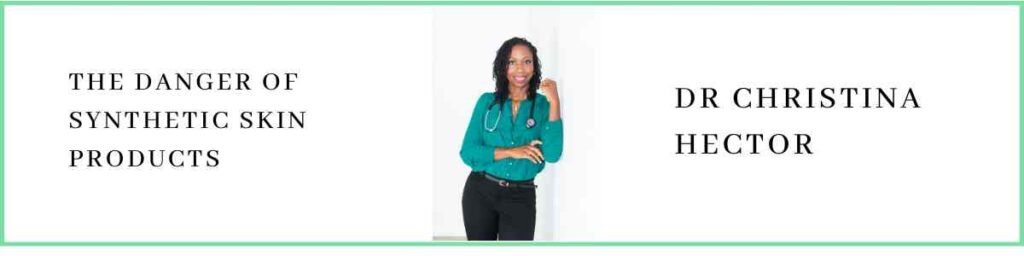
Dr. Christina Hector is a board-certified physician specializing in non-surgical sports medicine and regenerative aesthetic medicine and founder of Nature’s Puree, a physician-founded natural skincare line for the whole family. Dr. Hector shares how her medical school experience led her to avoid chemicals in hair and skincare products and begin creating her own natural formulations. She explains the benefits of plant-based skincare—vitamins and antioxidants that protect skin, the body’s largest organ—and emphasizes reading ingredient labels, especially as skin thins with age and absorbs more products. She outlines a simple routine: gentle cleansing twice daily, moisturizing, and mineral-based sunscreen, with optional vitamin C and retinol, and suggests seeing an aesthetician for concerns like acne, rosacea, or hyperpigmentation. She also discusses tallow/lard soaps, her book The Natural Skincare Playbook, and where to find her online.
3 Takeaways
The Case for Plant-Based Skincare:
Dr. Hector emphasized the benefits of plant-based skincare products, drawing parallels between nourishing our bodies with vegetables and nurturing our skin with plant-derived ingredients. These products, rich in vitamins and antioxidants, can protect our skin from free radicals and environmental damage. This approach aligns with holistic health principles, acknowledging our skin as the body’s largest organ and first line of defense.
Creating a Simple Skincare Routine:
Dr. Hector shared practical tips for developing an effective daily skincare routine. She stressed the importance of scrutinizing product ingredients, advocating for gentle, natural cleansers and moisturizers. Protection from the sun with mineral-based sunscreens was highlighted as a critical step. For those seeking additional benefits, incorporating vitamin C and retinol-based products can be beneficial.
Addressing Common Skin Challenges:
For those facing persistent skin issues like adult acne or hyperpigmentation, Dr. Hector suggested consulting with a professional aesthetician. A tailored skincare approach can often resolve these concerns, particularly when combined with a thorough review of current products.
ShowNotes
Click on the timestamps to go directly to that point in the episode
[02:35] Her Natural Beauty Origin
[05:21] Why Plant Based Skincare
[08:40] Simple Daily Skin Routine
[13:16] Plant vs Animal Based Oils
[15:56] Natural Skincare Playbook
[19:19] Where to Find Dr Hector
Get In Touch:
If you’re interested in connecting with Dr Christina Hector, you can reach her via her website, via Instagram, via Facebook, or via LinkedIn.
For those interested in sharing their own stories on “Chatting with the Experts,” reach out to Paula Okonneh through her website or connect via LinkedIn.
Paula: [00:00:00] It is another episode of Chatting with the Experts where I speak with phenomenal women. These women are from Africa, from the Caribbean, and in the diaspora, and they share my mission, which is to educate women, to encourage women, and to empower women globally. I have a few men who join me, but for the most part it’s women. Our episode today is called Healthy Skin At Every Age- A Physician’s Guide to Natural Skincare, and my guest who will join me in a minute is a board certified physician specializing in Sports Medicine and Regenerative Aesthetic Medicine. She’s also a health and wellness speaker, and she’s the founder of Nature’s [00:01:00] Puree, a physician founded Natural Skincare line designed for the whole family. She explores natural skincare, healthy skincare at every age, and she’s gonna share with us simple routines that women can use every day. And with that, I wanna welcome Dr. Christina Hector to the show. Welcome, Dr. Christina.
Dr Christina: Thank you. Thank you for having me.
Paula: Absolutely. Absolutely. I know that I just gave a snippet of your bio. Maybe you can expand on anything that I may have omitted that you think is really relevant. It’s up to you.
Dr Christina: I think you said it all. I’m a board certified physician. I specialize in non-surgical sports medicine, musculoskeletal injuries, and I do regenerative [00:02:00] aesthetics for, you know, all skin types. I do like to focus on melanated skin types also and I started doing aesthetics because I felt like a lot of women they didn’t know exactly what to do with some of the skin conditions that they have.
Paula: Mm-hmm.
Dr Christina: So that’s…
Paula: That’s really it. All right. Okay. Okay. Okay. So you said a lot of women did not know how to take care of the skin that they had.
Dr Christina: Mm-hmm. So, my journey started in medical school.
Paula: Mm-hmm.
Dr Christina: At that time, I’ll tell you the story. I had relaxed hair, so it was like chemically treated hair and you know, I was just, hair was falling out. It might have been, I was stressed from being in medical school and I went to hair justice after hair justice and nothing was changing. And I said, you know, [00:03:00] maybe is the chemicals that I am using on my hair. So I decided to, stop using chemicals and go natural as they would say. And when I went natural, the next dilemma I had was I wanted to really go chemical free, but a lot of the haircare products had a lot of chemicals in them.
And I searched and when I did find products that didn’t have chemicals in them, they were really expensive for my medical school budget. So I really couldn’t afford it at that time. And, you know, I might be aging myself, but back then it wasn’t as many people making natural skincare products and now we’re finding them in stores. But back then it was very few. So I was like, okay, you know, I’m in medical school, I’m smart, let me, you know, lemme see what I can whip up in the kitchen. So I started to make hair care products for myself [00:04:00] and as I went through this journey of making hair care products and trying it and seeing like really good results with my hair, I said, you know, something, the same chemicals I’m trying to avoid using in my hair are inmy skincare products.
Paula: Wow.
Dr Christina: You know, like when you pick up a bottle of skincare products and you look at the ingredients and you can’t pronounce anything that’s in them. So that’s when I said, well, if I could make products for my hair, let’s see if I can make products for my skin. You know, and the whole goal for me, was as I educated myself, I realized these products are dangerous for, you know, our health. So I started to make skincare products.
Paula: Hmm. So you said being in medical school and being on a tight budget, you wanted to go natural with your hair, but that was smart. I mean, looking at the products of the skincare products and saying, Hmm, these are not [00:05:00] healthy products. Being in medicine, you knew that it wasn’t.
Dr Christina: Mm-hmm.
Paula: And then you thought, what would be the benefits, right? Of natural skincare. We know what the, me, we know what the benefits are, but we be lay people, people who are not medicine sometimes don’t know what the medical benefits of natural skincare are.
Dr Christina: Right, right.
Paula: So tell me about that.
Dr Christina: You know, so when I say like natural skincare, you know, I, I tend to mean like using plant-based products. So a lot of these products are made in nature. So there’ll be like the plant-based oils, avocado oil, olive oil, castor oil, the plant-based butters like the most common, the shea butters or coconut butters coconut oils, I should say. And so I’ll give you an analogy. We eat vegetables, right? And we say the healthy part of eating vegetables, they have vitamins in them and they have antioxidants that fight [00:06:00] against free radicals. And you know how rejuvenate ourselves, the same thing with the plant-based skincare products for our skin. They have vitamins that our skin can use. They’re full of antioxidants that can help protect our skins from, you know, free radicals and from the sun, the UV light. So , if we think about eating vegetables and it’s the same analogy of for our skin, all these benefits that we wanna take in are gonna benefit our skin.
Paula: Makes sense.
Dr Christina: Mm-hmm.
Paula: I recently had a guest who said, and she’s a pharmacologist and she’s also a trichologist, a certified psychologist.
Dr Christina: Mm-hmm.
Paula: And she said, similar to you, if you can’t eat it, don’t put it on your head. You know?
Dr Christina: That’s a good one.
Paula: I thought that’s interesting. Uh, yeah. And she is also, you know, pushing for, we need to look at the products, the [00:07:00] plant-based products. And she uses a plant-based for the hair care products that she uses.
Dr Christina: Mm-hmm.
Paula: It’s plant-based. She’s based in South Africa, but she’s from Zimbabwe and South Africa and there’s a product there, natural product that her people used way back.
Dr Christina: Mm-hmm.
Paula: And she’s like, that’s what we need. And so that’s how she created her own. So this is interesting because as you’re saying, if all the natural… the minerals and the vitamins and everything that we get in food in plant-based food. We can use it for our skin because if we’re ingesting it, then it could work for our skin. That’s what I’m kind of hearing from you, right?
Dr Christina: Yes, definitely. Yes. The same nutritious parts of these plants for our inside our body is good for, because our skin is actually the biggest organ of our body. And I think, just really thinking about that, it does so much. It’s the first line of defense against infection, [00:08:00] microorganism. So, we really need to focus on, you know, what are we putting on our skin and what are we not putting on our skin?
Paula: Oh, right. 100%. You know, I think a lot of us are becoming more aware of that, that our skin is indeed the largest organ of our body because we didn’t think about it in that way, it was just skin.
Dr Christina: Mm-hmm.
Paula: You know, we’d be concerned about what we put in our mouth. Like what we put on our skin, what we put on our hair, and we looked at hair as just hair. You know what I mean?
Dr Christina: Right.
Paula: It doesn’t really matter because it’s just your hair. You could cut it off, but it’s more than that.
Dr Christina: Right? It comes from your skin.
Paula: Yes.
Dr Christina: Yes,.
Paula: Yes, yes, yes. So, we know that you started this skin skincare company and, now that you are really educating us, or we becoming more educated on, you know, what we need to do to be healthy overall? What would you say is like a good, simple, daily routine that we can do as women? Because [00:09:00] most of us are putting stuff on our skin because it’s advertised that is good.
Dr Christina: Mm-hmm.
Paula: And we have our beauty, whether we wash our faces, well, most of us, we wash our faces at night before we go to bed and we wake up in the morning, we wash our faces again. And we, of course we shower. So what’s a simple routine?
Dr Christina: So first I would start with, getting into the mindset of looking at the ingredients of the products that you’re using, you know, and one, look for products that have more plant-based ingredients in them, or the non-harmful ingredients. There are some, you know, synthetic ingredients that are made. Based on their knowledge of plants that are not harmful. So that’s the first thing because as we, as women, we age, you know, sometimes our skin gets a little bit thinner and we absorb more of what we put on our skin. So if you are putting something on your skin [00:10:00] that has a lot of harmful synthetic products in it you’re absorbing more of those harmful products.
So the first step is let’s really dive into you know, and be conscious. Just like we look at the food ingredients, look at the ingredients on our skincare products. I’m a simple person. I, you know, it’s really, you gonna cleanse the skin. And I recommend a natural, gentle cleanser for the skin and cleansing the skin twice a day in the morning and of course, in the evening. ’cause during the day, we’re out and about and, you know, putting makeup on the breeze on our face. So you definitely wanna cleanse twice a day. You don’t want the cleanser to be too harsh for the face. But definitely cleansing the face, moisturizing the face. So you want a good moisturizer for the face and then protection. Okay, now the sun is really bright. It doesn’t matter if it’s winter, if it’s [00:11:00] summer, you know, you do want to add a protection to the face, a sunscreen, minimal based sunscreen I would recommend as opposed to a chemical based sunscreen, because like I said, we’re trying to stay away from harmful chemicals on the face.
So that’s really the basic every day routine. Now you wanna add, a little bit extra. Vitamin C is really good for the face. It has antioxidants in it, so that can help with brightening the face and help you know, repair the cells. So that is something that we can add to the face. And then some people use, like a retinol, which is vitamin A based. That can lighten some of the dark marks on the face. You know? So those are like the simple routine I would recommend.
Paula: Mm-hmm.
Dr Christina: And another thing I recommend too is if someone feels like I am trying a lot of things and I feel like I’m having difficulties [00:12:00] with whatever it may be. It could be adult acne. It could be rosacea. It could be hyperpigmentation of the face. You may wanna go to an aesthetician, a professional, you know, and have them do you know, a deep cleanse, deep exfoliation, and then really discuss with you what products you are using, and come out with a product plan that works for you in terms of the face. Now, for the body, it’s the same thing. We wanna cleanse it, we wanna moisturize it. We wanna really pay attention to the ingredients, especially the soap that we’re using. A lot of people, you know, we focus a lot on the moisturizer. But if you are using a soap that’s full of synthetic ingredients and harmful ingredients, sometimes that can cross the itchy skin, the dry skin, the irritated skin and even the moisturizer that you using, it’s just not [00:13:00] healing the skin enough. So it just becomes this repetitive cycle. So, you know, definitely wanna cleanse with a plant based or, you know, soap moisturized um, you know, , and protect the skin.
Paula: I’m gonna ask you this question. I noticed you emphasized plant-based, and I know I said I had a guest on the show who, for the hair, she uses plant-based products that was naturally occurring in South Africa and Zimbabwe, I think she said.
Dr Christina: Mm-hmm.
Paula: But you talk now you mentioned plant based. I’m wondering why plant based and not… can we get like some animal based stuff? I know now people are into rightfully so, animal rights, you know? Mm-hmm. And not wanting to to use like oils from animal skins, but I’m just curious as to emphasis on plant-based.
Dr Christina: I think [00:14:00] I focus more, my products are more plant-based. I am not, you know, I tell you when they really started to make soap, it wasn’t necessarily, it was natural, but it wasn’t plant-based. It was made with lard and tallow. And tallow is from a cow, and the lard is from the fat of the pig and the cow. And they use it in a chemical based formula and it turns into soap. And I think now people are starting to, you know, some soaps are based on tallow and lard and it’s still considered natural. It’s not a chemical base. But my products are plant-based, so I think that’s why I say more plant-based ’cause that’s what I’m familiar with.
Paula: Mm-hmm.
Dr Christina: But I feel like now we’re seeing more tallow come back into the market and people are using tallow a little bit more, or, you’re seeing it more on social media, the use of tallow, but use of tallow and lard has been here for years in terms of making soap. So. [00:15:00] I think it’s gonna be the preference of the person.
Paula: Okay. Okay.
Dr Christina: But I think yes.
Paula: Thanks for clearing that up. ’cause that’s something I was thinking about like, I know long ago or many years ago however long ago that was. Yes. They use animal fat, you know?
Dr Christina: Mm-hmm.
Paula: So as a base for some of these soaps.
Dr Christina: Mm-hmm.
Paula: That we used. Yeah, yeah, yeah. That’s so true.
Dr Christina: Yeah. I’ve been meaning to at least try a formula with a tallow. I haven’t gotten to it yet, but I’ve been trying just to test it out and see, you know, how it works.
Paula: Yeah. I love if you do, if you actually do that, let us know so that we probably can bring you on so you can now talk about, yeah. Aha. I did find out something, that the tallow works. Probably not better, but it’s equally, you know.
Dr Christina: Mm-hmm.
Paula: Does similar things to what you have right now.
Dr Christina: Mm-hmm.
Paula: Which is so interesting. I know you also had, you talked about the [00:16:00] skincare and natural skincare playbook.
Dr Christina: Yes.
Paula: You wrote that, that’s your book, right?
Dr Christina: That is my book.
Paula: Mm-hmm.
Dr Christina: And I wrote it because, when I would go to vending events and talk about natural skincare. Sometimes people say, well, why should I pay this money for this? You know, why is I could get skincare from the store? Why is it important to even consider it?
Paula: Mm-hmm.
Dr Christina: So I wanted to write a book, um, want to talk about. The journey of natural skincare, it’s almost like a comeback. ’cause skincare was natural, it was made at home.
Paula: Mm-hmm.
Dr Christina: By family members and recipes were passed down and it was made to be very protective from the elements and the sun and, you know the bacterias and viruses. So that’s really where skincare started. And then it became really commercialized and went to like mass production and then it went to making synthetic [00:17:00] products to be able to do mass production. And then now when we are realizing that the synthetic ingredients are harmful in the sense that they can affect your reproductive system, they can affect your endocrine system. So now we’re having that turned back to a natural form of, and very low, use of chemicals. So I wanted to really talk about, and explain to people the history and also talk about the science, you know, behind.
Paula: Mm-hmm.
Dr Christina: The skin, the signs of skin, and how important our skin is to our survival and the science behind plants. And how the two together, work, you know. So, and a little bit about my journey, you know, from, you know. Starting an, you know, a natural skincare product, which I didn’t plan to start. I just planned to pretty much, you know, help myself in terms of decreasing the amount of chemicals I’m putting on my [00:18:00] skin. But then I realized I can help, you know, more people. So I did write a book, the Natural Skincare Playbook, Everything You Need to Know about Plant-based Beauty. It is on my website and it is on Amazon. And this book is for anybody who’s one interested in changing their skincare products to more natural base. Someone maybe they’re interested in making it to sell and they just want to get some feedback or just to learn about the history could give to anybody. Aunties, young people in general, I think they need to see this. ’cause they, you know, a lot of advertising is going towards the young girls on skincare products and they’re using products that, you know, starting now, it’s going to damage their skin as they age.
So even if you have a young, you know, teen or pre-teen, you know, for them to really understand, how to look for better skincare products and why. I think that [00:19:00] that’s the biggest thing. Why? And the science behind the why. There’s been research done and I added into the book of, research done on these plant-based products and the benefits down to the, the cell level. So it’s a good read.
Paula: I’m sure it is. I’m sure it is. So, you’ve told us where we can find the book is that, it’s on your website and on Amazon. So someone listening into this before we have the active or the guests who have joined the show…
Dr Christina: Mm-hmm.
Paula: Before we have them ask questions. For someone who’s listening to this post recording and wants to find out more about you get to, um, well, you’ve told us where we can get your playbook, but if you wanna find out more about you or connect with you, how can they find you?
Dr Christina: Well, you can connect with me on my website.
Paula: Mm-hmm.
Dr Christina: My website is www.onyxaasm.com. [00:20:00]
Paula: Mm-hmm.
Dr Christina: And my skincare store is located on www.naturespuree.com.
Paula: Okay. Are you on Instagram? Because a lot of the young people.
Dr Christina: Oh, of course. Are on Instagram. So on Instagram Nature’s Puree, on Instagram, N-A-T-U-R-E-S-P-U-R-E-E. And Dr. Christina Hector spelled out on Instagram and Facebook.
Paula: And Facebook too. Okay. And Facebook, do you, you have both the nature
Dr Christina: Nature’s puree? Yes.
Puree
yes. Nature is puree and, and, yes.
Paula: Gotcha. Oh, this is great. This is great. Well. Who hasn’t learned from this, I’ve learned so much from Dr. Christina. And, what I would like to see to those of you listening in or viewing this on YouTube, if you’d like to be a guest, just like Dr. [00:21:00] Christina has been, reach out to me on my website, which is chattingwiththeexperts.com. I’m also on LinkedIn, my business page there just look for Chatting with the Experts business page, or you can go to my profile. My business page and my profile there, Paula Okonneh. I’m also on Instagram and my handle there is at chat_experts_podcast, I am on Facebook, Paula Okonneh, and the business page, which is Chatting with the Experts. And please, please, please subscribe to my YouTube channel where you find all the videos, these amazing women who educate, empower, and encourage women globally through their expertise, whether it’s on a product or whether it’s just or on a business tip. So many things they educate and empower and encourage women to do in their lives. Thank you so much, [00:22:00] Dr. Christina Hector.
Dr Christina: Thank you for having me, Paula. It was great.
Paula: Absolutely. And now let’s open up the floor to those who joined us so that they can ask you. I always say the questions I haven’t asked, I couldn’t think of asking you. They will ask you for sure. Thanks.
Dr Christina: Thank you.