
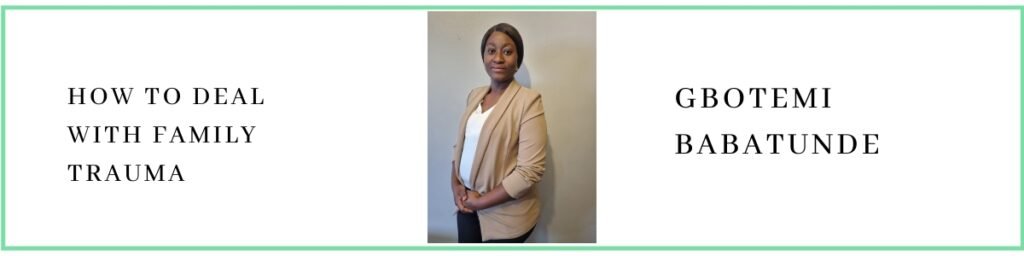
Gbotemi Babatunde, a clinical psychologist, discusses intergenerational trauma and how unresolved trauma affects child-parent relationships. Babatunde explains trauma as complex and subjective, noting that unprocessed experiences can shape perceptions, trigger protective responses, and be unintentionally transferred to children through modeling, emotional distance, overcontrol, and difficulties with co-regulation. She describes how children seek safety and love, and how parents may focus on material provision while missing emotional needs. In infant mental health, she emphasizes working with parents by exploring their “angels and ghosts in the nursery” to understand parenting patterns and child behavior. Healing begins with awareness, processing painful memories, forgiveness, coping with triggers, intentionality, and repairing ruptures, including apologizing to children; she notes ongoing challenges with teenagers and adult children when control and connection break down.
3 Takeaways
Understanding Infant Mental Health:
A key aspect of Dr. Babatunde’s work involves focusing on infant mental health, often overlooked by parents who assume young children are unaffected by trauma. The conversation sheds light on how a child’s initial experiences with their parents form the foundation for their understanding of love, safety, and self-worth. By addressing their own childhood experiences, parents can create a nurturing environment that fosters emotional well-being in their children.
Healing From Trauma:
The path to healing begins with awareness. Dr. Babatunde reiterates the importance of acknowledging past events and their impacts. Forgiveness, both of oneself and others, is crucial. Parents must strive to prevent the transmission of their traumas to their children by being intentional in their everyday interactions and responses.
Future Generations and Repair:
While acknowledging the existing rupture in relationships, Dr. Babatunde provides hope, emphasizing that intentionality can bring about healing. Even parents of teenagers can take steps to rebuild connections by understanding how they contribute to issues and approaching relationships constructively. For parents of young children, building a foundation free of past traumas creates a nurturing environment for future generations.
ShowNotes
Click on the timestamps to go directly to that point in the episode
[02:39] What Intergenerational Trauma Means
[04:55] Unresolved Trauma and Body Memory
[07:33] How Parents Pass Pain Down
[10:26] Kids Need Safety and Love
[11:08] Infant Mental Health Explained
[12:26] Ghosts and Angels Framework
[13:31] When Behavior Problems Show Up
[14:22] Parent as the Starting Point
[15:05] Childhood Stories Shape Parenting
[18:09] Finding Balance as a Parent
[18:45] Good Enough Parenting and Awareness
[20:36] Trauma Control and Triggers
[21:14] Beyond Quick Fixes
[21:42] Kids Want Connection
[22:35] Needs Beyond Basics
[23:12] Living With Intention
[23:54] Healing Through Awareness
[26:43] Forgiveness And Reparenting
[28:33] Managing Triggers Daily
[29:31] Teen Autonomy Clashes
[33:27] Repair And Apologies
Get In Touch:
If you’re interested in connecting with Gbotemi Babatunde, you can reach her via her email (gbotemibabatunde1@gmail.com), via Instagram, or via her LinkedIn.
For those interested in sharing their own stories on “Chatting with the Experts,” reach out to Paula Okonneh through her website or connect via LinkedIn.
Paula: [00:00:00] Hello and welcome to another episode of Chatting With The Experts, the show where I speak with amazing and phenomenal, dynamic women from Africa, and a few men, from Africa, the Caribbean, and in the diaspora.
They share with me my mission, which is to educate, empower and encourage women globally. Today’s show is the intergenerational trauma and its impact on child-parent relationships, and we’ll be discussing how unresolved trauma impacts parent-child relationships. My guest, who’ll join me in a few minutes, is a clinical psychologist.
She previously earned a PhD in public health, and she’s passionate about infant mental health, parent-child [00:01:00] psychotherapy, trauma-focused therapy, family and couples therapy, and assessment services. She’s had extensive research experience in areas such as mental health promotion, global mental health, child and adolescent mental health, substance use interventions, and health equity. She’s published peer-reviewed journal articles and book chapters on these topics.
My guests are phenomenal. And with that, I want to welcome Gbotemi Babatunde to Chatting With the Experts. Welcome.
Gbotemi: Thank you so much for having me.
Paula: Welcome.
Gbotemi: I’m so glad and I’m excited to be here.
Paula: Oh, my [00:02:00] word. I am bowled over with your bio. Thank you for saying yes.
Gbotemi: Thank you. Thank you. Thank you so much. I am so excited to be here to talk about one of the things I am truly passionate about.
Paula: When I met you, I saw the passion uh, in your face, in your smile, everything about all these things.
Gbotemi: Thank you.
Paula: And I know, I know that one, hmm, that you are so intrigued. And, And intrigued is probably not the word. You’ve gone to great extents to study intergenerational trauma. Let’s talk about that.
Gbotemi: Yes. Intergenerational trauma is… it is such a complex, you know, term to even start explaining or unpacking. ‘Cause trauma is not just one single event. And, And I mean, that’s also the complex nature of trauma. It could be one single event, and it could be multiple events, and it could be multiple unconnected events [00:03:00] that then come together to shape how we think and the lens through which, through which we, we interpret our world.
And so somebody goes through um, a traumatic experience, and it stays with them forever. It shapes how they understand people, how they interpret relationships, how they respond to situations. And so trauma is a complex, a, a, a really complex term, a, a complex phenomena that, you know, we need to sit down and understand more about, and even begin to develop our own awareness about, you know, the events that have traumatized us and shaped us to who we have become.
And, you know, what could be traumatizing for someone may not be traumatizing for someone else. That’s also you know, the, the interesting thing about trauma, that some people would experience some, some events that would probably not, not impact on them as much as it would impact on other people. And some people would experience some events [00:04:00] that other people may consider non-traumatizing that would, you know, really significantly shape their lives even into adulthood, for example, if they experienced it as a child.
And trauma could impact us at any phase of life. Um, It’s not just when we are children. I mean, We tend to like, you know, develop or try to talk to parents, you know, from a psychologist standpoint about you know, developing protective factors for children so that they are not overly exposed you know, to, to traumatic experiences. But we also do know that it’s almost impossible to shield or protect a child from you know, experiencing trauma. But what we can do is you know, try as much as possible to minimize the impact on them. And so what I was trying to say is that trauma could impact on anyone at any phase of life. It could be at the earlier years of life, you know, mid, mid-life, you know, experiences, and it, it could even be later in life.
But I think one of the key things about trauma that we need to always put at [00:05:00] the back of our mind is that we need to process this event. Unresolved trauma um, are the ones that you know, really significantly impact um, on us, even in a way that we’re not totally aware of. So there’s this thing that I read about sometimes, that even if we don’t process, even if we don’t remember the complete you know, events, we don’t have the memory of this event, our, our bodies remember. There is a way that the body keeps count of you know, these experiences.
And before you even think about it, you begin to respond in a way that you possibly did not even sit down to process or think that you were gonna respond this way because of what your mind, because of what your body had previously experienced. And so oftentimes trauma response is you know, a protective mechanism for so many people. I don’t wanna experience the pain that I have experienced in the past anymore, so I rather protect myself. And then in [00:06:00] that way of you know, wanting to protect yourself from the pain that you have previously experienced, it is possible to then traumatize another person, and another person in the situation might be your child.
And so some people experience neglect. They didn’t have responsive parents, you know, people who really attended to them and were present for them. And so their own way of you know, caring for their children would also almost be physical care. They would pay school fees, they would buy clothes, they would buy everything, but they are so emotionally distant.
Paula: Yes.
Gbotemi: From their own children, probably because they didn’t have anyone mentor that to them, you know, when they were growing up. And secondly, they just don’t know how to do it.
Paula: Yeah.
Gbotemi: And thirdly, it could just bring out this discomfort, reminding them of the things that they suffered in their own childhood. So they just rather like, “I’ll throw you the money, I will throw you the toys, I will throw you the clothes.[00:07:00]
Everything you want I will provide, but I’m just not capable of providing that emotional presence.” And parents don’t intentionally traumatize their children well, in most cases. In most cases. Um, parents in most cases.
Paula: Yeah.
Gbotemi: Parents would not intentionally sit down and say, “I am going to inflict pain on my child.” i, I don’t think any normal functioning person would do that. But almost all the time, parents unintentionally traumatize their children and, you know, transfer their own pains to those children. How do parent transfer their pains to those children? Children use their parents as you know, the means through which they understand the world. Children often think about their parent as their models.
They think about their parent as the lens they use in seeing and interpreting the world. And so whatever it is that they see their parent do becomes their own way of doing things.
Paula: [00:08:00] That’s true.
Gbotemi: And so when a child sees a parent who’s always triggered, a parent who’s not able to regulate their emotions, they’re also not able to develop their emotion regulation skills, ’cause mommy gets triggered, mommy yells, mommy gets anxious about things. And so it impacts on their whole nervous system also. Like, “Oh, that’s the way my parents respond. Maybe that’s the best way to respond,” you know? Right. And so this is how we then transpired, like a mom who’s experienced a mom who wasn’t responsive to her care, but she wants to be more responsive right now, but she’s still carrying that emotional baggage you know, with her that she snaps at a child at every single thing.
Like, “Why are you crying? Why are you throwing a fit or a tantrum?” It’s no longer about the child throwing the tantrum, it’s now about the parent’s discomfort, the parent’s inability to sit with you know, the discomfort of experiencing a child throw the tantrum.
Paula: Ahhh. [00:09:00]
Gbotemi: If a child does not have the capability to control themselves, at least the adult should have the ability to be able to take it in to say, “Okay, this child is having big feelings right now. I’ll do everything possible to help them regulate.” Um, There is no self-regulation. A child cannot develop self-regulation skills without co-regulation. They must have learnt it from their parents, who would be able to sit down with them and say, “Oh, I know you’re having big feelings right now. How can I help you? What can we do to fix this?”
Paula: Okay, so quick question. So from what I’m hearing, it’s almost like a domino, backward domino effect in the sense that, so the parent who possibly had experienced trauma in their own time, they see a child crying. The child cannot regulate their own behavior. The parent meanwhile is now the grown-up child who had their own trauma.
Gbotemi: Yes.
Paula: Feels [00:10:00] discomfort. They see the child crying and they’re like, it triggers. It’s a trigger.
Gbotemi: Yeah.
Paula: Yes. So they don’t even know how to control that, and so they shout at the child.
Gbotemi: Yes.
Paula: That child invariably, 20 years forward, is gonna grow up remembering how that mother shouted at them, and they’re probably gonna do the same thing to their child.
Gbotemi: Oh, yeah. Oh, yes. That’s exactly what happens. It’s, It’s this continuous you know, effect.
Paula: Yeah.
Gbotemi: Ripple effect of you know, teaching our children how to respond by modeling. We teach children a lot of things. There are two things that children are you know, unconsciously pulling for in their parents. Mm. Number one is safety. Am I safe-
Paula: Yes …
Gbotemi: around this person? A child wants to feel safe. Mm. Um, And am I loved? Am I worthy of love? Am I worthy of attention?
Paula: Mm-hmm.
Gbotemi: And so if a parent is not able to meet those needs, then there is, there is a distortion. You know, um, there’s this, There’s this shaking up that happens within a child. Like, “Okay, I am not settled in this environment. I don’t feel safe. I don’t feel loved. I don’t feel worthy of love.” Mm-hmm. And [00:11:00] so that is already shaping their own perception of their own self first-
Paula: Yeah …
Gbotemi: and then their own perception of, of other people around them.
Paula: Okay, so I have a question for you. So in your bio, you mentioned, or your bio indicates that you’re passionate about infant mental health.
Gbotemi: Yes.
Paula: Many of us grew up not even thinking, well, I shouldn’t say not thinking, but when we think about mental health, we think about… most times people who are cognitively aware. So-
Gbotemi: Oh, yeah. People who have severe mental health concerns.
Paula: Yes. Um, How do we think about… Tell me more about an, an infant’s mental health.
That’s what I’m trying to get at.
Gbotemi: Oh, yeah. I mean, that’s, I am very much happy to answer that question. I am always happy to answer that ’cause parents often ask, like, “What does this child know?” Um-
Paula: Yes.
Gbotemi: … I mean, “Why do I [00:12:00] need to bring this child to therapy?” And I think the primary thing, the fundamental thing that we do in infant mental health is working with parents.
Paula: Okay.
Gbotemi: We are helping parent develop that awareness and, you know, just what I have been talking about, that we help parent go back in time to their own childhood and reflect on how they grew, how they perceive their parents, what were the protective factors in their own childhood. So there’s something we call angels in the nursery and ghosts in the nursery in, in infant mental health.
Angels in the nursery are those, you know, positive experiences that they had in their own childhood, and ghosts in the nursery are the traumatic experiences that they had growing up. These two things shape how a, a child grows, and then how they form their own parenting style.
Paula: Okay. Wait, wait-
Gbotemi: So oftentimes-
Paula: Wait, wait one second.
Sorry. I’m writing this. Infant in the nursery, and child… Oh, ghosts.
Gbotemi: Ghosts and [00:13:00] angels in the nursery.
Paula: Ghosts and angels in the nursery. Okay.
Gbotemi: So angels are the positive, protective experiences that an individual has had, you know, over time-
Paula: Okay
Gbotemi: … across their lifespan or, but also primarily in their, in their childhood.
Paula: Okay.
Gbotemi: And then ghosts in the nursery are the, the past traumatic experiences.
Paula: Oh
Gbotemi: that they have had. But these two things then shape the person into the adult they have become.
Paula: Okay.
Gbotemi: And invariably, the parent that they would be to their child.
Paula: Okay.
Gbotemi: And so oftentimes we don’t get parent bring their children in until there are concerns from preschool, for example. Mm. I work mostly with, you know, two to threes, and then up until age 12, thereabout.
Mm. Um, But oftentimes parents don’t seek care until the child goes to daycare, and then they are becoming defiant. They’re having behavioral concerns. They are throwing very big tantrums. They are hitting and pulling on other children, [00:14:00] and they just have severe behavioral difficulties or even emotional difficulties.
Mm. These are the times that we get them, you know, the school then refer them to infant mental health. Mm. And then they come in and say, “I don’t know what is happening to this child. I have done everything possible to help this child, but it’s just not working.” Mm-hmm. “And so I need help. I need you to fix this child.”
And they come in and I say, “No, the child is not the starting point here. You are the starting point here.”
Paula: Mm. How does that come-
Gbotemi: Oh, yeah…
Paula: through the parent?
Gbotemi: You as a parent is the starting point here because um, I mean, this child came without having any experience. You know, The very first experience of their world was through you.
Paula: Yeah.
Gbotemi: And so let us understand how you are modeling you know, all those behaviors to them. Mm. Or let’s see how you are shaping their own pers- pers- per- perspect- oh my God, English, perception of the world, perspectives- Mm … you know, of, [00:15:00] of the world. Um, and then we sit down and I’m like, “Tell me about your childhood.”
Paula: Mm-hmm. Yeah. Yeah.
Gbotemi: And then we go on, and then my parents were never present, I lived with an uncle, or I lived with my mom. She was a single mom, and she had to work so hard, and I had to take care of my younger ones. I had to grow up very quickly. Um, My mom didn’t have any time to attend to my emotions. I mean, She was so focused on, you know, paying rent. My dad wasn’t present. My parents were constantly fighting at home. I experienced them, you know, fighting. I experienced physical abuse, domestic violence and, you know, emotional abuse and all of that. Or um, grandmother died when I was much younger, and she was one of the biggest protective factors in my life, and the moment grandmother died, my mom could not manage it and, you know, it was just a hard time.
Or my parents worked so hard, but they were poor and could not you know, really meet our needs, and so we lived in abject you know, poverty. We had so much lack [00:16:00] growing up. Um, And we had you know, unstable housing. We didn’t know where the next meal was gonna come from. And then some people come and like, “No, I had a pretty good childhood. We had housing, we had enough food, we had everything. Um, But there was a point where my parent got a divorce, and I had to move between two households and you know, um, it was difficult for my parents to communicate and, you know, all of that.” So it’s different stories for different people.
I am just trying to l- you know, capture as much as possible- Mm-hmm … that, you know, could possibly be the realities of people growing up. But I am trying to say that all of these experiences shaped them to become the person that they are right now.
Paula: Yeah.
Gbotemi: But they have never had any time to really sit down and think about themselves and how they have come to become who they are. I once had a caregiver sitting across me and said, ” I feel like I’m always angry, and I don’t know why I’m angry.”
Paula: Mm-hmm.
Gbotemi: And then I said, “Let’s talk about it. What was your relationship with your parents like?” [00:17:00] She was like, “You know what? My parents separated. I really loved my dad and I wanted this connection, this feeling of, of being loved and being you know, preferred by your father. But no, he just left. He got married to another person. I tried living with them, but it was difficult. My dad could not even look me in the eyes and tell me he loves me or he, he even cares about me. And then I moved in with my mom. She’s moved in into an abusive relationship. Her boyfriend was hitting and beating her.”
Mm-hmm. And then this is the condition she grew up in.
Paula: Mm.
Gbotemi: And then I said, “I think we have the answer.”
Paula: Mm-hmm.
Gbotemi: You have never sat down to process this, to think about this, and then you grew up into a parent who constantly wanted to fix that for your children. You didn’t wanna be an absent mother. You, You wanted to protect your children so much that you became overprotective-
Paula: Yeah
Gbotemi: in the process, and you begin to say things like, ” I don’t know why I’m not able to do the right things by [00:18:00] my children. I am doing my possible best you know, as, as a parent, but it’s just not working,” because those things weren’t addressed.
Paula: So true.
Gbotemi: So it either, oftentimes trauma’s just so, so complex in that way that if it’s not resolved, it i- if it’s not addressed, it swings you on, you know, the extremes of the pendulum, of, of the balance rather.
You either become so desensitized or you, I mean, so what I’m talking about is probably to the emotional needs of the children, or you become overprotective, overly protective, which are two extremes that are bad.
Paula: Yes.
Gbotemi: What we wanna do is find the middle point, the balance.
Paula: And how do we find that?
Gbotemi: And what… Exactly, and how do we find that? So there is no perfect person. Mm. When parents come in, I tell them that, um- you cannot be perfect and perfectionism is not what you should be striving for right now. You can be good enough for your child.
Paula: Yeah.
Gbotemi: Who is the [00:19:00] good parent for your child is what we should figure out. What are the needs of your child, and how can you as a parent develop the skills to meet the physical, emotional, psychological needs of this child? That is what makes you a good parent. And as long as you are doing that, even if there are times that you miss it or do it wrong sometimes, there is always opportunities to go back and say, “Oh, I did that wrong. I can do better, and these are the ways I can do better next time.” That is where you’re able to find balance, that you’re able to sit down and reflect on your responses. You are aware. Gaining that level of awareness of how you are presenting every day. You know, it’s possible that we just live our lives every day without even being intentional about how we are presenting.
We just know that…
Paula: Yeah.
Gbotemi: We wake up, we do the normals like, you know, we wake up, we wake the children up, we get them ready for school, we pack their lunchboxes, we drop them off at school, and we just not paying [00:20:00] attention to all the things in between the line, you know.
Paula: For sure.
Gbotemi: In between those chores that we do. We’re not paying attention to how Junior is saying, “Mommy, no, I don’t want bread this morning,” and you’re like, “Please don’t disturb me this morning,” and you snap at the child and you’re like, “That’s what I’m giving you.” Yeah. We’re not paying attention to, “Junior, can you help me understand why you don’t want bread this morning?”
Mm-hmm. And, “Oh, Mommy, it’s because it’s like this,” and you’re like, “Oh, no, that’s not it. Maybe we can find a way to make it softer. Maybe when we apply butter, it’s, it’s gonna be softer and you’re gonna enjoy it better.” But we’re not paying attention to having those conversations. We just want things to go our way, and that’s what trauma does to us.
Yeah. And trauma puts us in a place where we want to always have control.
Paula: Mm. Mm.
Gbotemi: Because that’s, that’s, you know, what gives us power. That’s what puts us in a safe space. We always want to feel safe, right? We don’t wanna experience that pain anymore, and the only way to do that is to have control over every situation.
Paula: And I guess that’s why [00:21:00] you mentioned unresolved-
Gbotemi: Yes …
Paula: um, trauma. That’s why- It impacts the parent and the child because until you get to the bottom of it, like, okay- Okay … why are we looking for the control? Why are we looking just for a solution?
Gbotemi: Oh, yeah.
Paula: Why are we looking for the comfort? Oh, yeah. Why are we looking for the easy way?
Gbotemi: Yeah.
Paula: Until, as you said, when they bring the children to you-
Gbotemi: Yeah …
Paula: and they say, “This child is the problem,” you say, “Okay, let’s talk more about this. What happened to you? What was your childhood like?”
Gbotemi: Yeah.
Paula: Because like you say, when Junior is saying, “Oh, I don’t wanna eat this,” or sometimes Junior is like, “I don’t wanna wear these socks,” or- Oh.
Gbotemi: Yeah
Paula: “I don’t wanna go to school.” We’re like-
Gbotemi: Oh, yeah … “
Paula: I have to get to work, so just hurry up.” Oh, yeah. “Hurry up, hurry up.”
Gbotemi: Oh, yes.
Paula: We’re just saying like, “Let’s find out why.” And then you could-
Gbotemi: Yeah
Paula: … find out the reason. Like I look-
Gbotemi: And that’s what the child is actually pulling for. Yeah. It might not even be the clothes.
Paula: Yeah.
Gbotemi: It’s just the attention they are pulling for. “I just want mommy to attend to me.”
Paula: Me, yes. Yes. “I [00:22:00] just want mommy to, or daddy to attend to me.” Or-
Gbotemi: Oh,
yes …
Paula: “Daddy to see me.” And-
Gbotemi: Oh, yeah. ” I just wanna be seen and heard.”
Paula: And heard, you know?
Gbotemi: Yes.
Paula: And daddy’s thinking, “I just have bills to pay. I just have to get to work.”
Gbotemi: “I need to be at work.”
Paula: Yes. Yes. So why bother me?
Gbotemi: But nobody ever gave me this. Nobody ever-
Paula: Thank you
Gbotemi: … attended to my emotions, and so I mean, I am paying your school fees, you have shoes, you have clothes. You should be thankful.
Paula: Um- Yes. Are you not happy?
Gbotemi: Oh, yes. Mm-hmm. Are you not fed? Mm-hmm. Are you hungry? Don’t you have a roof over your head?
Paula: Over your head? No. Yeah.
Gbotemi: And human needs are way beyond that.
Paula: Way beyond that. But it’s understanding that because sometimes you have to bring that parent back to the awareness, as you just said. Human needs are way beyond that. Human needs are way beyond. I mean, these are needed, but human needs go beyond that.
But sometimes it’s also the luxury of having these [00:23:00] things already there. When you have the luxury of a house and food and shelter and a car, sometimes that’s when you can start thinking about more things, you know?
Gbotemi: Oh, yeah. Oh, yes. Oh, yes. Um, But regardless of the situation where we find ourselves, whether we have just enough or more than enough or not enough, um, there is one thing that we all need to grow, intentionality.
Paula: So true.
Gbotemi: Being intentional about the way we are living. Mm-hmm. I mean, our situation could just be good excuses, but they’re still excuses, you know?
Paula: That is so true.
Gbotemi: That doesn’t mean that we’re not capable of doing better.
Paula: That is so true.
Gbotemi: It just depends on our level of awareness and our determination and decision to be intentional in how we present what we choose, what we don’t choose.
Paula: That’s so true. So let’s talk about healing. How do we heal this? How do we… Now we talked [00:24:00] about, you know, um, the intergenerational trauma. We talk about the parent-child relationship and how to be, you know, a parent, and why a lot of these things start with the parents in the first place because there’s unresolved trauma.
Gbotemi: Yes.
Paula: How do we heal this?
Gbotemi: Yeah. Healing stems from gaining awareness-
Paula: Okay
Gbotemi: … that we have already started talking about.
Paula: Mm-hmm.
Gbotemi: That we talk about, um, oftentimes when I sit down with parents and I say, “Tell me about your childhood,” they’re not able to remember the, the intricate details Mm-hmm … of, you know, their childhood, and that’s not what I’m reaching for. I wanna know the experiences that stays with them.
Paula: Mm-hmm.
Gbotemi: You know, There are some things in childhood, no matter how young, there are some things that I remember from when I was just five years old I do not remember my five-year-old experience as a whole, but there are one, two, three events that I can remember, you know?
And it means that those events [00:25:00] shaped me somehow. They impacted me somehow for me to still have the memories of that. And so these are the memories that I wanna explore with them.
Paula: Mm-hmm.
Gbotemi: Take me back in time, and then we’ll begin to talk about those things. And parents would often cry and would say, “You know, I had, I never, you know, processed these memories. I never brought it back because it’s just so painful to remember.” Mm-hmm. So the recollection of the memories is the starting point for healing because parents have you know, avoided, they have repressed these memories over time, but bringing them back to the point where they’re able to sit down and tell the story.
One thing about therapy, I, I mean, I’m just going off-track right now, but one thing about therapy that people don’t understand is that it helps you to think and talk at the same time, and the more we think, the more we talk and process this event, the more we minimize the impact on us because we begin to [00:26:00] gain you know, increased level of awareness.
Like, “Oh my, this is how this thing has impacted me. This is the reason why I am like this.” And oftentimes people wanna go back, for example, if their parents were you know, the agent um, through which this trauma was um, perpetrated, they want to, to go back and, like, have these conversations. And unfortunately some people don’t have that. Maybe parents have passed away or you know, people who um, traumatized them in some way are just not reachable or accessible for them anymore. And so closure is different from healing. Some people start their healing from closure, but some people, oftentimes people start healing from awareness.
Awareness of how much this person impacted you, and then going through the phase of forgiveness. Yeah. Forgiving yourself, forgiving the person, not for their own sake, for your own sake if it was something that was done to, to [00:27:00] you. For example, a parent neglected a child and then they are struggling to connect with their own children.
Understanding that you don’t have the full details of why they neglected you. Even if you have the details, the stories, you know, around why they neglected you, it still doesn’t excuse the fact that it was a negative and traumatizing experience for you as a person. And so there is need for you to forgive. That you begin to minimize the hate, the resentment that you carry towards that person or whatever it is that caused the trauma. And begin to re-situate yourself in the world that you think would be ideal for you outside of that traumatic experience. Mm-hmm. Like, okay, yes, I have experienced this, but in an ideal situation, this is how I should have grown up.
Mm-hmm. And so I, I kind of accept the fact that I do not have that childhood-
Paula: Mm-hmm …
Gbotemi: but I have gained this [00:28:00] level of awareness, and I would not be the person to do this to another person.
Paula: Mm-hmm. Mm-hmm.
Gbotemi: So I am going to, you know, be the intentional parent that my parents were not Mm-hmm,
Paula: mm-hmm …
Gbotemi: such that my healing and the way that I know that I have healed is that I am not transferring this trauma to my own children.
Paula: I love that. Yes. Be the intentional parent that my parent wasn’t-
Gbotemi: Yes …
Paula: so that I don’t transfer that negative behavior from me to my children, the future-
Gbotemi: Yeah …
Paula: generation.
Gbotemi: Yes.
Paula: Yes.
Gbotemi: And it takes a lot of work.
Paula: It does.
Gbotemi: It takes a lot of just being, just paying so much attention to ourselves, like I have been saying, how we are presenting, how we are responding.
Mm-hmm. As little as the tone of our voices.
Paula: Yeah.
Gbotemi: As little as our facial expressions.
Paula: Yes.
Gbotemi: As little as paying attention to our triggers. What are the things that trigger me?
Paula: Yeah.
Gbotemi: What are the things that you know, gets me on edge, that sets [00:29:00] me on edge?
Paula: Yeah. Mm-hmm.
Gbotemi: And how do I respond to these triggers? Thinking about coping mechanisms, um, for our triggers. Do I remove myself? Do I just find a place to go breathe for a while? What are the things I can do to help myself regulate my internal experience when I am triggered such that I am not, you know, spilling, you know, um, this, this, this experiences on other people around in a way that would traumatize them, children in particular.
Mm. And I have been talking about you know, much younger children. Let’s talk about teenagers and even young adult children. Mm-hmm. They have known mommy and daddy to be this person because they have now lived with them until their teenage age, and remember the teenage age is the age where people are seeking autonomy, where people are beginning to shape their own identity. They are seeking independence, and they just wanna have control over their own lives too. And this is a mom who’s not learnt to let go of control because that’s their own coping mechanism. [00:30:00]
Paula: Yes.
Gbotemi: So it’s a fight of somebody seeking control and somebody holding on to control. Parent has held onto control for so long. They have told this child what to do. They’re now even telling them, “No, you have to do sciences,” or, “No, you have to do math,” or, “No, you have to wear this,” or, “No, you cannot go there.” And they’re like, “Why?” And I mean, that’s the question we get asked right now, “Why, Mom?” And you’re like, “I never had the confidence to ask my parents why.”
We are living in a different generation, right? Yeah. We are living in a different context, and that’s where culture comes in also. “Oh, my parents did that, and I must do that. This is what is cultural. In our culture, this is what we do.” But we’re also now thinking that times are changing, and we must-
Paula: So we are going to have to continue this conversation on another episode because I’m looking-
Gbotemi: Yeah
Paula: at the time. But that’s-
Gbotemi: Yeah
Paula: … a great, great, great topic. Dealing with [00:31:00] teenagers, especially in a different cultural setup.
Gbotemi: Oh, yeah. Yes.
Paula: Oh my gosh, that’s a topic for another day.
Gbotemi: And it’s complicated by unresolved trauma on both end.
Paula: Yeah. Yes.
Gbotemi: And remember, the child is now grown to become a teenager. They might have been traumatized in one way or the other
Paula: Mm-hmm …
Gbotemi: without them even knowing that they have been traumatized, because parents have also not resolved their own trauma. And now parents are, are struggling to have conversations with their teenagers. Mm-hmm. And then their whole relationship is getting ruptured and ruptured and ruptured every day, and there is no repair strategy.
Hmm.
And so we are fighting every day. Parents are fighting with teenagers over food, they are fighting over clothes, they are fighting over when you get back from school, they are fighting over what is happening in school, and it just feels that this teenager feels like, “My parent is not hearing or seeing me.”
Mm-hmm. And parent are also so frustrated, like, “I’m praying over this child, but this child is just so [00:32:00] defiant, they are not listening.” But the, the challenge is right in their relationship. If only everybody could sit down and say, “I really wanna listen.” Um, if parent can say, “I’ll let go of control,” and then teach the teenager how to manage control.
And in thinking about young adults or adult children, or finally the teenager is like, “I cannot wait to be out of this house. The moment I am off to college, that would be the end with this mom. Like, I will never come back or you know, have to you know, stay or live with this woman anymore.” And then they leave for college, and the relationship that wasn’t really great you know, while they were at home, then I mean, distance then helps to you know, widen the gap in that relationship. And so parents are not able to connect with their adult children anymore. They don’t need them for anything, maybe except for financial support. Mm. Where, I mean, even in this culture, children can work and get [00:33:00] some money and you know, manage through college by themselves.
Paula: Mm-hmm.
Gbotemi: And so there is- Yeah
maybe no need for this parent anymore. They don’t have to choose what they wear, what they, what they would eat, what time they get back anymore. And, and parents then begin to you know, get into that phase where they are empty nesting, they’re lonely, and they are grieving the loss of that relationship with their child because of the things that they did not pay attention to while this child was growing within the household.
And there is room for repair. One thing that I would really want parents you know, to take home from today’s conversation is finding ways to repair. I mean, if parents are lucky to still have very little children below the age of five, that this is the age where parents need to be very intentional about their presentation, about how they are developing this relationship with their children. And even if they now have teenage children that they are now struggling to connect with, that there is room for them to take a [00:34:00] pause and like, “Okay, how am I contributing to these dynamics as, as a parent, and what can I do to begin to repair?” There is no need to be afraid of rupture in relationship if we know how to repair.
Okay. Um, and I think that’s one thing we need to learn culturally, particularly as Africans, that it’s okay for us to apologize to our children. Hmm. To say, Hmm … ” I yelled at you yesterday. I am so sorry I did that. Can we have a conversation about that?”
Paula: That’s a big thing, I think that’s a learning, um-
Gbotemi: Learning curve
Paula: There’s a learning curve for the African parent to know apologies are part of growth on both sides.
Gbotemi: Oh, yeah.
Paula: The children need to hear it, and the-
Gbotemi: Yeah
Paula: … parents need to know it is okay. It doesn’t take away respect from you.
Gbotemi: No.
Paula: If anything, it helps your children to grow into-
Gbotemi: To
learn …
Paula: better adults.
Gbotemi: Yes.
Paula: You know? And they respect you even more for doing that.
Gbotemi: Oh, yeah.
Paula: Mm-hmm. Because ultimately, they see that you see them.
They see that you are, um… Uh, what am I saying? [00:35:00] They feel um, that you are helping to bridge, bridge the gap between-
Gbotemi: Oh, yeah …
Paula: your culture and the culture that they’re going out the door to be a part of. And that’s-
Gbotemi: Yeah, they see the effort. They see the effort you’re putting in.
Paula: Yeah, they see you’re making an effort.
Gbotemi: Yeah.
Paula: Yes. Yes. So, we have to have another, another episode to talk about that. Because that is a-
Gbotemi: No, I will be coming back
Paula: That’s a topic on its own.
Gbotemi: Oh, yeah. Oh, yes. Oh, yes.
Paula: Oh, boy. Oh. Gbotemi, this has been absolutely, you know, amazing, and I’ve learned so much. But for those, I mean, we, we’re only stopping because we have people in the audience who would love to talk more with you. But for those listening on Apple Podcasts and Spotify or watching this on YouTube, if they’d like to get in touch with you, how can they do that?
Gbotemi: My email address would be the best way. Um- Okay. That’s it It’s my first name, G-B-O-T-E-M-I, and my last name, B-A-B-A-T-U-N-D-E, then number one, gbotemibabatunde1@gmail.com. [00:36:00] Okay. And I’ll be happy to have that conversation with them.
Paula: Okay. I, I can drop that in the, um, in the chat, and we’ll put that, of course, uh, uh, in the show notes. And, um, oh my gosh. And for those who, of course, are listening to this on Apple Podcasts or Spotify or watching this later on YouTube, if you’d like to be a guest just like Gbotemi has been, reach out to me on my website, which is chattingwiththeexperts.com.
I’m also on LinkedIn as Paula Okonneh on my business page, which is a better place to get in touch with me. Um- You can, which is Chatting With The Experts. I’m also on YouTube. Um, please subscribe to me there at Chatting With The Experts. And, um, I am also, um, on Instagram and my handle there is @chat_experts_podcast.
And, um, now we will open up the floor to all who joined us so that they’ll get an opportunity to speak with Gbotemi [00:37:00] herself and ask the questions that I haven’t asked her or I forgot to ask her, and this will be your opportunity to do that. Thank you so much, Gbotemi for being a guest on Chatting With The Experts.
Gbotemi: Thank you so much for having me. It was such a great experience.
Paula: Absolutely. Thank you