
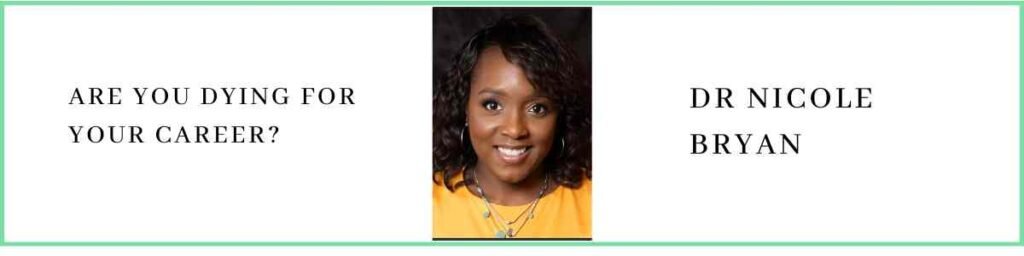
Dr. Nicole Bryan, a psychologist and leadership coach specializing in introverted women in leadership roles, explores the complex issue of work addiction, particularly how it disproportionately affects high-achieving introverted women. Dr. Bryan explains that work addiction is a real behavioral addiction, not just busyness, and outlines various symptoms such as compulsive working, mental preoccupation, and eroded personal relationships. The conversation covers why society rewards work addiction, making it harder to diagnose and address, and details how introverted women are especially vulnerable due to their reflective and identity-linked approach to work. She also touches on potential solutions and professional help avenues for those struggling with work addiction.
3 Key Takeaways
Understanding Work Addiction:
Dr. Bryan highlights a critical distinction in defining work addiction. Unlike other addictions—like sex, gambling, or gaming—work addiction is societally embraced and rewarded. This cultural conundrum particularly affects high-achieving women who often find themselves in a whirlwind of proving their worth in corporate spaces while managing personal aspirations. These women transition from being part of household nurturing to joining the paid workforce, craving for success and recognition, unaware of slipping into addictive patterns.
Why Introverted Women are at Greater Risk:
The impact on introverted women is particularly significant. Dr. Bryan sheds light on how introverted personality traits, such as reflective tendencies and internal recharge habits, amplify work addiction risks. Introverts often find themselves lost in their thoughts, which can lead to ruminating over work, consequently intertwining work with their identity. This makes introverted women more vulnerable, as they create narratives that equate self-worth with work achievement.
Steps Towards Healing:
If you notice warning signs such as compulsion to work, eroding relationships, or emotional dependence on work, Dr. Bryan advises a reflective approach. It’s essential to discuss your feelings with someone who knows you well, like a close friend or partner. Attempt to regulate work hours and mentally detach when necessary. However, when self-regulation proves insufficient, seeking professional help is crucial. Resources such as psychotherapy or Workaholics Anonymous provide structured support.
ShowNotes
Click on the timestamps to go directly to that point in the episode
[02:33] Understanding Work Addiction
[05:16] Personal Experiences with Work Addiction
[09:06] Why Introverted Women Are More Vulnerable
[13:59] Warning Signs of Work Addiction
[25:07] Seeking Help and Solutions
Get In Touch:
If you’re interested in connecting with Dr Nicole Bryan, you can reach her via her website, via Instagram, or via LinkedIn.
For those interested in sharing their own stories on “Chatting with the Experts,” reach out to Paula Okonneh through her website or connect via LinkedIn.
Paula: [00:00:00] Welcome to another episode of Chatting with the Experts TV show and podcast where I speak with amazing women from Africa, from the Caribbean, and in the diaspora. These women are successful professionals and successful entrepreneurs, and they share my mission, which is to educate, empower, and encourage women globally. Today, we are going to be talking about when success becomes an addiction, and my guest who will be joining me in a few minutes says that as a psychologist and leadership coach specializing in introverted women in leadership, she has seen firsthand how work addiction, which she says is not just busyness, but it’s a real behavioral addiction disproportionately affects high [00:01:00] achieving introverted women. She says her research and clinical work show that introverts are at the higher risk for workaholism, and especially when women are navigating corporate spaces, this can become a perfect storm.
I’ll tell you about her. She’s a certified leadership coach, an organizational consultant, and a psychotherapist, with over 25 years of experience helping introverted women rise to executive leadership. She blends psychology, business strategy, and real world experience to empower women to lead with confidence and impact. She’s a Brooklyn native with Proud Bajan, which means Barbadian roots and is the founder of [00:02:00] TheChangeDoc, LLC, and she holds both a PhD in Counseling Psychology and an MBA from Cornell University. Please welcome to Chatting with the Experts, Dr. Nicole Bryan.
Dr Nicole Bryan: Hi Paula. Thank you so much for having me. I’m so excited to be here and to have this conversation with you today.
Paula: I am so excited as well because you know, speaking with you offline, we talked about how work addiction is real. It’s not just a dedication, it’s real. So we are gonna be touching on that today. You said you’ve done your research, so I’m not gonna say why do you say so, but what has your research shown you about this?
Dr Nicole Bryan: So I think what is really interesting about [00:03:00] work addiction and probably what sets it apart from other behavioral addictions. So there’s other, you know, behavioral addictions like sex addiction or game addiction gambling addiction, like all of those are also real addictions. But I think what’s unique about work addiction is that it’s the one addiction that society actually embraces. Like we reward that addiction unlike some of the others that I just mentioned. And because of that, it’s a real conundrum particularly for women in general, who we have fought for our place in the workforce, right? Particularly in the United States, the Caribbean our in Africa, we have we don’t realize how recent it has been that we as females are, you know, have been a part of the paid workforce, I should say.
We’ve always been a part of the workforce, but a part of the paid workforce. But with work [00:04:00] addiction, some of that aspiration, some of our desire to be successful, some of our desire to prove ourselves has not only made us high achievers, but also led to some of us being addicted to work. And because of that addiction and because we are now in the workforce, the paid workforce, we get rewarded all the time for being more addicted, right? For giving more time and energy and not being able to stop working. We get rewarded by the salaries that we receive, the bonuses that we receive, the job titles that we receive. And the more accolades, the more certifications, the more education.
All of those things kind of feed our desire, our internal drive to be even more successful. And we don’t see that type of constant reward with other addictions like gambling addictions or [00:05:00] sex addiction, et cetera. Right. We chase the high, but every, at every intersection, we get some type of prodding that helps us continue to do our work addiction behaviors versus having to stop. I personally dealt with work addiction myself. I think one of the things that people don’t necessarily always understand. We will hear people say, oh, I’m a work addict, or I’m a workaholic. That’s usually what they say I’m a workaholic. And it’s bragging rights for them, right? And when people say that, they are usually meaning that they work long hours.
They work long hours. So if your typical work hours in your country is 35 or 40 hours a week, a work of someone who says they’re a work at a workaholic will be working 60, 70, 80 hours a week. But they say that without recognizing that working long hours is just [00:06:00] working long hours, that’s not necessarily the meaning that you are truly addicted to work. I realized that I was addicted to work probably in my late thirties. And I realized that I was addicted to work. Yes, I was working very long hours. But there are other indications of being a workaholic, right? Truly being addicted to work that people don’t necessarily know. And so if someone’s listening to this right now and they’re like, hey, I wonder if I’m a workaholic. I would ask you to think about being compulsive about work meaning that even when you want to stop working, you don’t, right?
So it means yes, you are working long hours, you’re probably working double what your job actually requires of you. Another indication or symptom could be that when you wanna stop, you don’t stop. Another indication could be [00:07:00] that if you have relationships, your personal relationships outside of work are being damaged because you are working so much, meaning you’re either not spending the enough time with your partner, your children, your parents, et cetera, or when you are spending time when you’re not working, technically not in the office or not actually on the clock for the job, you are still thinking about work, so you’re physically not there. But your mind is still there. You’re planning the next meeting. You’re retelling a conversation that you had with a colleague the prior week. You are strategizing on how you’re gonna tackle a certain project all while you’re at the dinner table with your family or you’re out shopping or something, right?
All of these are potential symptoms of you being work addicted, not just working long hours. I, in my thirties realized that [00:08:00] even though I wanted to stop working, I couldn’t, right? Meaning that even though I wanted to pull back on the number of hours that I was working, I just physically could not make myself do it. And it’s really easy to tell the story that, oh, it’s my company that, you know, it’s just this project that requires me to work once this project is over, I’ll be back to, you know, I’ll cut back on my hours, or maybe it’s my boss that is requiring me to work so long, so hard all of the time. Or we tell ourselves it’s the company culture. But when you move company cultures or when you move or we shift your boss, you have a new boss or the project is over and your behavior is still the same, you have to eventually admit to yourself that it’s not those environmental things that the problem is with you. And that’s what happened to me. And that’s what led me to research work addiction and become an expert in [00:09:00] it.
Paula: Interesting. But you know, I’m gonna come back to the same point again.
Dr Nicole Bryan: Sure, sure.
Paula: Why does research show that introverted women are more vulnerable to this?
Dr Nicole Bryan: Ah, it’s because of the way introverts operate in the world, right? So in being an introvert is a personality trait. And we can argue whether personality traits are learned or innate or whatever. I think is a combination of both. But the way introverts work in the world or some traditional characteristics of introverts is that we get our energy internally, right? And we don’t get it externally. We rejuvenate ourselves from having time alone, right? That’s one characteristic.
Another characteristic of introverts is that we think a lot, we are overthinkers. We reflect a lot and that usually happens when we spend time by ourselves. And so I think that the correlation between someone being an [00:10:00] introvert and them being more susceptible to becoming work addicted is because we as introverts spend a lot of time in our heads, and when we spend a lot of time in our heads, that gives us more room to ruminate over something. And when we ruminate one thing that we will attach ourselves to, is our work as part of our identity. And so all of those factors, I think is what makes introverted women more susceptible than most other people to becoming work addicted.
Paula: That makes sense.
Dr Nicole Bryan: Yeah.
Paula: You know, a lot of time is spent in your head or one likes being by oneself, and therefore, you know, work becomes your identity. And so spending time thinking about work, even boost your own identity, you know, you can justify it and you can [00:11:00] see the reason why it’s, you know, you are constantly working.
Dr Nicole Bryan: Yes.
Paula: Even though, as you said, you could be at a dinner table, but your mind is on the next project or what somebody said to you, or how you can improve something that. You know, that you were thinking about.
Dr Nicole Bryan: Yes.
Paula: But you know, it makes me think about my dad. My dad was an engineer. He loved engineering. So wherever we went and we’d laugh about it, he’d always be looking at structures and beams.
Dr Nicole Bryan: Yes.
Paula: You know, and now I’m thinking about it, maybe he was an introvert. Now these are in the seventies where, you know, we weren’t too much into personality types, et cetera.
Dr Nicole Bryan: Yeah.
Paula: But now, Hmm.
Dr Nicole Bryan: Yeah, yeah, yeah. And you know, and the truth of the matter is that all of us as individuals, we each, no matter what you claim in terms of introvert or extrovert or you know, if you’ve taken assessments a lot of there’s personality tests that you can take that help you determine whether you are introvert or [00:12:00] extrovert, no matter what that is or what the results of those things are. All of us have both introvert and extrovert traits. Right. That’s proven. That’s not really up for debate. And what brings out those different traits is the situations that we’re in. So for example, there are a lot of introverts who, with their families, they may show up extroverted because they’re comfortable with their family, right? The role that they have in that family’s system and family dynamic, it may seem like they’re extroverts with their families, but when they go out into the rest of the world, their introverted traits come out. So sometimes it is situational, right? But the truth of the matter is we all have both introvert and extrovert qualities and traits within us.
Paula: You are right, because I know it was from the millennials. I kept hearing about what’s it, ambivert.
Dr Nicole Bryan: Yes.
Paula: I’m an introvert-extrovert, and I’m like, what on earth is that?
Dr Nicole Bryan: Yeah, yeah. Yes, yes. Yeah. [00:13:00] Ambivert are those who will not necessarily claim introvert or extrovert, but readily admit that they can go back and forth. They will demonstrate introvert traits in some situations, extrovert traits in other situations. I will say that from a clinical psychology and clinical standpoint. There is no ambivert. You’re primarily an introvert, or you’re primarily an extrovert. However, nomenclature in terms of you know, pop culture, the ambivert piece comes up. And I think that is because there are so many people who now recognize that they may demonstrate either of those types of qualities depending on the situation.
Paula: Yeah, yeah, yeah. The nomenclature is determined by, as you say, culture, pop culture, you know?
Dr Nicole Bryan: Yeah.
Paula: Yeah.
Dr Nicole Bryan: Yeah.
Paula: You’re so right. You’re so right. So what are [00:14:00] some of the warning signs that we can look for?
Dr Nicole Bryan: So, I think I mentioned a few already, but here’s what I will say. And frankly, I will say that. For anyone listening, don’t try to self-diagnose yourself, right? So if you really do believe that you are a workaholic or a work addict, if you have an addiction to work, it’s a serious compulsion, right? So, and it can have detrimental impact, detrimental effects. It can have effects on your personal health. It can have impacts on how you work to your work environment. It can have impacts on your family. There are some workaholics who will go broke, go bankrupt, right? There are some workaholics who literally lose their relationships, lose their family, or, so this is not something that is you know, a nice to talk about. It’s a real true issue that if you believe that you [00:15:00] are a workaholic or a work addict, that I would implore you to actually seek someone out to get help.
With that said, there are some indicators, right, or symptoms that you can, or warning signs. Let’s call them warning signs, like think of them in terms of warning signs. If you have one or more of these things, I would want you to ask yourself, am I work addicted? Like I would want you to be reflective about that. And then I would also ask you to if you are unsure, ask your colleagues. Ask your, ask people who see you and know you. Ask your family, your spouse, et cetera.
So one is, and I think I mentioned this already, it’s a compulsion, right? So you can’t stop even when you want to. So even when your body is screaming for rest. Even when your mind is, you know, when you are working really late and you are [00:16:00] like, you, the words start to blur and you feel like you’re reading the same thing over and over and over again.
Paula: Mm-hmm.
Dr Nicole Bryan: But you keep pushing yourself to, to read it even though you know, it’s not making it sense anymore to you, the compulsion is kind of like that. Like, you know you should stop working. You know it’s time to cut the computer off to stop thinking about the project, et cetera. Even though you want to, you cannot. That is the compulsivity. Like you’re no longer in control of your behaviors, right? Your mind is telling you one thing, but you’re pushing your body to keep doing something else. So if you find yourself compulsively working, that is a warning sign that you might be addicted to work.
The other one that I talked about earlier is when your relationships erode, right? So your personal life is literally falling apart because work comes first, right? I will tell you the story of, you know, when I [00:17:00] was in my late twenties and I was addicted to work, but wasn’t aware that I was addicted to work yet, right? I thought I was just climbing the corporate ladder and I was doing everything I needed to do to kind of create a name for myself, to build financial security for myself and all of those things. And at the time I was readily dating, right? I wasn’t necessarily dating for marriage, but I had a relationship that was really important to me. And this person was very clear about his needs in terms of time and intentionality, and I heard him and I recognized that yes, I want this relationship, but I could not pull myself away long enough or often enough from work to be able to give the time and energy to this relationship that I wanted, right? So that relationship eroded, right? That person was very clear in that what their needs were. [00:18:00] I heard them, I was like, yes, I’m gonna do it, and then I would not do it. And then they happened again, and it happened again. So when your relationships erode, and again, it’s not just your personal relationships.
Many of the women that I work with who are work addicted, it’s not always their spouse who is the relationship that erodes, it sometimes can be their parents. It’s oftentimes their children. It’s their sisters, their siblings, et cetera, right? So not just, don’t only think about it in terms of a romantic partner. So if your relationships erode, that’s another warning sign. If you have mental occupation, so meaning like even when you’re not working or when you’re off the clock, you’re mentally working, you’re planning, you are playing conversations, you’re trying to solve business problems when technically you’re at the pool or you’re on the beach or you’re, you know, you’re doing something else. You’re spending time quality time with your friends and your family at the picnic. But [00:19:00] you’re really sitting there and working, right?
Paula: Mm-hmm.
Dr Nicole Bryan: So if you’re mentally preoccupied. Another warning sign is emotional regulation, right? You need work to feel okay. You need to be working to feel okay for yourself. Without it, you feel really anxious or you feel worthless, or you feel lost. Right? That’s another key warning sign. The other, we kind of alluded to it earlier, Paula, is you have no other identity. So even despite the fact that you are a mom, you are a wife. You know, you belong to the church all of these other aspects of your identity, when someone asks you what you do for fun, you draw a blank because work is your identity, right? You prioritize that above all other things and to the detriment of all other things. So, yeah, those are some of the warning signs [00:20:00] that if you are experiencing these things and not just as a one-off, right, not just for one month or the three month project, if this, these things are an ongoing experience that you are having, that’s when you need to be asking yourself whether or not you might be addicted to work.
Paula: Thanks for expanding on this because you know, yes, we touched on it earlier, but now that you’ve really expanded, woo, you know, when fun and work are the same thing for you. I mean, that’s what jumped out at me in particular, because I know a few people like that. You know, you ask them, what do you do for fun? Fun? Why should I have fun, you know?
Dr Nicole Bryan: Yeah. Yeah.
Paula: They don’t even think about going on vacations. To them, that’s a waste of time when I could be doing X, Y, Z or making this amount of money by working, et cetera.
Dr Nicole Bryan: Yeah.
Paula: Let’s see that, that identity and work becomes their [00:21:00]
Dr Nicole Bryan: Yeah.
Paula: Identity. Go ahead.
Dr Nicole Bryan: Yeah, I was gonna say, and if with that in particular I think it’s important to distinguish yes, for we all dream of having a job or having a career where we have fun, right? That we enjoy what we do. So that’s not what we’re talking about. If you and Paula, I know you enjoy what you do, I enjoy what I do for a living. So if you enjoy what you do for a living, that is great. That is what we want. That’s the goal. It’s when you not only enjoy it or you equate that with fun, but you can’t stop it, right?
It’s when you are doing it, but you can’t turn it off. It’s when other people see you and they’re like. I wanna spend time with you, but you are so busy having fun doing your work, that you are neglecting me. You’re neglecting the things that you say are important to you. That’s when it becomes problematic. Not that you enjoy your [00:22:00] work. We want you to enjoy your work. Yeah, we all wanna do that, but when that is prioritized to the detriment of every other aspect of your existence, that’s when it’s a problem.
Paula: Yeah, I can see that. I can see that clearly.
Dr Nicole Bryan: Yeah.
Paula: Because I can think of some people, I know who that describes a hundred percent.
Dr Nicole Bryan: Yeah. Yeah. I’m sure we all know work and that’s part of the issue, right. In my opinion as a person who studies this, researches this and works with people who are workaholics. We all, if once I describe this, people are like, oh, I can see this person. They start naming people. Oh, Sally and Sarah and Jack. They name the people who they know meet these criteria. But because it is held up as such a good thing to be so high achieving, to be successful. ’cause we are rewarded [00:23:00] for the behaviors, then that’s why I think this goes so undiagnosed.
Paula: Got you. Got you. Wow. I’m just, you know, as you said, I’m thinking of so many people. I could put a check mark against their name.
Dr Nicole Bryan: Yeah.
Paula: You know?
Dr Nicole Bryan: Yeah.
Paula: The description.
Dr Nicole Bryan: And I think for those of us who, you know, I think particularly, introverted women in particular. Have, you know, I think that about the historical context, right? And before we even entered the paid workforce, right, we were able to go into companies and organizations and work and get paid for our work. We were the center and we still are the center of our homes. And we worked in the homes, right? Raising our children, taking care of the household, et cetera. And even then, when we weren’t necessarily getting paid for our work, we were constantly working around the clock. You never turn off being [00:24:00] a mother or a wife or, you know, taking care of a home or taking care of your elderly parents, your grand baby. So many of us have multiple generations that we are responsible for.
Paula: Mm-hmm.
Dr Nicole Bryan: As caregivers, we never turn that off. So I also believe that there’s the historical perspective, you know, plays into the fact that we are more susceptible to becoming workaholics. Yeah. And I do think our desire to achieve right, to prove to the world. So many of us have the desire to prove to the world that we can do all things. We can be all things to all people, including you know, becoming vice presidents and executive vice presidents including making multiple six figures in terms of our income. Doing all of that while doing everything else. I think that also makes us more susceptible to becoming addicted to work as well. [00:25:00]
Paula: Yeah. Before we round up here, before we close up.
Dr Nicole Bryan: Sure.
Paula: Any suggestions on how we can help ourselves? There may not be solutions, but there could be like, you know, tips on how to recognize it and then how to start making steps of putting things in place. You see it in yourself or you see it in a love one and what to do.
Dr Nicole Bryan: Yeah, absolutely. So, first let me say that there are, well, let me talk about recognizing it first and then I’ll talk about solutions. So, we talked about the symptoms we talked about, right? Not self-diagnosing, but if you recognize some of these behaviors in yourself, it is important to ask the question. Am I work addicted? Even if you think there is a possibility, maybe you don’t know, but if you think there’s a possibility, I personally would recommend that you ask someone who knows you really well, right? Your best friend. And that’s one thing I [00:26:00] love about women. Our friends, they will be honest with us. They’re gonna tell us. They’re not gonna let us walk around like we crazy. So you ask your best friend. Ask your partner, right? Ask someone who really knows you well and, you know, share with them what we talked about today in terms of potential symptoms. And ask them if they see that in you. That’s just a good check and balance that you don’t have to go anywhere. That’s a phone call or a quick conversation, right. To get validation or invalidation of what you might be already thinking.
When you get to a point where you’re like, you know what, I probably do have an issue, you can by trying to self-regulate, meaning you can start, if your problem is you are working way too many hours, you’re working double the hours that your company requires then you can start by trying to cut back those hours, right? Like I would suggest that you start [00:27:00] with the behaviors that you see that you are overextending yourself on. You can try that. Meaning, and I did this as well. I tried to cut back on the actual physical hours that I was working. I tried to stop myself when I would be at the dinner table or out to dinner with friends and family and my mind was start going toward work. Like I would literally try to correct myself and bring myself back into the conversation.
So there are those things that you can try to do. I will say though, that if you truly are addicted to work, when you try those things, it’s not gonna work, right? If you’re addicted, you’re addicted, right? So trying to on your own correct those behaviors, it’s either not gonna work at all, or it’s gonna work for a very short time. And then you’re gonna find yourself going [00:28:00] right back into the problematic behaviors that you had before. And that is when you truly do know that you are addicted and you need to get some other type of help, either through a psychologist or psychotherapist or even a clinical social worker, right? Work addiction is a compulsion. So the person that you go to for help doesn’t have to be a expert in work addiction, but they do have to be an expert in helping with behavioral addictions. So that’s one way you can get professional help if you need it.
The other way is there are Workaholic Anonymous. So just like there are Alcoholic Anonymous, there are organizations that are dedicated to Workaholic Anonymous. So there are group programs that would help you to deal with the addiction that you have with work. So that’s another avenue that you could go to for professional support.
Paula: I love it. I love it because sometimes people think that, well, you know, there’s [00:29:00] no hope. Knowing that there’s hope.
Dr Nicole Bryan: Yes.
Paula: You know, the beginning many times of getting help.
Dr Nicole Bryan: Yes.
Paula: So, yeah. Yes. Thank you.
Dr Nicole Bryan: Yeah.
Paula: And so if someone wants to get in touch with you, Dr. Nicole, how can they …
Dr Nicole Bryan: Yes.
Paula: How can they get in touch with you online?
Dr Nicole Bryan: So online I am, you can go to my website, which is www.thechangedoc.com which I’m sure we’ll put in the show notes.
Paula: Yeah.
Dr Nicole Bryan: So you can go to my website, which you’ll learn more about me, my services, et cetera. I’m also primarily on LinkedIn, so if you go to LinkedIn and search The Change Doc or Dr. Nicole Bryan, I will pop up. So either of those ways is good. I also have a podcast that if you’re… I’m a podcast. I love podcasts, like I over-consume podcasts. But if you are into podcasts, I also have a podcast and it’s called Leading [00:30:00] Her Introvert Way. So that’s another way you can, that’s on all the podcast platforms.
Paula: You woohoohoo the podcast. I’ve been a podcaster for 13 years, so I’m all in.
Dr Nicole Bryan: You got me beat. I am still very new. This is year three. But I’ve been an avid listener to podcasts for a very long time, and I absolutely, it’s one of my favorite ways to learn, so I’m grateful.
Paula: It is. It is.
Dr Nicole Bryan: Yeah.
Paula: Wow. And for those of you who joined this, you have an opportunity to speak with her and ask her whatever questions that you may have that I didn’t ask. And for those listening and viewing this online, if you’d like to be a guest like Dr. Nicole Brian, reach out to me on my website which is chattingwiththeexperts.com. I am also on LinkedIn. I love LinkedIn. I’m not paid to say that, but I do love LinkedIn and just search for Paula [00:31:00] Okonneh there. On Instagram, I have an Instagram handle, which is @chat_experts_podcast. I’m also on Facebook. I’m more so now than I used to be in the past. Look for my business page there or my personal page, Paula Okonneh. You can reach out to me there. And we now have a YouTube channel that I love for you to subscribe to. Yes, yes, yes. And well thank you again Dr. Nicole. And now for those in the audience, we’ll open up the floor so that you can ask her questions and find out, you know, so much more about this very interesting topic, when success becomes an addiction and why introverted women are most affected by that.
Thank you. Thank you, thank you.
Dr Nicole Bryan: Thank you.